


Apple Tightens Full-Disk Access to Block AI Agent Abuse

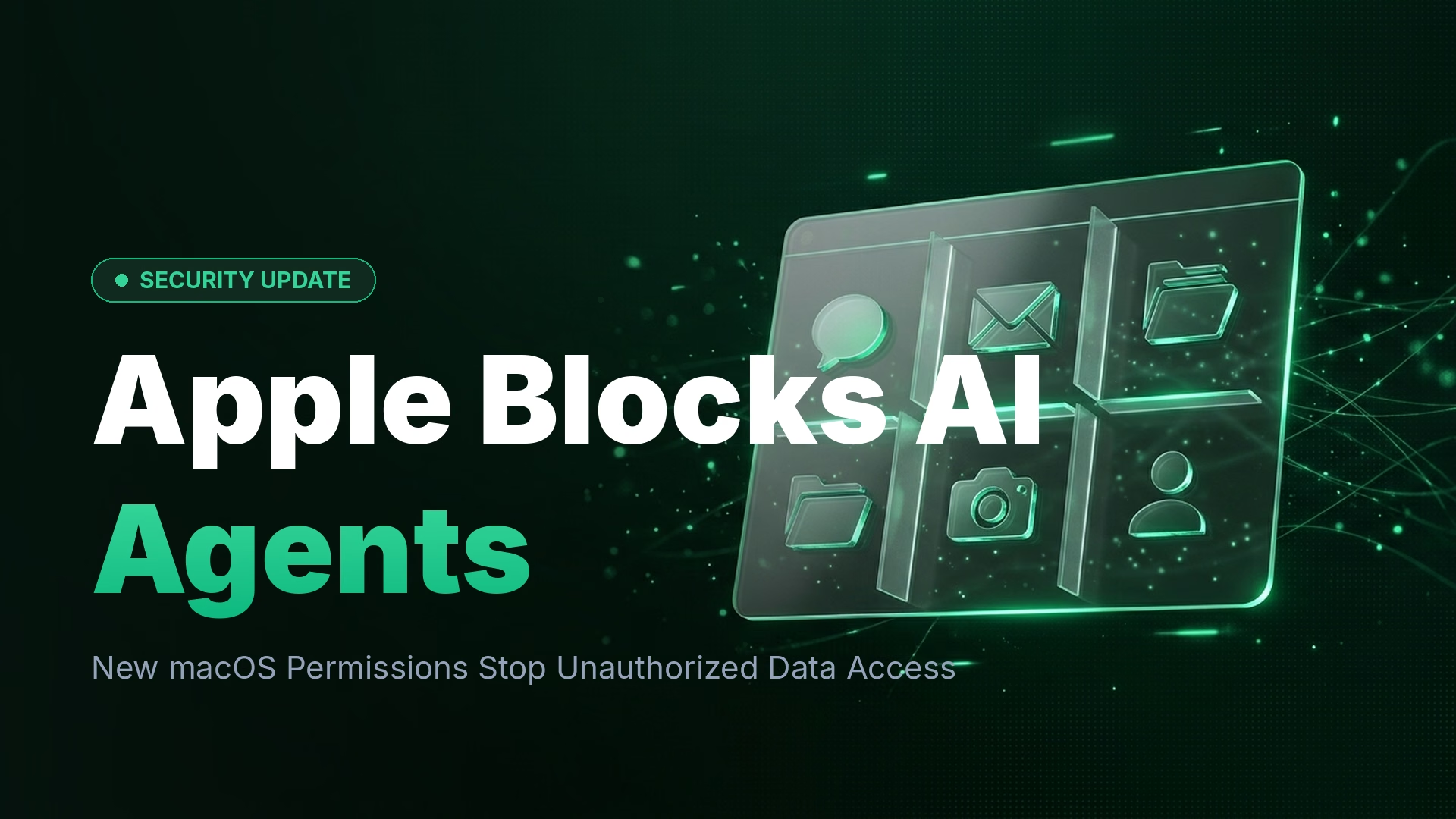
Apple has introduced stricter full-disk access (FDA) permissions in macOS, officially launched on October 2, 2026, to prevent AI agents from accessing private user data without explicit authorization. The move directly addresses concerns raised by Meta's Muse AI agent, which the company claimed could legitimately read user messages through existing FDA permissions. Apple's security team has publicly disagreed, implementing granular controls that require users to approve each sensitive data access request individually.
What Changed in Full-Disk Access Permissions
The updated permission model introduces a multi-tiered authorization system for applications requesting FDA privileges. Previously, granting FDA to an application allowed unrestricted access to all user files, including Messages databases, Mail archives, and Safari browsing history. Under the new framework, applications must now specify which categories of sensitive data they intend to access, with users receiving clear prompts for each category.
Apple's implementation creates distinct permission buckets for messaging data, email archives, browser history, and financial documents. AI agents and automation tools can no longer use blanket FDA approval to read private communications. Each data category requires separate user consent, with permissions revocable at any time through System Settings.
The Meta Muse Controversy
The security update follows Meta's controversial stance on its Muse AI agent, which the company argued could legitimately access user messages through standard FDA permissions. Meta's position suggested that existing macOS security architecture was sufficient for AI agents to read private communications as part of their core functionality. Apple's engineering team rejected this interpretation, stating that FDA was never intended to grant AI systems unrestricted access to personal correspondence.
Security researchers noted that Meta's argument overlooked the fundamental privacy expectations users have when installing productivity tools versus AI agents. While backup utilities and system management tools historically required broad file access, AI agents operate with different risk profiles, often processing and transmitting data to remote servers for analysis.
How AI Agents Are Affected
The permission changes impact all AI agents designed for business automation and personal productivity. Developers building agents that summarize emails, analyze messaging patterns, or extract insights from browsing history must now request specific permissions for each data source. The update affects both local AI models running entirely on-device and cloud-based agents that transmit data for processing.
Apple has published updated guidelines for AI agent developers, recommending that applications explain their data needs clearly before requesting permissions. The company emphasizes that legitimate use cases, such as email summarization or calendar integration, can still function under the new model. However, agents attempting to access multiple sensitive data categories will face increased user scrutiny through successive permission prompts.
Release Date and Availability
Apple officially released the FDA permission update on October 2, 2026, as part of macOS 15.1. The update is available immediately for all Macs running macOS Sonoma or later. Users receive automatic prompts to review and reconfigure permissions for previously installed applications that held broad FDA access. Apple recommends auditing all third-party applications with FDA privileges to ensure they align with the new granular permission model.
Industry Response and Developer Adoption
Major AI agent platforms have begun updating their applications to comply with Apple's new requirements. Developers of AI agents for small business automation report that the permission model actually improves user trust, as customers can now see exactly which data sources their agents access. Early adoption metrics suggest users are more willing to grant specific permissions when they understand the precise data requirements.
Privacy advocates have praised Apple's decision, noting that the update addresses a critical gap in macOS security architecture. As AI agents become more prevalent in both consumer and enterprise environments, granular permission controls provide essential safeguards against unauthorized data collection. The update sets a precedent for how operating systems should balance AI innovation with user privacy protection.
What This Means
Apple's FDA permission update represents a significant shift in how operating systems manage AI agent access to sensitive user data. By requiring explicit consent for each data category, the company establishes clear boundaries between legitimate automation and invasive surveillance. The move challenges other platform providers to implement similar controls, potentially reshaping industry standards for AI agent development. For users, the update delivers meaningful control over which AI systems can access their private communications, financial records, and browsing history, without blocking beneficial automation tools entirely.



on Emergent today




