


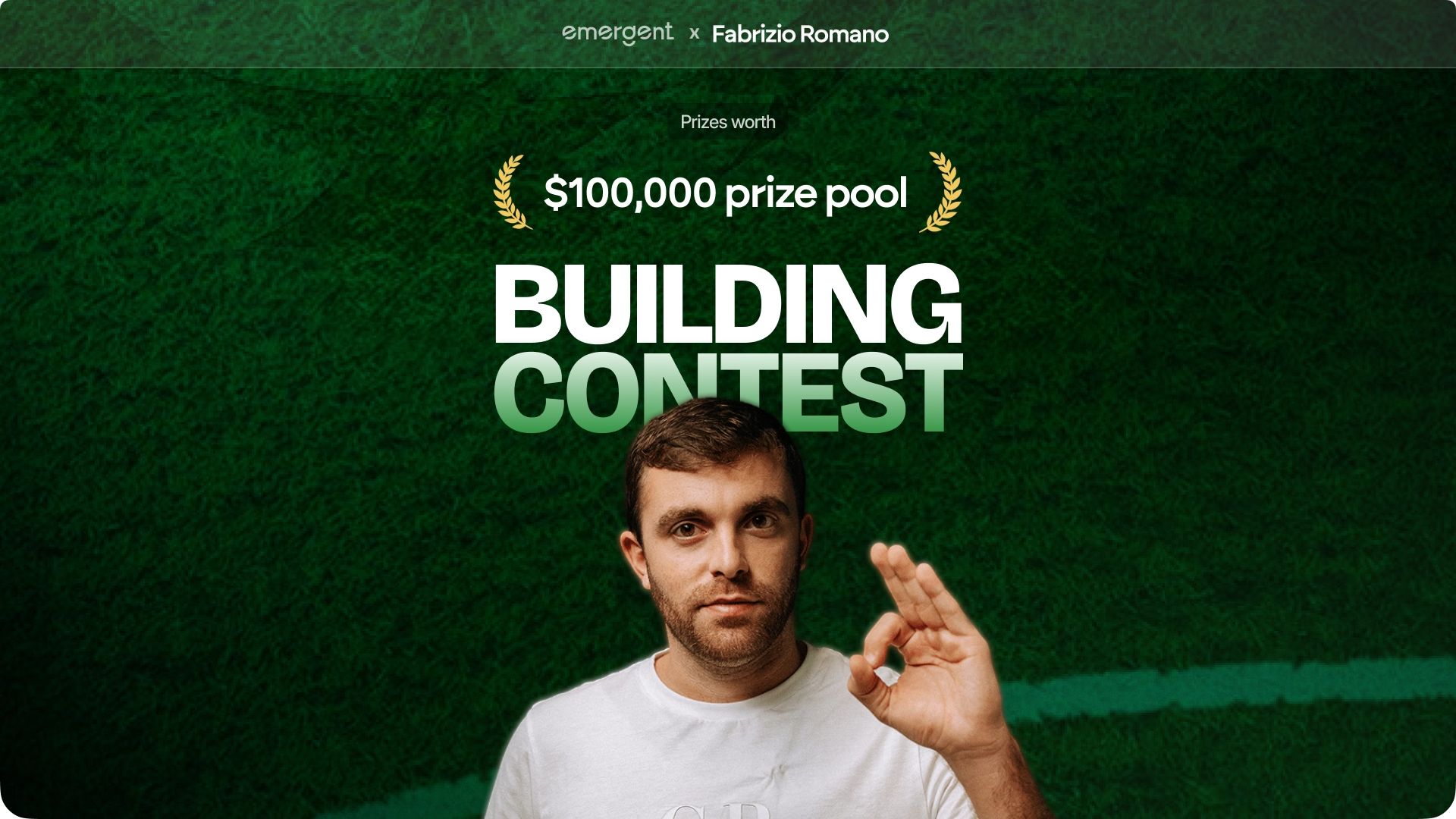
Fabrizio Romano x Emergent: $100K Builder's Contest
A global AI contest with Fabrizio Romano and a $100,000 prize pool. Business owners worldwide built real software with no coding. Browse 4,300+ submissions.
The winners are in. Catherine Vandermeets of Belgium took first with Le Copilote TDAH, Lucio Vittorio Taglialatela of Italy second with Agenzee, and Zechariah James Rhodes and Kenneth Ngwoke shared third. Meet the winners.
Emergent partnered with football transfer journalist Fabrizio Romano on a global build challenge with a $100,000 prize pool. Business owners and professionals worldwide built software for one real problem using Emergent, published it, and let the community vote. No coding needed.
Key dates
The challenge ran from 1st July to 21st July 2026. All dates below have passed.
The Demo Finale has taken place and the winners are announced. Meet the winners and what they built.
Prizes
The top three builders showing the most meaningful transformation share the $100,000 prize pool.
Monetary prizes are awarded to the top three only.
Payment follows identity, eligibility, tax, banking and compliance verification. Taxes, bank charges and compliance obligations related to the prize money are the winner's responsibility unless otherwise stated. Winners are advised to seek independent tax advice.
How it worked
Who entered
The contest was open globally. No technical background needed. If you ran a small business and tracked operations in spreadsheets, you could build software to replace that workflow. If you managed a sports league and coordinated schedules manually, you could build a scheduling app. If you had an idea for a tool that did not exist yet, this was the reason to build it.
The common thread across winners is not coding skill. It is the quality of the problem they chose to solve and the software they built around it.
What people built
More than 4,300 apps were submitted, and the strongest were not generic tools, they were specific software built around one real workflow, spanning businesses across India, Europe, West Africa, Southeast Asia and beyond. The standout builds clustered around a few kinds of problems:
- Billing and invoicing
GST-ready billing and voice-assisted invoicing tools built for local businesses, from small shops to larger operations.
- Approval and workflow platforms
Centralized systems that replace scattered chat threads and paper-based processes with a single audited flow.
- Business operating systems
All-in-one tools for service businesses covering customers, payments, automation and marketing.
- Sales and procurement
Apps that compare supplier prices and draft ready-to-send negotiation messages, cutting out spreadsheets.
- Creator and marketing tools
Platforms that help creators and brands collaborate, and that ground a business's marketing direction in its actual numbers.
- Everyday consumer apps
From grocery receipt-scanning and price tracking to executive-function companions for people living with ADHD.
- Education and admin
School management platforms covering administration, parent communication and day-to-day operations.
How winners were chosen
Selection ran in stages. All submissions were ranked by upvotes, and the 200 most upvoted advanced to judging. Those 200 were scored against the rubric below to produce the Top 100 and their ranking. The Top 25 were shortlisted, and the highest-ranked entries were invited to the Demo Finale on 31st July, where a panel identified the top three.
The final selection was led by Emergent and a pool of experts based on the judging criteria.
The rubric
Business impact was the heaviest criterion. Concrete evidence counted for more than aspiration: time saved per week, follow-ups no longer missed, cost or revenue movement, team adoption, before-and-after screenshots.
What's next
The winners are announced. Meet them and the software they built, or browse the submissions to see what builders around the world made.
Frequently Asked Questions
Your Questions, Answered
Don't change this element unless you know what you are doing
What was the Fabrizio Romano x Emergent contest?
It was a global AI contest run by Emergent with football transfer journalist Fabrizio Romano. This AI app building contest asked builders to pick one real problem, build software for it on Emergent, publish it, and gather community upvotes, competing for a $100,000 prize pool. Unlike an AI innovation contest chasing the most novel idea, it rewarded one real problem solved well.
Who could enter this AI competition, and from where?
Anyone, anywhere. The contest was open globally to business owners, founders, operators and professionals, with no technical background required. The test was whether you could describe a real problem clearly, not whether you could code, which is what set this AI challenge apart from a developer hackathon.
How did upvotes affect the result?
Upvotes were the first gate and a scored criterion. The 200 most upvoted apps advanced to judging, and upvotes then counted for 20% of the rubric that ranked the Top 100 and Top 25.
How were the top three chosen out of 4,300+ entries?
After the upvote gate, the 200 finalists were scored on business impact, upvotes, problem solving, use of Emergent, and UI/UX. The highest-ranked entries were invited to the Demo Finale on 31st July, where a panel of Emergent leaders and outside experts identified the top three.
What did winners receive?
The top three share the $100,000 pool: $50,000 for first, $30,000 for second, and $20,000 for third. It awarded money to the top three only, with no lower prize bands.
Are the winners announced yet?
Yes. Catherine Vandermeets won first, Lucio Vittorio Taglialatela second, and Zechariah James Rhodes and Kenneth Ngwoke shared third. You can read more about the winners here.
Did the whole app have to be built on Emergent?
Yes. Every submitted product had to be built on Emergent, which handled the code, backend and deployment from a plain description of the problem.
Do builders keep ownership of what they made?
Yes. Participants retain ownership of their app and idea, subject to Emergent's platform terms and any third-party materials used.
on Emergent today




