


400+ US AI Data Centers Use More Power Than Three States

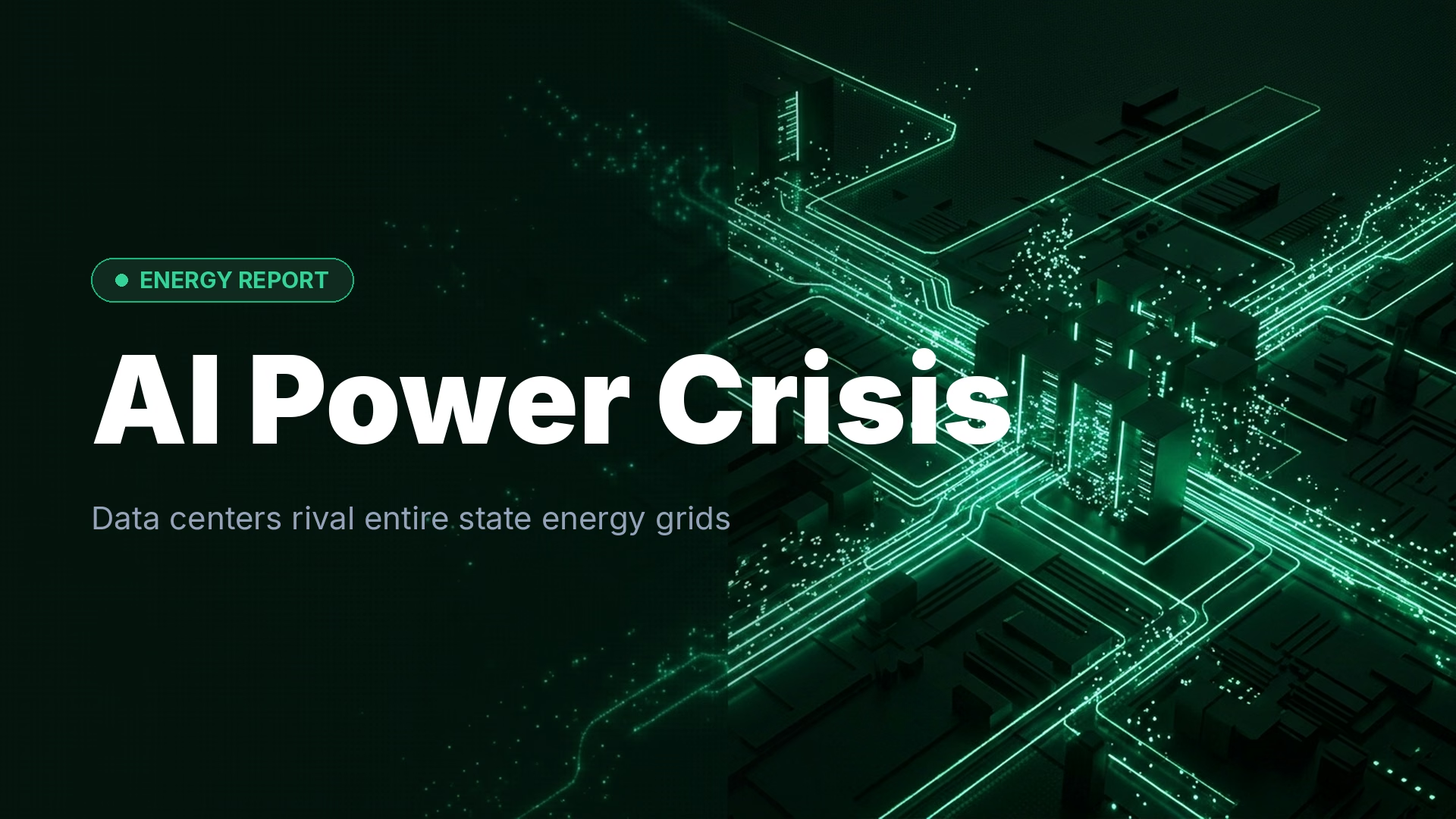
A striking new analysis reveals that more than 400 American AI data centers collectively consume electricity at levels matching the total power usage of entire states like Wisconsin, Michigan, or Indiana. The findings underscore the staggering energy footprint of artificial intelligence infrastructure as the industry continues its rapid expansion throughout 2026.
Unprecedented Scale of AI Energy Demand
The analysis, published November 16, 2026, highlights how AI workloads have transformed national energy consumption patterns. Training large language models and running inference at scale requires massive computational resources, with modern AI data centers housing thousands of specialized GPUs that operate continuously. Each facility can draw tens to hundreds of megawatts, creating power demands that rival small cities.
Wisconsin consumed approximately 66 terawatt-hours of electricity in recent measurements, while Michigan and Indiana each used similar amounts. The fact that distributed AI infrastructure now matches these state-level totals represents a fundamental shift in how America allocates electrical capacity. Industry observers note this comparison becomes even more striking when considering that AI represents just one sector among many competing for grid resources.
Release Date and Data Context
Officially released on November 16, 2026, the report synthesizes energy usage data from utility providers, facility operators, and grid monitoring systems across the United States. Researchers tracked power consumption at identified AI-focused data centers, distinguishing them from traditional cloud computing facilities by their concentration of AI-specific hardware and workload profiles.
Grid Infrastructure Challenges
Energy analysts warn that current electrical grid infrastructure faces mounting pressure to support continued AI expansion. Many regions already operate near capacity during peak demand periods, and adding data center loads equivalent to multiple states strains transmission networks and generation capacity. Several utilities have reported delays in connecting new facilities due to insufficient transformer and substation availability.
- Waiting periods for new data center connections have extended to 24-36 months in some regions
- Grid operators project needing 15-20 gigawatts of additional capacity by 2028 to support planned AI facilities
- Renewable energy sources currently supply only 30-40% of data center power in most markets
Industry Response and Future Outlook
Major AI companies have announced commitments to renewable energy procurement and efficiency improvements, though implementation timelines vary widely. Some operators are exploring nuclear power partnerships and investing in on-site generation to reduce grid dependence. Others focus on liquid cooling systems and next-generation chip architectures that promise better performance per watt.
The 400-facility milestone also reflects broader trends in AI infrastructure buildout. Hyperscale cloud providers, specialized AI labs, and enterprise deployments all contribute to the growing energy footprint. As model capabilities advance and adoption accelerates, energy consumption shows no signs of plateauing without significant efficiency breakthroughs.
What This Means
The state-level energy comparison forces a reckoning about AI's resource intensity and sustainability trajectory. While artificial intelligence delivers transformative capabilities across industries, its infrastructure costs extend far beyond capital expenditure into fundamental questions about energy policy, grid modernization, and environmental impact. Stakeholders from utilities to policymakers must now grapple with balancing innovation acceleration against practical constraints of power generation and distribution. The 400 data centers operating today represent just the foundation of what many project will become an even larger infrastructure footprint as AI capabilities continue advancing through the remainder of the decade.
on Emergent today


