


Adaptive Agent Avatar Plugin Launches for Claude, Codex

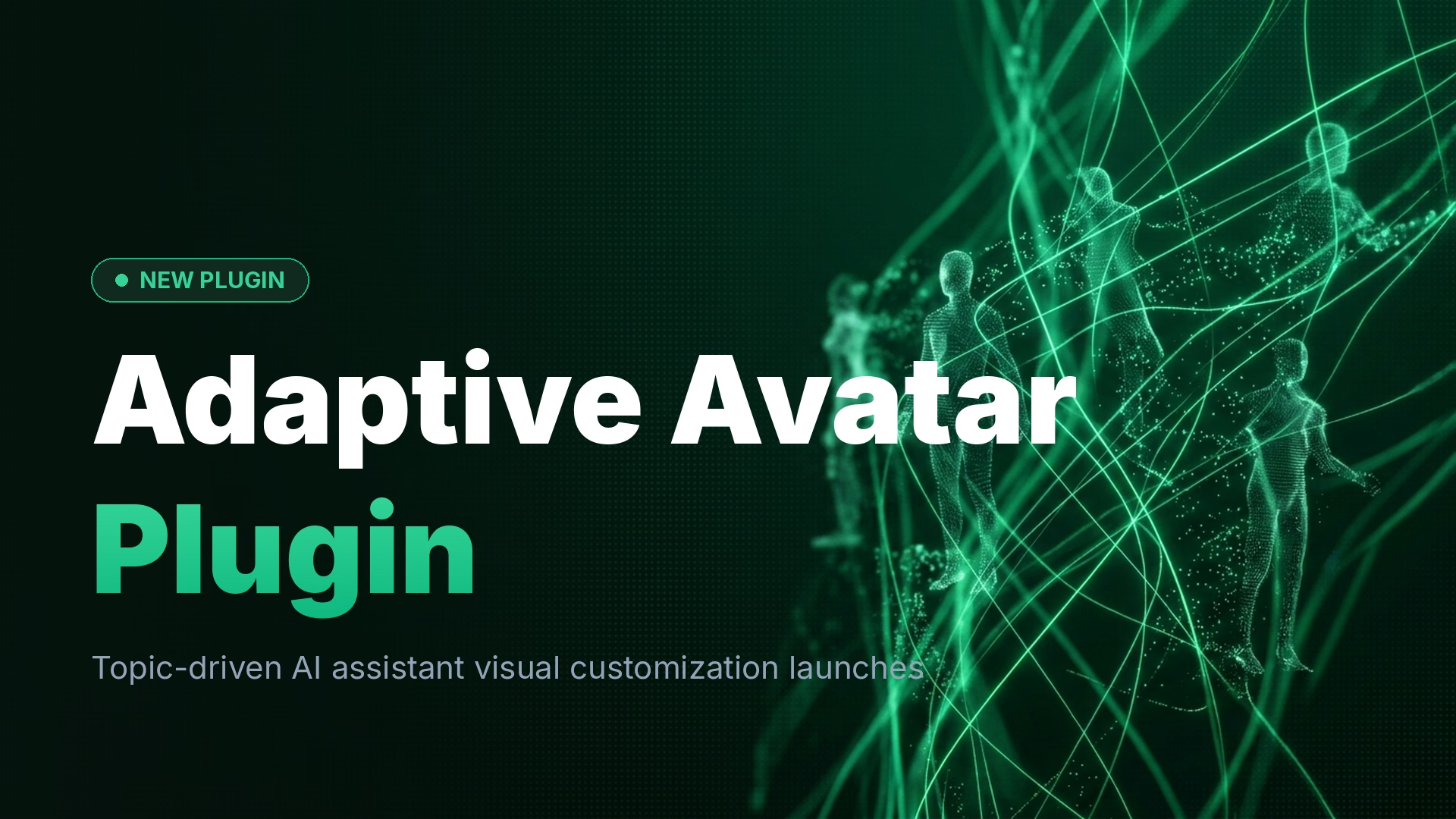
A new open-source plugin brings dynamic avatar customization to popular AI coding assistants, automatically changing visual representations based on the topics users ask about. AdaptiveAgentAvatar, released November 13, 2026, works with Claude, Codex, DSH, Doubao, and Yuanbao, running entirely offline using a lightweight embeddingGemma model for topic classification.
How the Plugin Works
AdaptiveAgentAvatar analyzes user queries in real time to determine the subject domain, then updates the assistant's avatar to reflect expertise in that area. A question about Python triggers a developer-themed appearance, while a database query might show a data architect visualization. The plugin uses embeddingGemma, a compact embedding model that processes topics locally without sending data to external servers.
The offline-first architecture addresses privacy concerns common in AI plugin ecosystems. By keeping topic classification on-device, users retain full control over their interaction data while maintaining the visual customization features typically reserved for cloud-based services.
Cross-Platform Compatibility
The plugin supports a diverse range of AI assistants beyond Western models. Alongside Claude and Codex integrations, it works with Chinese language models including Doubao and Yuanbao, plus the DSH assistant. This broad compatibility positions AdaptiveAgentAvatar as a rare cross-platform customization tool in an increasingly fragmented AI assistant landscape.
Developer HCI-Yeo released the project on GitHub with full source code access, enabling community contributions and custom avatar designs. The repository includes documentation for adding new AI assistant integrations and extending the topic classification system with additional domains.
Release Date and Availability
Officially launched on November 13, 2026, the plugin is available immediately through the GitHub repository. Installation requires no API keys or cloud accounts, with setup taking under five minutes according to the project documentation. The lightweight embeddingGemma model downloads automatically during first run, keeping the total footprint under 100MB.
Technical Architecture
The plugin operates as a middleware layer between user interfaces and AI model APIs. When a user submits a query, AdaptiveAgentAvatar intercepts the text, runs topic classification through embeddingGemma, selects an appropriate avatar from its library, and passes the original query to the target AI assistant unchanged. Response times add less than 50 milliseconds of latency according to early testing.
- Fully offline operation with no cloud dependencies
- Support for five major AI assistants across multiple languages
- Open-source license enabling community customization
- Lightweight embeddingGemma model for topic classification
What This Means
AdaptiveAgentAvatar represents a shift toward user-controlled personalization in AI assistant interfaces. By combining offline processing with cross-platform compatibility, the plugin offers visual customization without the privacy trade-offs of cloud-based alternatives. The open-source approach invites experimentation with avatar designs and topic classification models, potentially spawning ecosystem tools for voice, animation, and accessibility features tied to AI assistant interactions.


on Emergent today


