


ADNOC Deploys OpenAI Agent Platform for Energy Operations

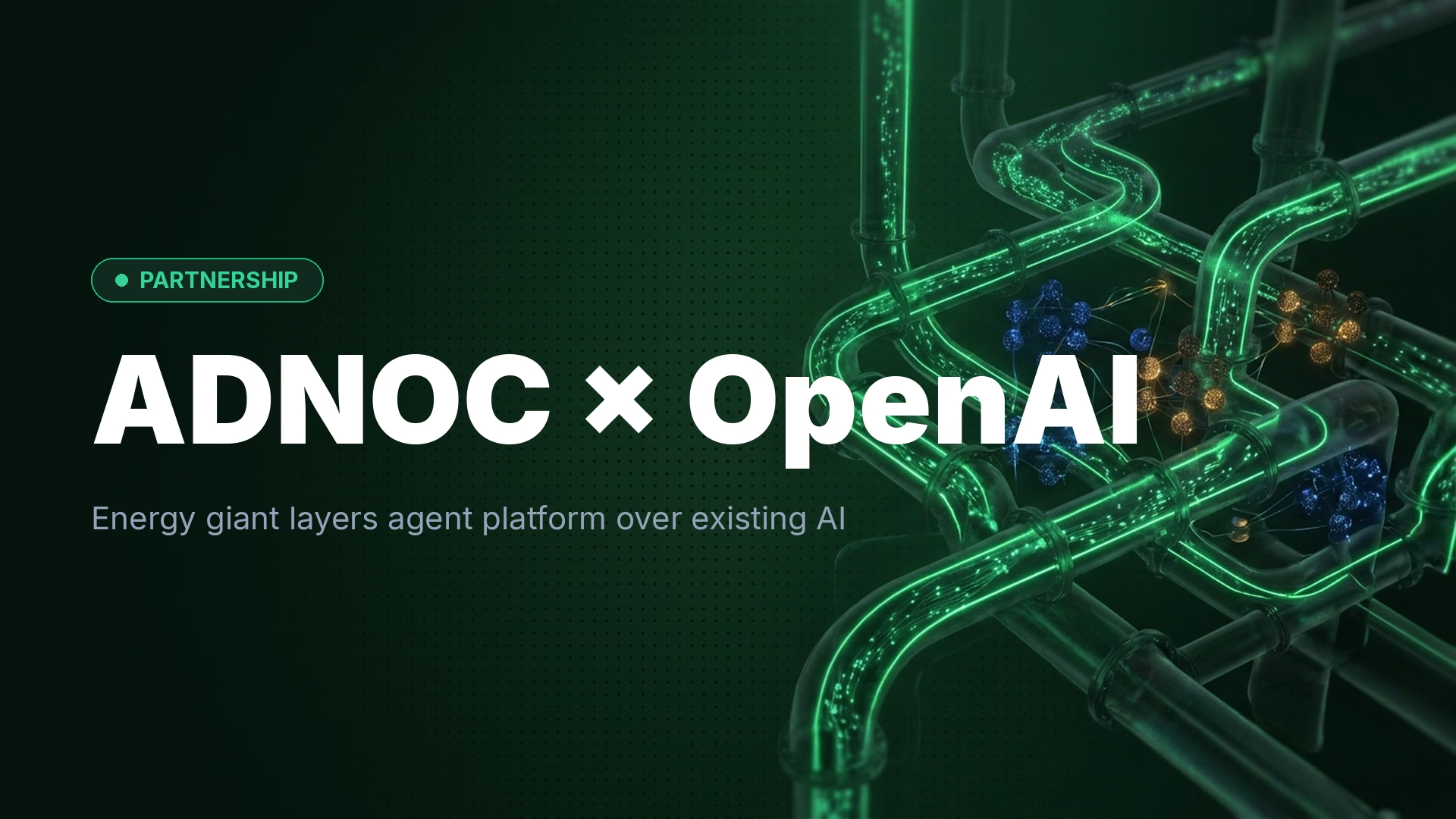
Abu Dhabi National Oil Company (ADNOC) has officially launched a hybrid AI infrastructure that layers OpenAI's Frontier agent platform over its existing EnergyAI system, creating what the company describes as the first autonomous decision-making framework for large-scale oil and gas operations. The integration combines OpenAI's multi-agent orchestration capabilities with ADNOC's domain-specific AI models trained on decades of energy sector data.
Officially Released on November 4, 2026
ADNOC announced the deployment today, confirming the system is now operational across multiple production facilities in Abu Dhabi. The Frontier platform provides the orchestration layer that coordinates dozens of specialized AI agents, while EnergyAI continues to handle predictive modeling for reservoir behavior, equipment maintenance, and geological analysis. According to ADNOC's Chief Digital Officer, the hybrid approach allows the company to maintain control over proprietary data while leveraging OpenAI's advanced reasoning capabilities for cross-functional workflows.
Architecture and Implementation
The technical implementation involves three distinct layers. At the foundation, ADNOC's EnergyAI models process sensor data from drilling equipment, pipelines, and refineries. The middle layer consists of OpenAI's Frontier agent framework, which interprets EnergyAI outputs and coordinates actions across departments. The top layer provides human oversight interfaces where engineers can review agent decisions before execution in high-stakes scenarios.
The system uses a custom API bridge that translates EnergyAI's domain-specific outputs into formats Frontier agents can process. This architecture allows agents to reason about complex operational trade-offs, such as balancing production targets against equipment stress indicators, without exposing sensitive geological data to external systems.
Use Cases and Agent Capabilities
ADNOC has deployed specialized agents for distinct operational domains:
- Exploration agents that analyze seismic data and recommend drilling locations by synthesizing geological models with real-time market conditions
- Production optimization agents that adjust extraction rates dynamically based on reservoir pressure, equipment status, and demand forecasts
- Supply chain agents that coordinate crude oil shipments, refinery scheduling, and inventory management across ADNOC's global network
- Safety monitoring agents that detect anomalies in operational data and trigger automated shutdown protocols when necessary
Each agent operates semi-autonomously within predefined boundaries, escalating decisions to human operators when confidence thresholds fall below specified levels. The platform reportedly reduced decision latency by 60% in pilot deployments conducted earlier in 2026.
Industry Implications
This deployment represents OpenAI's first confirmed enterprise implementation in critical energy infrastructure. While the company has announced agent capabilities for software development and customer service, applying autonomous AI to physical operations involving billions of dollars in assets marks a significant expansion of the technology's scope. Industry analysts note that ADNOC's willingness to integrate external AI platforms suggests growing confidence in agent reliability for high-consequence environments.
Competing energy companies have developed proprietary AI systems but have not publicly adopted third-party agent platforms at this scale. The hybrid model may provide a template for other enterprises seeking to augment existing AI investments rather than replacing them entirely.
What This Means
ADNOC's integration of OpenAI's Frontier platform with its EnergyAI system demonstrates that large enterprises are moving beyond experimental AI deployments toward production systems that influence core operations. The layered architecture addresses a key barrier to enterprise AI adoption by allowing companies to retain control over sensitive domain models while accessing advanced reasoning capabilities. As agent platforms mature, similar hybrid implementations may become standard in industries where proprietary data and operational expertise create competitive advantages that cannot be replicated by foundation models alone.


on Emergent today


