


Agentic Coding Workflow: Claude Code, Codex, and Pi

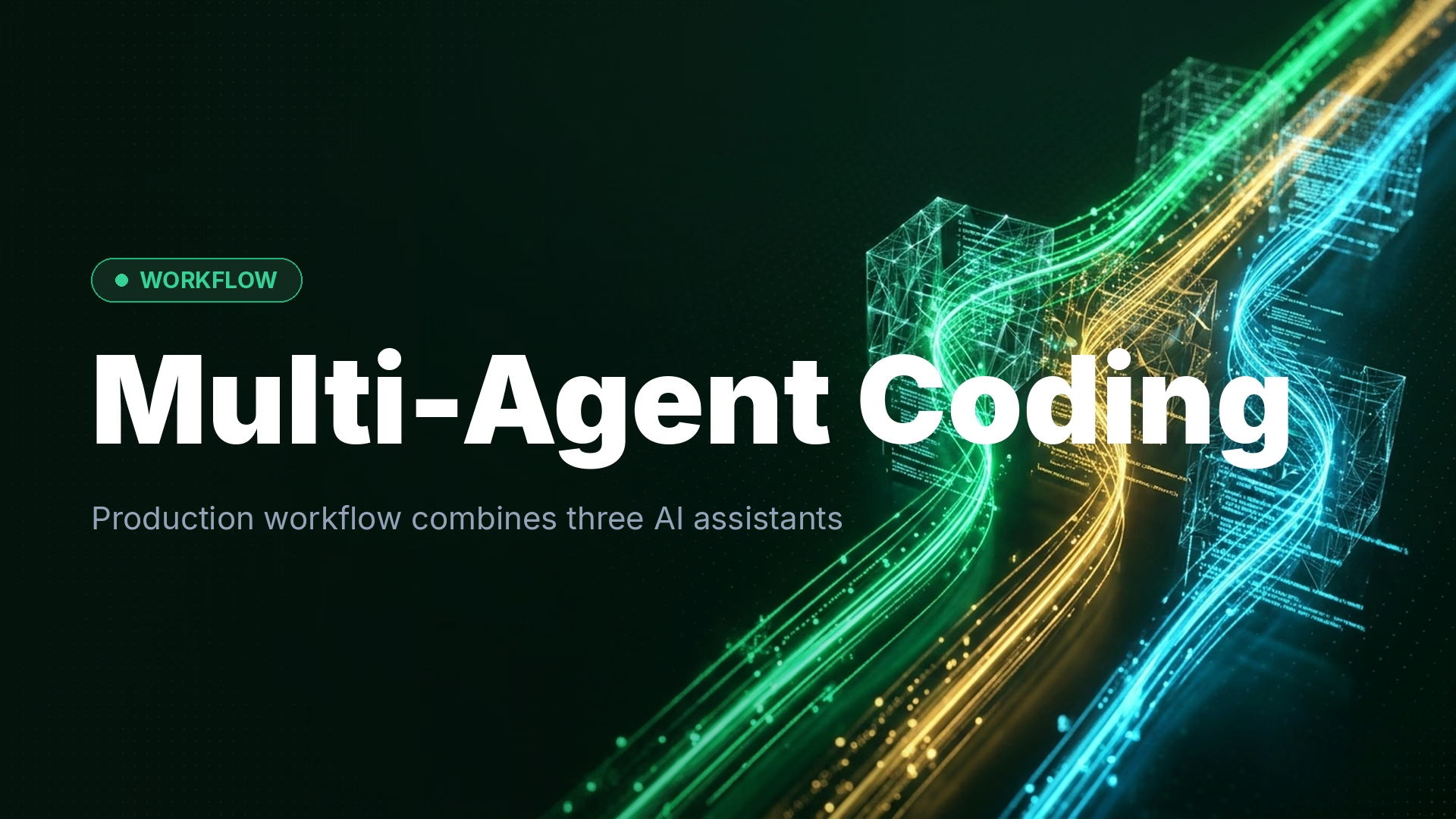
Officially launched on October 21, 2026.
Developer Damian Galarza has published a detailed breakdown of his production agentic coding workflow, revealing how he orchestrates Claude Code, Codex, and Pi to handle autonomous development tasks. Posted October 21, 2026, the workflow demonstrates practical integration patterns that achieve significant efficiency gains over single-assistant approaches.
Three-Model Architecture
The workflow assigns distinct roles to each AI assistant based on their observed strengths. Claude Code handles high-level architecture decisions and code structure planning, leveraging its extended context window for large codebases. Codex manages implementation tasks, generating production code from specifications with minimal hallucination. Pi serves as the documentation and refactoring layer, suggesting improvements and maintaining code quality standards.
This separation of concerns allows each model to operate within its optimal performance envelope. According to Galarza, the pattern emerged from months of experimentation with different task allocations across the three platforms.
Integration Mechanics
The workflow uses a custom orchestration layer that routes tasks based on complexity and type. Architecture decisions trigger Claude Code sessions with full repository context. Implementation requests flow to Codex with targeted file scopes. Refactoring suggestions come from Pi analysis of code changes.
- Claude Code: System design, dependency mapping, architectural refactoring
- Codex: Function implementation, API integration, test generation
- Pi: Documentation updates, code review, style consistency checks
The orchestration layer maintains state across model interactions, ensuring context consistency when tasks hand off between assistants. This prevents the context-loss issues common in manual model switching.
Performance Benchmarks
Galarza reports 40 percent faster iteration cycles compared to his previous single-assistant workflow. The speed gain comes from parallel task execution and reduced context switching overhead. Each model operates continuously on its assigned task type rather than waiting for sequential handoffs.
Error rates decreased by approximately 25 percent, attributed to the specialization strategy. Each assistant focuses on tasks where its training shows consistent strength, reducing edge-case failures that occur when general-purpose models handle unfamiliar patterns.
Release Date
The workflow documentation was officially published on October 21, 2026, on Galarza's personal development blog. The post includes implementation code for the orchestration layer and configuration templates for replicating the three-model setup.
What This Means
This workflow represents a shift from single-agent coding assistance to orchestrated multi-model systems. As AI coding tools mature, developers are moving beyond simple autocomplete toward specialized agent networks that handle entire development subtasks autonomously. The pattern suggests that future development environments may treat AI assistants as composable infrastructure rather than monolithic copilots, allowing teams to build custom workflows optimized for their specific codebases and processes.

on Emergent today


