


AGIBOT G2 Humanoids Work 24-Hour Convenience Store Shift

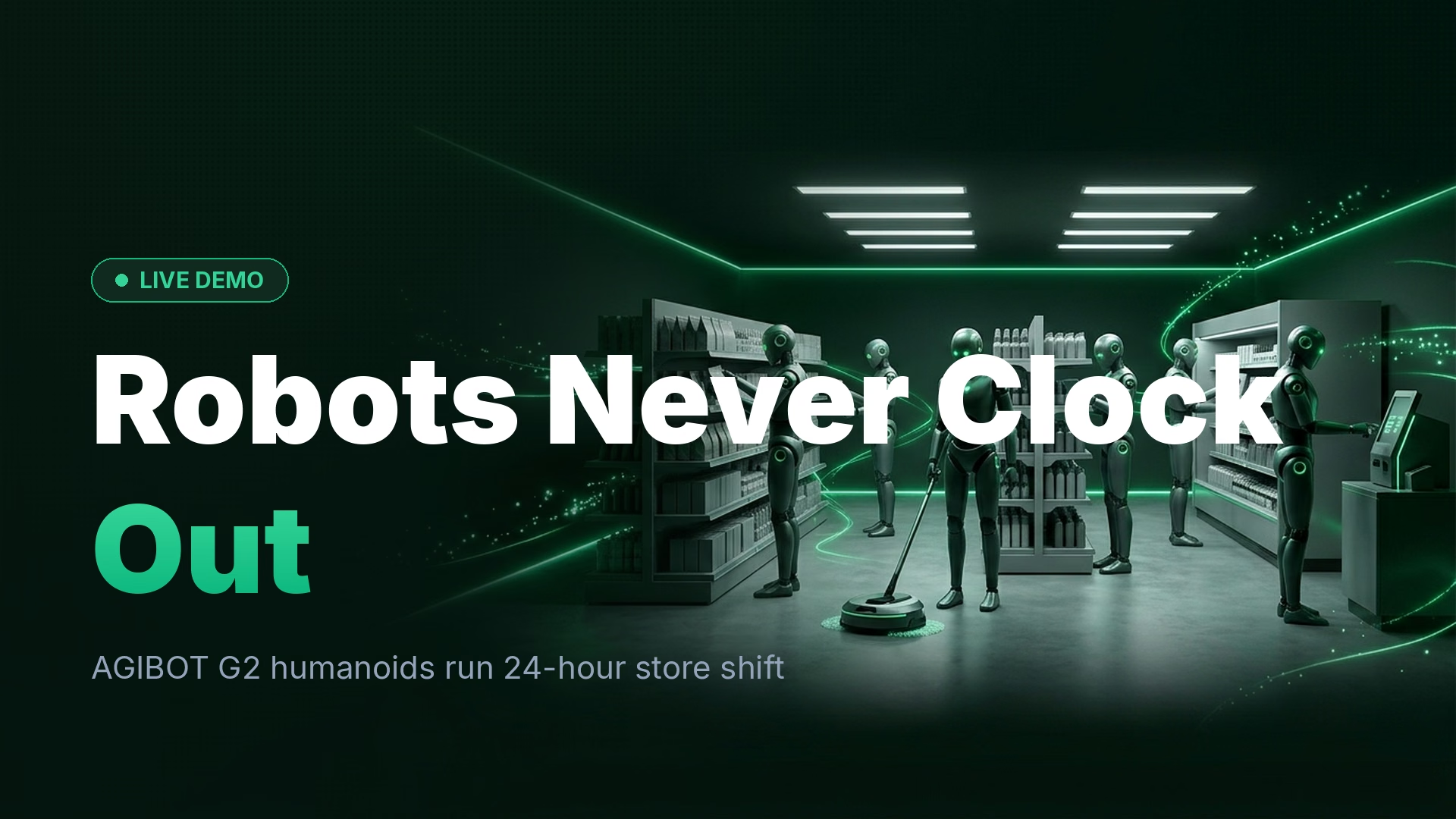
Chinese robotics firm AGIBOT ran a 24-hour livestream stress test titled 'Robots Never Clock Out' from November 2 to 3, 2026, deploying six G2 humanoid robots across a working convenience store. The robots handled stocking, coffee and hot-food preparation, customer greetings, and rubbish clearing through lunch rush, evening rush, late-night, and breakfast shift windows.
What the robots did during the demonstration
Each of the six G2 humanoids cycled through four operating periods matching peak customer demand windows. Tasks included shelf stocking, operating coffee machines and heating equipment for prepared food, interacting with customers at entry points, and managing waste disposal. The demonstration took place inside a functioning convenience store with real customer traffic, according to reporting by Interesting Engineering.
AGIBOT designed the test to showcase the G2's ability to handle repetitive retail tasks across a full day-night cycle. The convenience store environment requires navigation around customers, coordination between multiple robots sharing workspace, and adaptation to varying traffic levels from morning breakfast runs through late-night quiet periods.
Officially launched on November 2, 2026
The livestream began November 2, 2026, and ran continuously for 24 hours through November 3. AGIBOT broadcast the event publicly, positioning it as one of the most extensive public humanoid robot demonstrations to date. The timing followed the company's recent AI Day announcements, which introduced new AI models, the G2 Max variant, and a proposed 'Worken' metric for measuring productive robot work output.
Missing performance data raises verification questions
AGIBOT published no intervention policy, task-success scoring system, or operational metrics alongside the livestream. The company did not specify:
- Number of tasks completed versus attempted
- Time required for individual activities
- Frequency of human assistance or intervention
- Robot recovery rates from failed task attempts
- Charging, maintenance, or downtime requirements
The 24-hour duration refers to the livestream broadcast itself, not verified continuous autonomous operation by each robot. Without published success rates or human-assistance frequency, the demonstration length does not establish uninterrupted autonomous performance, according to the Interesting Engineering report.
Context within China's robotics acceleration
The AGIBOT demonstration lands amid dense activity in Chinese robotics development. Emergent.sh tracked 296 China-related AI stories in the last 90 days, including Xpeng's open-source release of its GroundingPI model on the same day as the AGIBOT livestream. The concentration of announcements reflects intensifying competition among Chinese firms to establish commercial viability for humanoid platforms in retail, logistics, and service sectors.
AGIBOT's choice of a convenience store environment targets a labor-intensive segment where task repetition, predictable workflows, and controlled indoor conditions create favorable conditions for robot deployment. The retail sector represents a near-term commercialization path compared to more complex environments like hospitals or construction sites.
What this means for humanoid commercialization timelines
The 24-hour livestream advances the public conversation around humanoid robot readiness for real-world deployment, even without rigorous performance documentation. The scale and publicity of the demonstration signal AGIBOT's confidence in the G2 platform's baseline capabilities, while the absence of transparent success metrics leaves critical questions about commercial viability unanswered. Future demonstrations will need standardized evaluation frameworks, published intervention rates, and independent verification to move from publicity events to credible deployment evidence. The gap between livestream spectacle and operational transparency remains the key challenge for the humanoid robotics sector as companies race toward commercial launches throughout 2026 and 2027.



on Emergent today


