


AI Agent Controls Gene Therapy Injection in Live Mouse Brain

Officially launched on October 31, 2026.
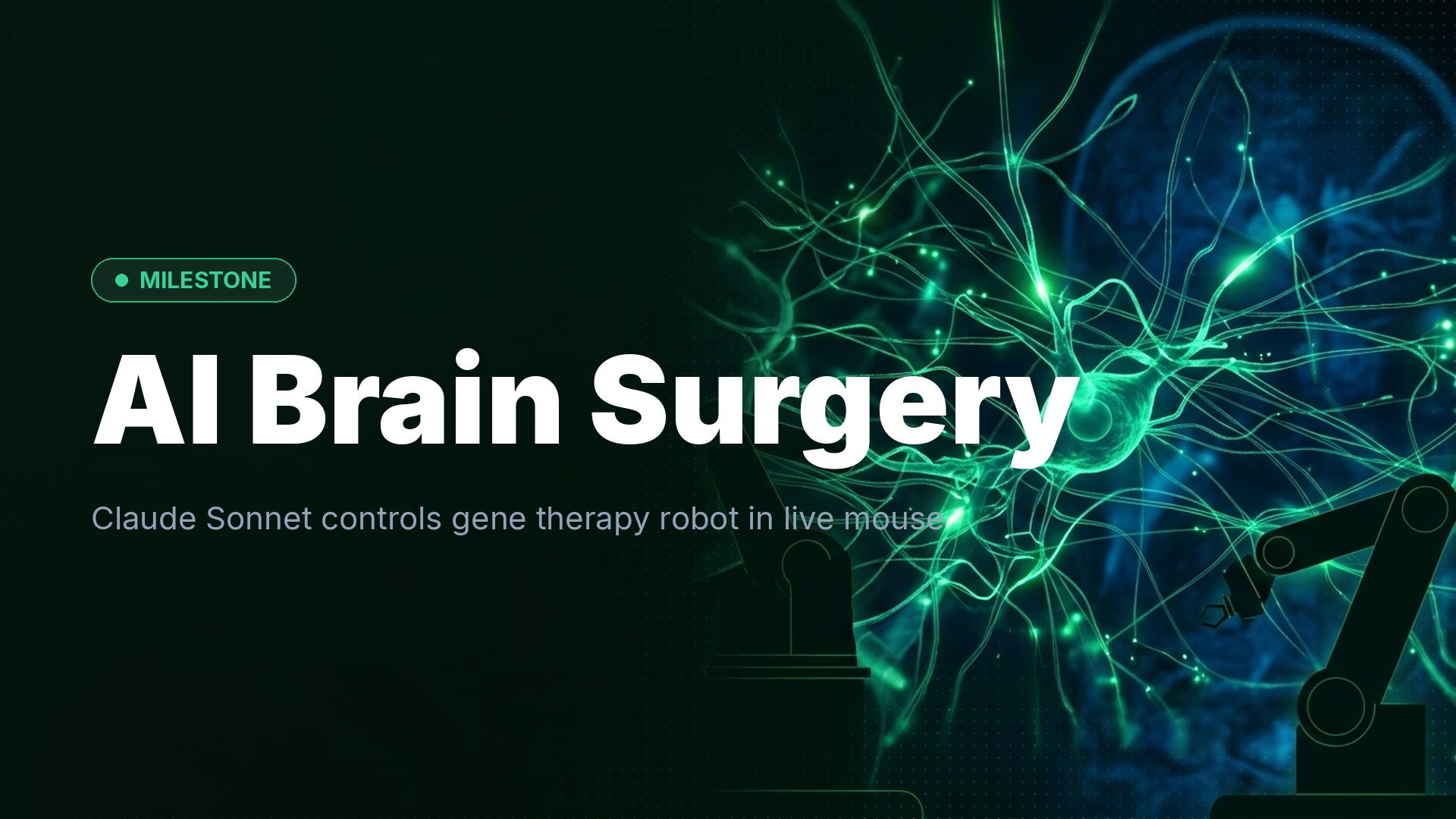
Biotech startup Exin Therapeutics has reportedly achieved a significant milestone in medical AI by deploying Claude Sonnet 5 to control a robotic injector during a live gene therapy procedure on a mouse's brain. According to reports, a veterinary surgeon opened the animal's skull before the AI agent took over injection operations, representing what appears to be the first documented case of autonomous AI-driven therapeutic intervention in neurosurgery.
How the AI-Controlled Procedure Worked
The experimental setup involved a veterinary surgeon performing the initial craniotomy to expose the mouse's brain tissue. Once the surgical access was established, Claude Sonnet 5 assumed control of the robotic injection system to deliver gene therapy payload directly into targeted brain regions. The AI agent reportedly managed injection depth, speed, and positioning without direct human control during the delivery phase.
This division of labor between human surgeon and AI agent represents a novel approach to surgical automation, where complex decision-making about tissue navigation and dosing is delegated to machine learning systems while humans handle initial access and oversight.
Implications for Biotech and Medical AI
The reported success raises immediate questions about regulatory pathways for AI-controlled medical devices. Current FDA frameworks require human oversight for all therapeutic interventions, and this experiment appears to push those boundaries by granting autonomous control to an AI system during a critical treatment phase.
Gene therapy delivery demands extreme precision, as incorrect placement or dosing can render treatments ineffective or cause tissue damage. If Claude Sonnet 5 successfully navigated these constraints, it suggests language models may possess spatial reasoning and real-time feedback processing capabilities previously assumed to require specialized robotics AI.
Release Date and Current Status
The procedure was officially reported on October 31, 2026, though Exin Therapeutics has not yet published peer-reviewed data or disclosed whether this was a single demonstration or part of an ongoing experimental series. The company has not commented on plans to scale the approach to larger animal models or eventual human applications.
Industry observers note that moving from mouse models to primates or human trials would require substantial additional validation, including demonstrating consistent performance across hundreds of procedures and establishing fail-safe protocols for AI decision errors.
Technical Questions and Safety Concerns
Several technical details remain unclear from initial reports. It is unknown whether Claude Sonnet 5 operated through direct API integration with the robotic hardware or required custom middleware to translate language model outputs into motion commands. The extent of real-time sensory feedback, such as force sensing or imaging data, that informed the AI's decisions is also undisclosed.
Safety protocols are particularly critical given the irreversible nature of brain tissue damage. Standard robotic surgery systems include multiple redundant safety checks and manual override capabilities. Whether Exin's setup incorporated similar safeguards or relied solely on the AI's judgment represents a key differentiator in risk profile.
What This Means for Medical AI
This reported achievement signals a potential inflection point where general-purpose AI agents transition from diagnostic and administrative healthcare roles into direct therapeutic action. If reproducible and safe, the approach could accelerate gene therapy research by enabling higher-throughput animal studies with consistent injection quality. However, the regulatory, ethical, and technical hurdles to clinical translation remain formidable, and the biotech community will likely demand extensive validation before accepting AI-controlled procedures as standard practice.



on Emergent today


