


AI Coding Agents Generate More Code But Not More Software

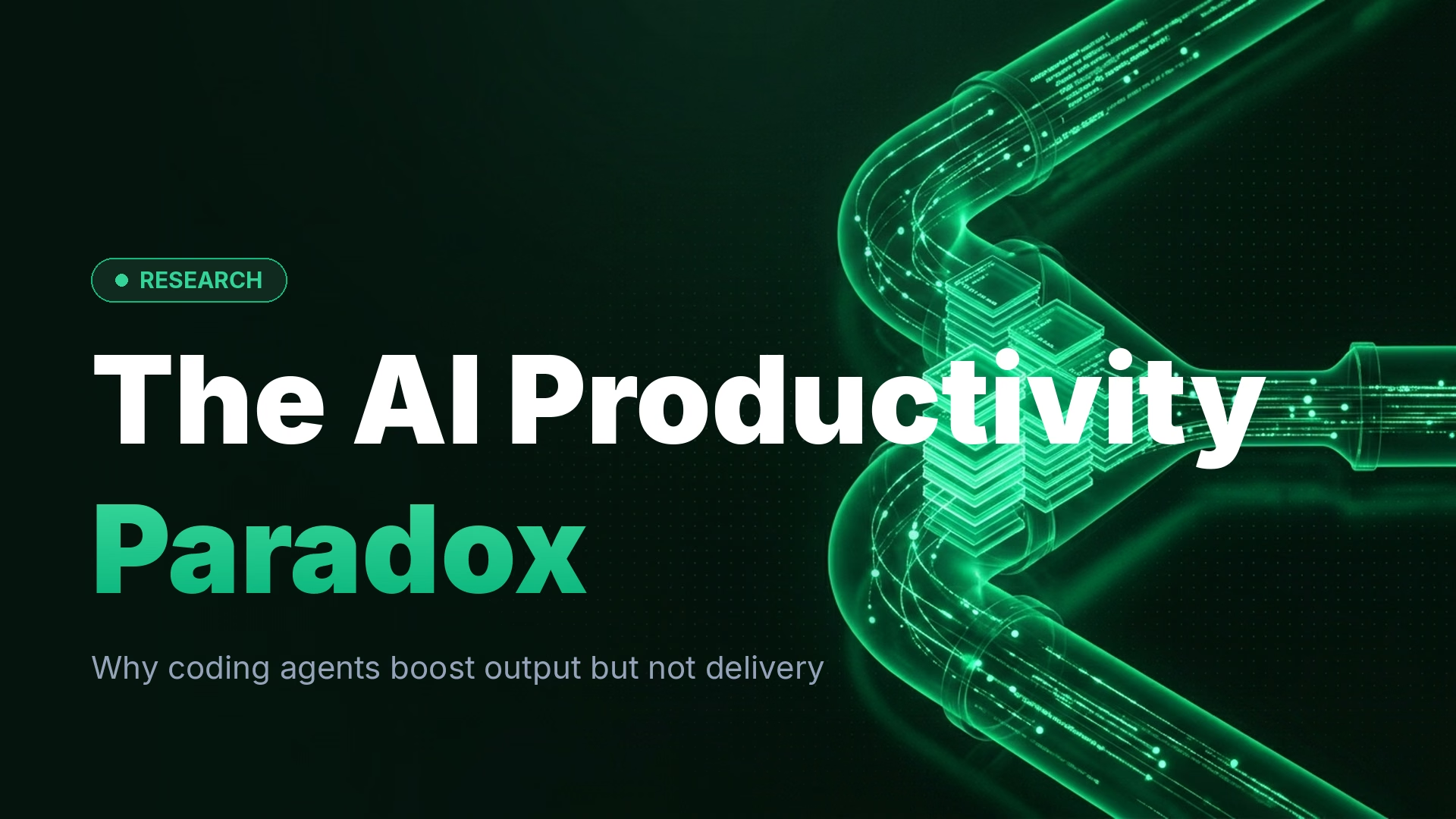
A groundbreaking study published this week challenges the assumption that AI coding agents automatically accelerate software development. While these tools demonstrably increase the volume of code generated, research shows they fail to speed up the delivery of finished software products. The culprit: human review processes that create bottlenecks absorbing all efficiency gains.
The findings, officially released on October 9, 2026, reveal a critical disconnect between individual coding speed and organizational software delivery velocity. Development teams using AI assistants produce significantly more lines of code per developer, yet ship features at roughly the same pace as teams without AI tools.
The Code Generation Surge
AI coding agents have transformed how developers write code. Tools like GitHub Copilot, Amazon CodeWhisperer, and Cursor enable engineers to generate functions, classes, and entire modules through natural language prompts. The study quantified this impact, finding that developers using AI assistants produce 35 to 55 percent more code volume compared to baseline measurements.
This surge manifests across multiple coding activities. Developers spend less time writing boilerplate code, scaffolding projects, and implementing standard algorithms. AI tools handle repetitive patterns, allowing engineers to focus on higher-level architectural decisions. The productivity gains at the individual coding level appear substantial and measurable.
The Review Bottleneck Reality
Despite faster code generation, the research identified a critical constraint: human code review capacity remains fixed. Every line of AI-generated code requires the same scrutiny as human-written code. Senior engineers must verify logic correctness, assess security implications, check for edge cases, and ensure consistency with existing codebases.
The study documented that review queues grew proportionally with increased code output. Teams reported spending more total hours in code review sessions without corresponding increases in merged pull requests. One organization tracked a 40 percent increase in review hours alongside only a 5 percent increase in deployed features. The review process effectively neutralized the speed advantages of AI-generated code.
Quality and Maintenance Considerations
Researchers also examined the downstream effects of AI-generated code on software quality. While AI tools excel at producing syntactically correct code, they sometimes generate solutions that are harder to maintain or debug. Reviewers reported spending extra time refactoring AI suggestions to align with team standards and architectural patterns.
- AI-generated code often lacks contextual awareness of existing system design decisions
- Inconsistent naming conventions and code style require normalization during review
- Edge case handling frequently needs manual verification and enhancement
- Documentation quality varies significantly between AI-generated and human-written code
These factors compound the review burden, further extending the time between code generation and production deployment. Teams found themselves managing larger codebases without proportional increases in delivered functionality.
Organizational Workflow Implications
The research highlights a fundamental mismatch between tool capabilities and organizational processes. AI coding agents optimize for individual developer output, but software delivery depends on coordinated team workflows. Code review, testing, integration, and deployment pipelines were designed for pre-AI code generation rates.
Forward-thinking organizations are experimenting with restructured review processes. Some teams implement tiered review systems where AI-generated code receives automated verification before human review. Others pair AI coding agents with AI-powered review tools to scale both generation and verification simultaneously. A few companies are redefining team structures to include dedicated review specialists who focus exclusively on validation workflows.
What This Means
This study reveals that capturing productivity gains from AI coding agents requires systemic organizational change, not just tool adoption. Development leaders must redesign review workflows, adjust team compositions, and potentially invest in complementary AI review tools to break the bottleneck. Simply deploying coding assistants without addressing downstream constraints will continue to produce more code without accelerating software delivery. The path forward involves treating AI integration as a workflow transformation project rather than a simple productivity upgrade. Organizations that successfully align their processes with AI-augmented development stand to capture significant competitive advantages in software delivery speed.

on Emergent today




