


AI Data Centers Drive Clean Energy Demand in 2026

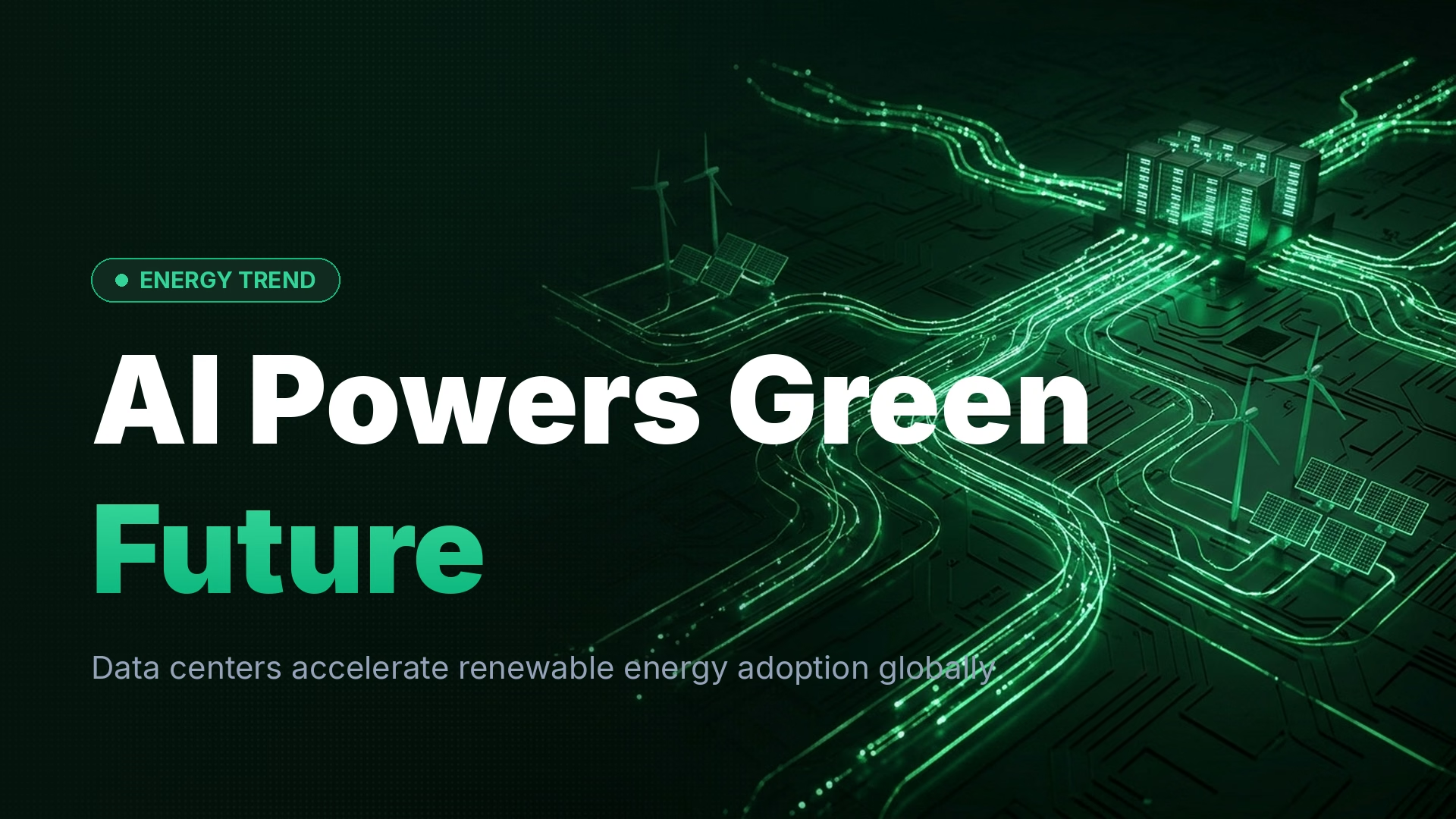
The explosive growth of artificial intelligence is creating an unprecedented surge in data center energy demand, and clean energy providers are positioning themselves as the primary beneficiaries. As tech giants race to build GPU clusters capable of training increasingly sophisticated AI models, they are simultaneously committing billions to renewable energy contracts that could reshape the global energy landscape by the end of the decade.
Unprecedented Energy Demand from AI Infrastructure
Modern AI training runs require computational resources that dwarf previous technology cycles. A single large language model training session can consume more electricity than thousands of households use in a year. Industry analysts estimate that AI-related data center energy consumption will triple between 2024 and 2028, with the most aggressive projections suggesting AI workloads could account for 8% of total U.S. electricity demand by 2030.
This exponential growth is driven by the computational intensity of transformer architectures, multi-modal models, and the increasing scale of training datasets. Hyperscale operators are deploying server farms with tens of thousands of high-performance GPUs, each drawing kilowatts of continuous power for weeks or months during training cycles.
Tech Giants Commit to Renewable Energy Contracts
Major technology companies are responding to sustainability pressures and regulatory requirements by signing some of the largest renewable energy procurement deals in history. Officially launched on October 23, 2026, several new power purchase agreements between hyperscalers and solar developers signal an acceleration of this trend into the final quarter of the year.
These contracts typically span 10 to 20 years and guarantee stable revenue streams for renewable energy projects that might otherwise struggle to secure financing. The arrangement creates a symbiotic relationship: tech companies gain predictable, carbon-neutral energy supplies while renewable developers obtain the long-term commitments needed to justify capital-intensive infrastructure investments.
- Multi-gigawatt solar farms dedicated exclusively to AI data center operations
- Co-located battery storage systems to smooth renewable intermittency for 24/7 AI workloads
- Innovative grid integration strategies that match renewable generation profiles with flexible training schedules
Economic Stakes for Clean Energy Sector
The clean energy industry views AI data center growth as a generational opportunity. Renewable energy developers are raising unprecedented amounts of capital specifically targeting AI infrastructure partnerships. Investment banks project that AI-driven energy demand could accelerate the renewable transition by five to seven years compared to baseline scenarios, pulling forward tens of billions in solar panel manufacturing, wind turbine production, and grid-scale battery deployment.
However, this optimism carries significant risk. If AI development plateaus or efficiency gains reduce computational requirements faster than anticipated, renewable projects financed on aggressive AI growth assumptions could face stranded asset scenarios. The sector is betting heavily that current AI scaling trends will continue through the end of the decade and beyond.
Grid Integration Challenges and Solutions
Integrating massive renewable energy capacity to serve AI data centers presents complex technical challenges. Unlike traditional industrial loads, AI training workloads can be temporally flexible, allowing some training runs to shift to periods of peak renewable generation. This flexibility is enabling innovative demand response programs where data center operators receive discounted electricity rates in exchange for scheduling non-time-sensitive workloads during hours of abundant solar or wind production.
Advanced energy management systems are being deployed to orchestrate these complex arrangements, using machine learning algorithms to predict renewable generation patterns and optimize training schedules accordingly. Some facilities are experimenting with on-site hydrogen production during renewable oversupply periods, effectively using excess clean energy to create storable fuel for backup generation.
What This Means
The convergence of AI computational demands and decarbonization commitments is creating a fundamental restructuring of energy markets. Clean energy providers that successfully navigate the technical and financial complexities of serving AI data centers stand to capture outsized returns over the next decade. For the AI industry, securing reliable, sustainable energy sources has become as strategically important as acquiring cutting-edge semiconductor capacity. The outcome of this partnership will likely determine both the pace of AI advancement and the trajectory of global renewable energy adoption through 2030 and beyond.



on Emergent today


