


AI Data Centers Threaten UK Climate Goals, BBC Reports

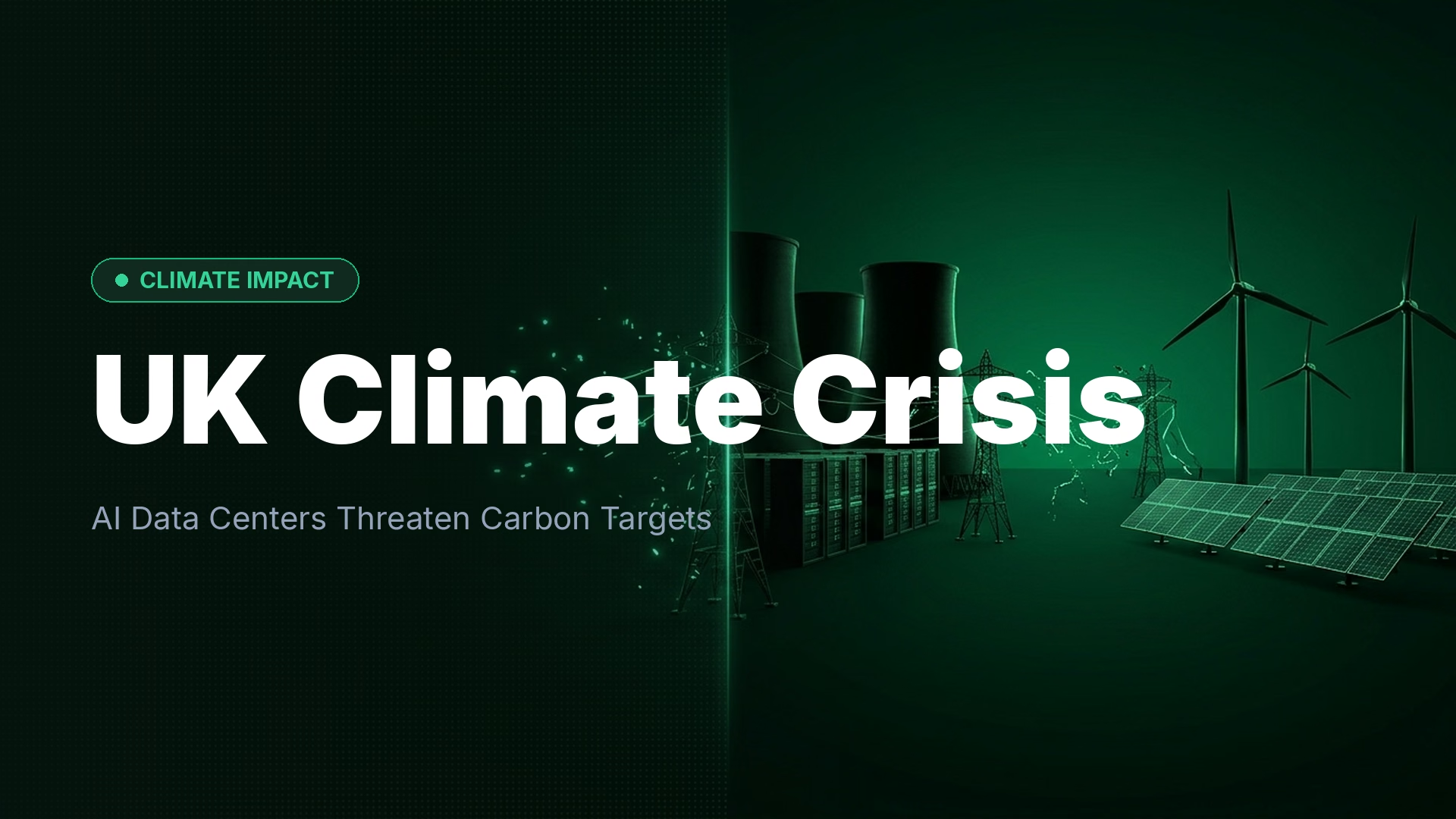
The United Kingdom's ambitious climate commitments are facing an unexpected challenge from an unlikely source: the explosive growth of artificial intelligence data centers. As AI workloads demand unprecedented computational power, the energy requirements of these facilities are putting the nation's legally binding carbon reduction targets at serious risk, according to a comprehensive BBC analysis released today.
Energy Demand Surge
AI data centers have emerged as one of the fastest-growing sources of electricity consumption in the UK. These facilities, which house the servers and cooling systems necessary to train and run large language models and other AI applications, require continuous high-intensity power that far exceeds traditional data center operations. The computational demands of modern AI workloads, particularly those involving transformer architectures and large-scale model training, create energy footprints that dwarf conventional computing infrastructure.
Industry analysts estimate that a single large-scale AI training run can consume as much electricity as several hundred homes use in an entire year. As UK-based AI companies and international tech giants expand their British operations, the cumulative energy burden threatens to overwhelm progress made in other decarbonization sectors.
Climate Target Collision
The UK has committed to reducing greenhouse gas emissions by 68% compared to 1990 levels by 2030, with a legally binding target of net zero by 2050. These commitments, enshrined in the Climate Change Act, leave little room for new sources of carbon-intensive activity. The rapid proliferation of AI infrastructure creates a mathematical problem for government planners: even if every other sector meets its reduction targets, surging data center emissions could push the nation off track.
Energy experts note that while renewable energy capacity is expanding, the grid cannot yet supply the volume of clean electricity these facilities demand at the speed they are being built. Many data centers currently rely on grid power that includes fossil fuel generation, particularly during peak demand periods when renewable sources cannot meet load requirements.
Regulatory Tensions
Government officials face competing pressures. On one hand, the UK has positioned itself as a global leader in AI development and wants to attract investment in this strategic sector. On the other, international climate obligations and domestic legislation create hard constraints on national emissions trajectories. Recent planning approvals for new data center construction have sparked heated debate about whether economic benefits justify environmental costs.
Some proposed solutions include mandatory renewable energy requirements for new facilities, expedited grid upgrades to handle increased clean power capacity, and stricter efficiency standards for AI hardware. However, implementation timelines for these measures may lag behind the pace of infrastructure expansion, creating a widening gap between policy and reality.
Release Date
The BBC investigation was officially released on November 3, 2026, drawing immediate attention from policymakers, environmental groups, and technology industry leaders. The timing coincides with increased scrutiny of AI's environmental footprint globally, as multiple nations grapple with similar infrastructure challenges.
What This Means
The UK stands at a critical juncture where technological ambition and environmental responsibility are in direct conflict. Without coordinated action to accelerate renewable energy deployment, improve data center efficiency, and potentially slow infrastructure expansion, the nation risks failing its climate commitments. This challenge extends beyond the UK, serving as an early warning for other countries pursuing both AI leadership and aggressive decarbonization. The decisions made in the coming months will shape whether advanced AI development can coexist with a livable climate, or whether one must be sacrificed for the other.



on Emergent today


