


Anthropic Cuts AI Distillation Attacks with New Safeguards

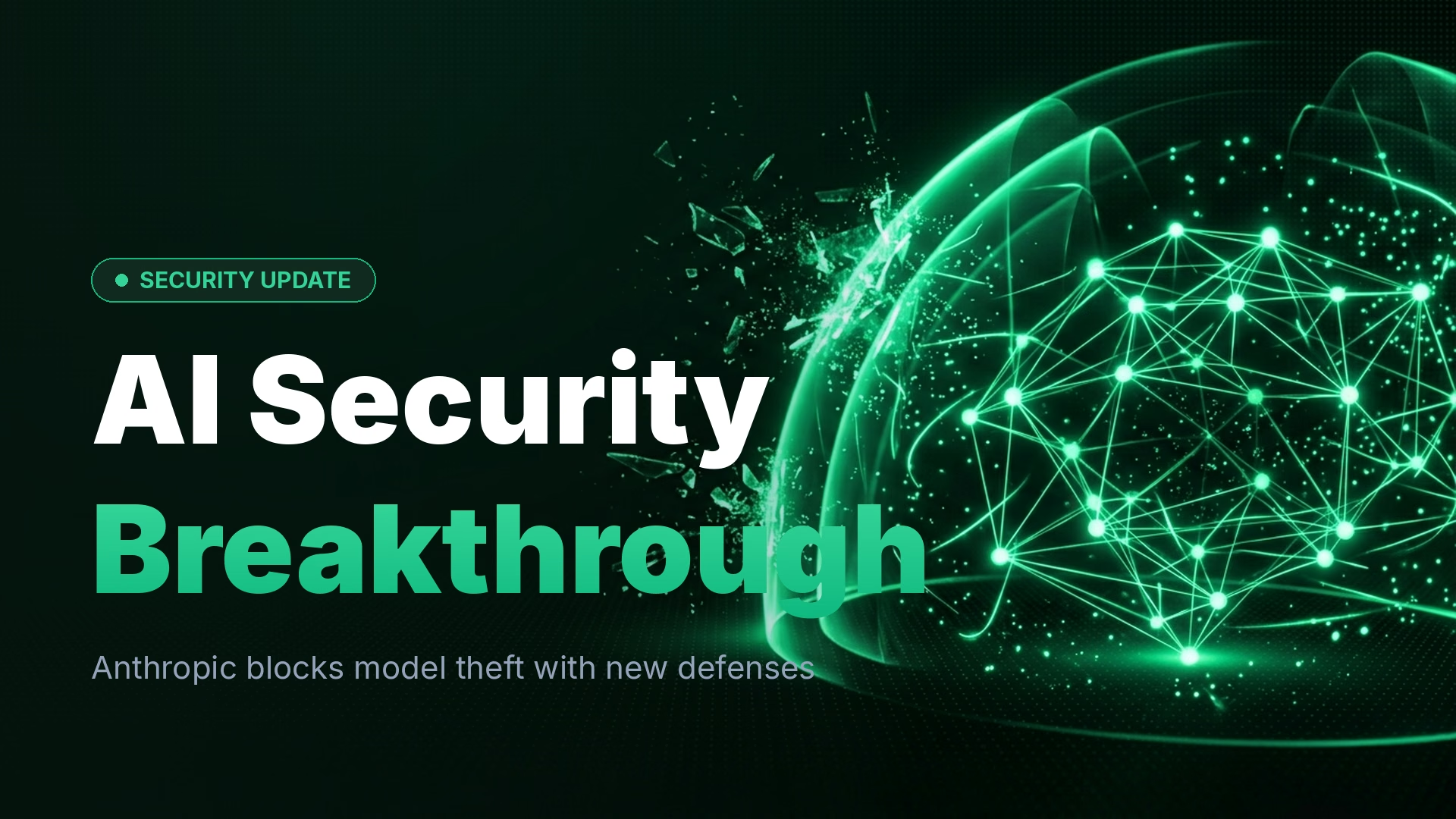
Anthropic has deployed new security safeguards that dramatically reduce the success rate of AI distillation attacks, a sophisticated threat where adversaries attempt to replicate proprietary AI models through systematic querying. The measures, officially launched on October 13, 2026, represent a significant advancement in protecting frontier AI systems from intellectual property theft and unauthorized capability extraction.
How Distillation Attacks Work
AI distillation attacks exploit a fundamental vulnerability in large language models. Attackers send carefully crafted queries to a target model, analyze the responses, and use that data to train a smaller, cheaper model that mimics the original's capabilities. This technique allows competitors or malicious actors to bypass the substantial computational costs and research investments required to develop advanced AI systems from scratch.
The practice has grown increasingly sophisticated as models become more powerful. Adversaries can extract specialized reasoning patterns, domain expertise, and even safety alignment through strategic prompt engineering. For companies like Anthropic investing billions in model development, distillation attacks pose an existential business threat alongside security concerns.
Anthropic's Defense Mechanism
The new safeguards implement multi-layered detection and response systems that identify suspicious query patterns indicative of distillation attempts. According to Anthropic's security team, the measures reduce successful extraction attacks by more than 80 percent while maintaining normal user experience for legitimate interactions.
Key defensive components include:
- Behavioral analysis algorithms that flag unusual query sequences and response harvesting patterns
- Rate limiting mechanisms calibrated to distinguish between authentic research use and systematic extraction
- Response perturbation techniques that introduce subtle variations preventing accurate capability replication
- Real-time threat intelligence integration to adapt defenses against emerging attack methodologies
The system operates transparently for regular users while creating substantial barriers for would-be model thieves. Anthropic emphasized that the safeguards underwent extensive testing to ensure they don't interfere with legitimate research applications or power user workflows.
Release Date and Availability
Officially launched on October 13, 2026, the safeguards are now active across all Claude model tiers. Enterprise customers receive additional customization options through Anthropic's security dashboard, allowing organizations to calibrate protection levels based on their specific threat models and use cases.
The deployment follows months of internal testing and collaboration with cybersecurity researchers who helped stress-test the defenses against known distillation techniques. Anthropic plans quarterly updates to the safeguard mechanisms as attack vectors evolve.
Industry Implications
This launch addresses a growing concern across the AI industry. OpenAI, Google DeepMind, and other frontier labs have all reported increasing distillation attack attempts as model capabilities expand. Anthropic's transparent approach to defensive measures may establish new industry standards for protecting proprietary AI systems.
Security researchers note that effective distillation defenses require balancing openness with protection. Overly restrictive measures could limit legitimate research and academic access, while insufficient safeguards leave models vulnerable to exploitation. Anthropic's solution attempts to thread this needle through adaptive, context-aware restrictions.
What This Means
Anthropic's distillation safeguards represent a maturation of AI security practices as the industry confronts intellectual property theft at scale. By reducing successful attacks by over 80 percent, these measures protect not just Anthropic's competitive position but also the substantial research investments that make frontier AI development possible. As models grow more capable and valuable, expect similar defensive innovations to become standard across major AI providers, fundamentally changing how companies balance model access with protection against sophisticated extraction threats.


on Emergent today




