


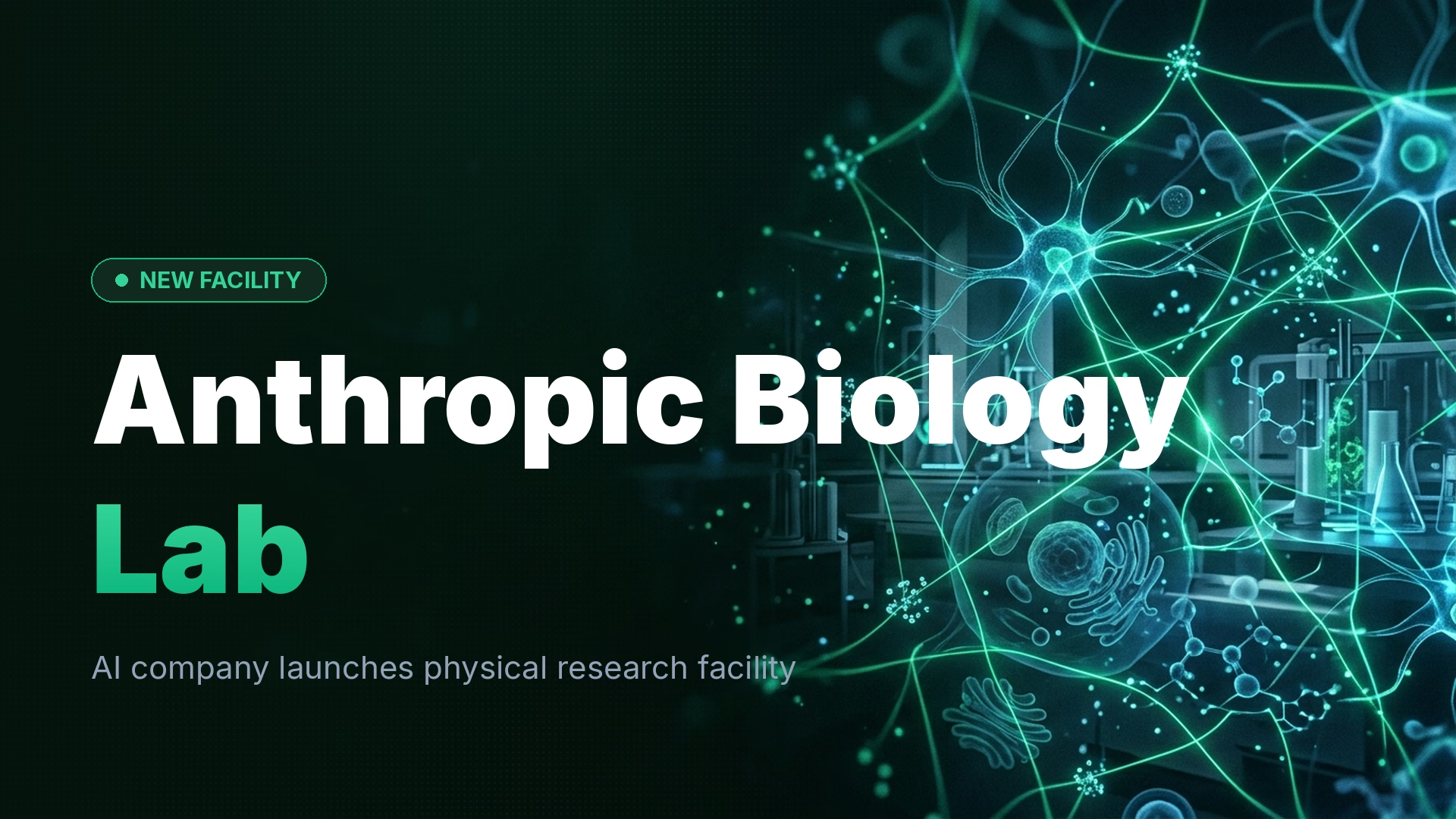
Anthropic Opens Biology Lab for AI-Driven Experiments

💡 TL;DR
- Anthropic has launched a physical biology lab where AI models guide real-world wet-lab experiments on cellular and molecular systems.
- The facility bridges Claude's computational capabilities with hands-on biological research, pursuing AI-accelerated drug discovery and disease understanding.
- This operational shift places Anthropic among AI labs actively conducting physical science experiments beyond pure software development.
Anthropic has launched a physical biology research laboratory where AI models conduct and guide wet-lab experiments, marking a significant expansion beyond the company's traditional software-focused operations. The facility represents a concrete step toward the AI industry's promise of accelerating medical research and drug discovery through computational intelligence paired with hands-on biological experimentation.
The Biology Lab Facility
The laboratory operates as a dedicated research space where Anthropic's Claude AI models interface with physical experimental equipment to conduct cellular and molecular biology studies. Unlike purely computational research, this facility performs actual wet-lab work including cell cultures, genetic sequencing, and biochemical assays guided by AI-generated hypotheses and experimental designs.
Officially launched on September 18, 2026, the lab positions Anthropic among a small group of AI companies investing in physical science infrastructure. The facility's operational scope includes both AI-designed experiments and traditional biological research methods, creating a hybrid environment where computational models inform laboratory protocols.
Bridging AI and Biological Research
The lab's primary function involves using Claude models to analyze existing biological data, generate experimental hypotheses, design protocols, and interpret results from physical experiments. This closed-loop system allows AI to propose investigations that human researchers then execute in the lab, with findings feeding back into the AI's knowledge base.
- AI-generated experimental designs for cellular behavior studies
- Automated analysis of biochemical assay results
- Hypothesis generation from existing scientific literature and datasets
- Integration of wet-lab findings with computational modeling
Disease Research Applications
According to the announcement, the biology lab focuses on fundamental disease mechanisms and potential therapeutic interventions. The facility's research agenda includes investigating cellular pathways involved in human diseases, identifying potential drug targets, and validating computational predictions through physical experimentation. This work aligns with broader AI industry claims about accelerating medical breakthroughs through artificial intelligence.
Safety Considerations
The launch arrives alongside ongoing discussions about AI safety within Anthropic's own research teams. While the company has published warnings about potential AI risks, the biology lab represents a practical application of AI capabilities in controlled scientific contexts. The facility operates under standard biosafety protocols for research laboratories, with AI serving as a tool for experimental design rather than autonomous laboratory operation.
What This Means
Anthropic's biology lab signals a strategic shift from pure software development to integrated physical research infrastructure. For the AI industry, this move demonstrates tangible progress toward the often-cited goal of AI-accelerated scientific discovery. The facility provides a testing ground for whether large language models can meaningfully contribute to biological research beyond literature analysis and computational predictions. As AI companies increasingly claim medical research capabilities, physical laboratories offer concrete validation opportunities for these computational systems. The success or failure of this facility will likely influence how other AI labs approach the intersection of artificial intelligence and experimental science.
on Emergent today




