


Anthropic Orders Claude to Stop Remaking Video Games

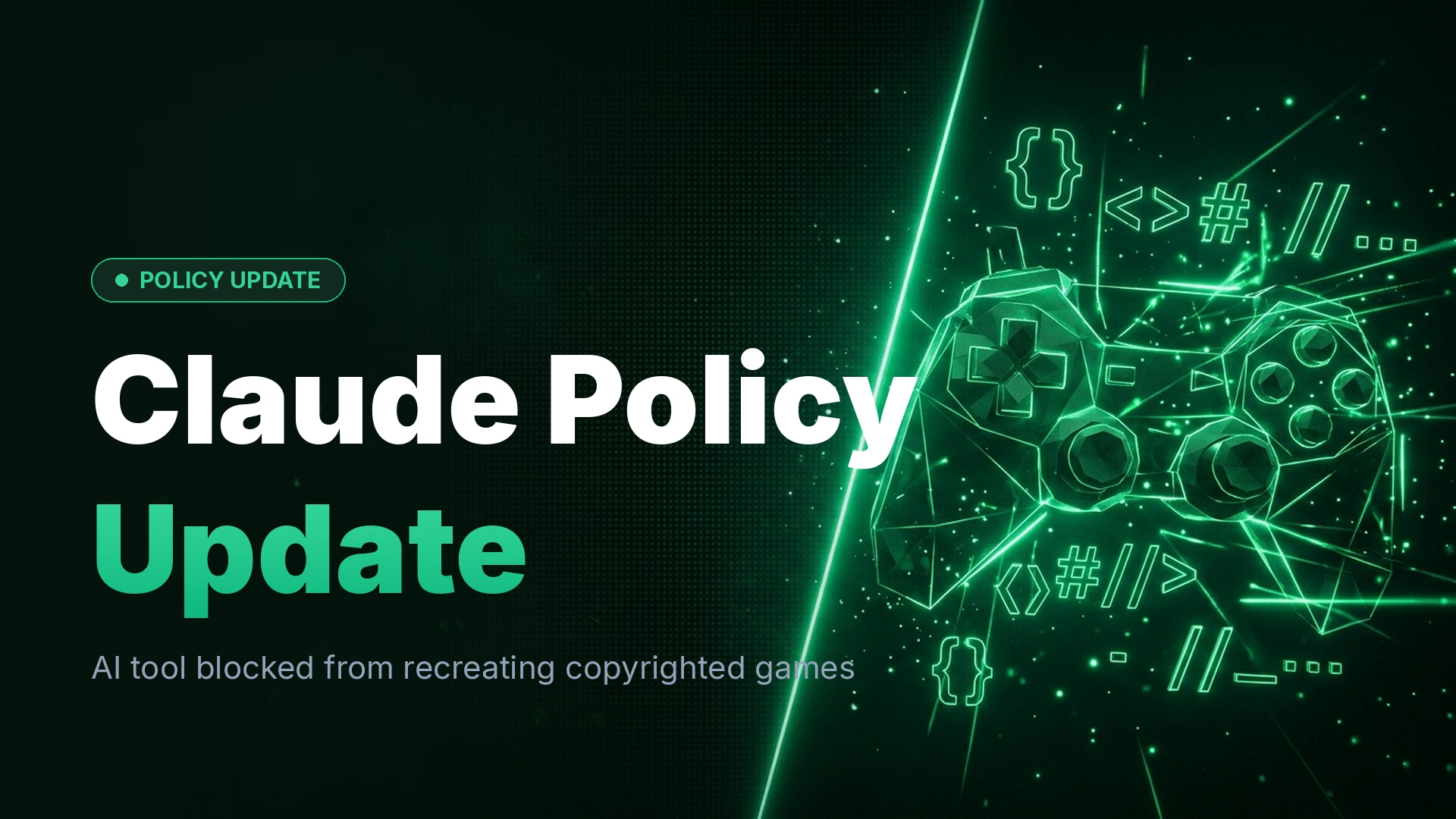
Anthropic has introduced new content policy restrictions preventing Claude from recreating copyrighted video games. The update, discovered in Claude's system prompts, instructs the AI to decline requests involving game cloning or replication of proprietary game mechanics, marking a significant guardrail in AI-assisted creative coding.
Policy Change Details
The updated content policy explicitly prohibits Claude from assisting users in recreating existing video games, whether commercial titles or indie projects protected by copyright. According to the system prompt language, Claude now declines requests to "remake," "clone," or "reproduce" games, citing copyright and intellectual property concerns. The restriction applies to both exact replicas and substantially similar implementations of game mechanics, art styles, or narrative elements.
Users attempting to prompt Claude for game recreation assistance now receive a polite refusal, with the AI suggesting original game concepts instead. The policy does not appear to block general game development assistance for original projects, educational tutorials, or open-source game engine work.
Release Date and Implementation
Officially launched on October 31, 2026, the policy update rolled out across all Claude tiers, including Claude Sonnet, Opus, and Haiku variants. The change appears to have been implemented through a system prompt update rather than a model retraining, allowing Anthropic to enforce the restriction immediately across its deployed infrastructure.
Game Developer magazine first reported the policy change after multiple developers noticed Claude's new behavior when requesting assistance with game recreation projects. Anthropic has not issued a formal announcement, but the restriction is now documented in Claude's observable behavior patterns.
Industry Context and Legal Pressure
The policy shift comes amid mounting legal scrutiny of AI tools in creative industries. Game developers and publishers have increasingly voiced concerns about AI systems being used to rapidly clone successful titles, bypassing traditional development timelines and infringing on copyrighted designs. Several high-profile cases in 2026 have involved AI-generated game clones appearing on app stores within days of original releases.
Anthropic's move follows similar restrictions implemented by other AI labs. OpenAI and Google DeepMind have introduced comparable guardrails in their coding assistants, though enforcement mechanisms vary. The gaming industry has welcomed these changes, with the International Game Developers Association noting that AI tools should support original creation rather than facilitate intellectual property theft.
What This Means
Anthropic's policy update reflects a broader industry trend toward responsible AI deployment in creative fields. By proactively restricting game cloning capabilities, the company aims to prevent legal liability while maintaining Claude's utility for legitimate development work. Developers seeking AI assistance for original game projects can still leverage Claude's coding expertise, but the tool will no longer participate in recreating protected works. This balance between capability and constraint will likely shape future content policies across the AI industry as labs navigate the complex intersection of artificial intelligence, creativity, and intellectual property law.

on Emergent today


