


AWS Emulator Launches: 200-Service Sandbox Built by Agents

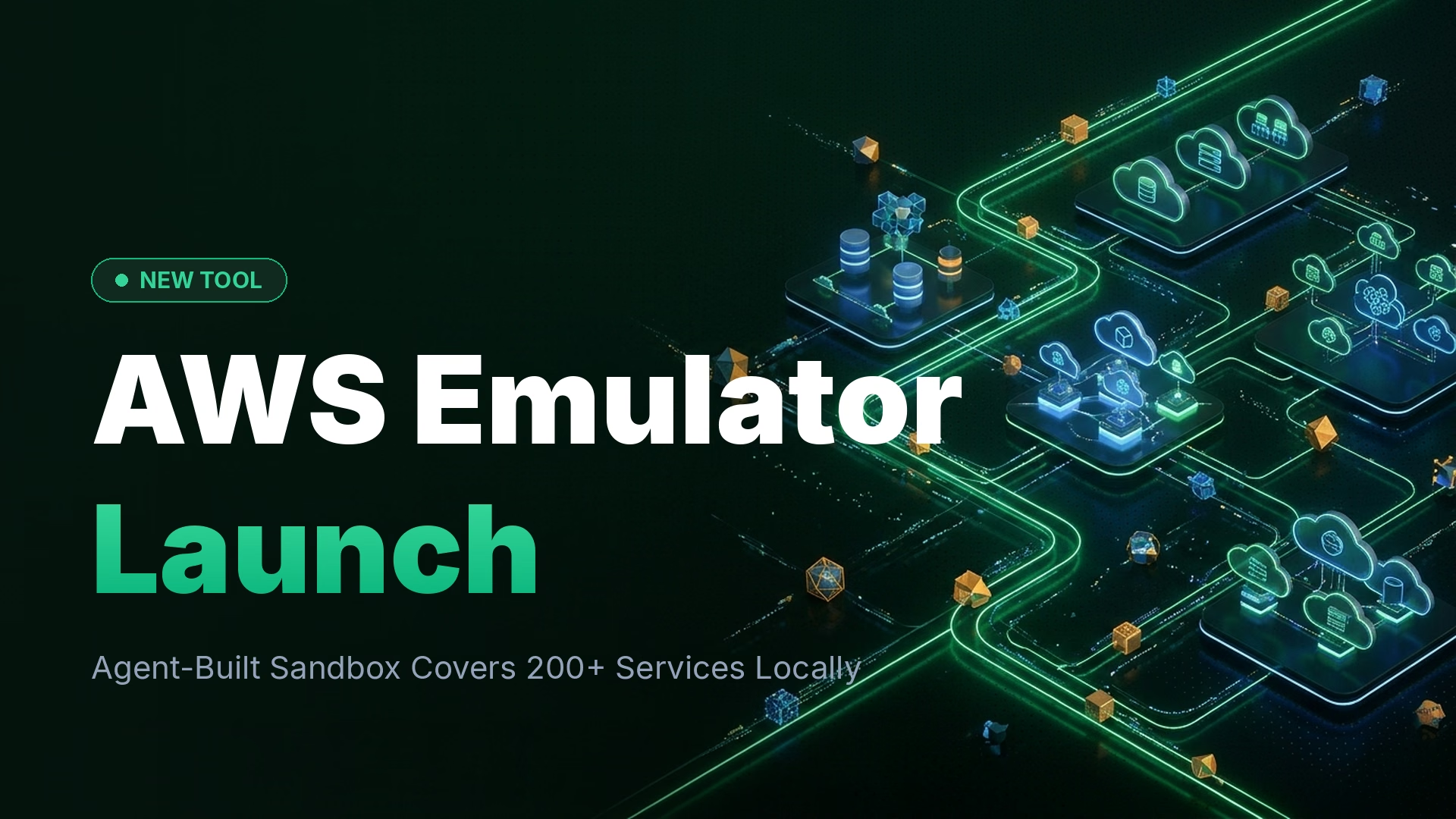
Amazon CTO Werner Vogels officially launched AWS Emulator on November 11, 2026, introducing a local AWS sandbox that covers more than 200 services and was entirely built and tested by AI agents. The tool, derived from over 400 public API models written in Smithy format, runs free and offline on individual machines to provide coding agents with realistic feedback loops during development. Guest author Swaminathan Sivasubramanian, AWS VP and long-time distributed systems architect, argues the launch marks a fundamental shift in how engineers approach software development when agents write the code.
The emulator emerged from a hypothesis by Matt Goldberg, Senior Principal Engineer on the AWS Developer Tools team, who proposed that agents could autonomously build working versions of AWS services given only written API descriptions and access to real AWS for verification. When Goldberg gave the Kiro agent platform one prompt describing this approach, it returned a functional first version of an Amazon Simple Queue Service emulator in approximately 15 minutes. Teams of agents then expanded the prototype to cover AWS's full service catalog, continuously testing against production AWS and fixing gaps through automated merge gates.
Officially Released November 11, 2026
AWS Emulator officially released on November 11, 2026, following rapid internal adoption that began within a month of the initial weekend prototype. The production release includes multiple security agents performing adversarial reviews at every merge gate, alongside deterministic checks that prevent agents from modifying code outside their assigned scope. All emulator code was written and tested by agents working from fidelity tests, which are end-to-end customer scenarios derived from public API models and verified against real AWS behavior.
The tool addresses a critical infrastructure gap for agent-driven development. A coding agent operates in a loop, writing code, executing it, and reading results before deciding what to change next. When that loop runs inside infrastructure that behaves like production services, agents can verify their own work during development and produce correct code on first attempts far more frequently. AWS Emulator places that infrastructure directly on developer machines, eliminating the cost and latency of cloud-based testing for early-stage agent feedback.
From Four Months to Two Hours With Proper Guardrails
Sivasubramanian illustrates the productivity shift through a personal example: rebuilding the replication engine from Alf, a distributed lock service he co-architected with Al Vermeulen roughly 20 years ago that still powers S3, DynamoDB, and other core AWS systems. The original build took approximately four months. When Sivasubramanian supervised Kiro to rebuild the same engine without proper specifications or test environments, four nights of work produced no usable results. Once he provided a spec and test environment, the rebuild completed in about two hours.
The lesson reinforces a central thesis: when agents write code, the engineer's role shifts to authoring specifications, tests, and quality gates that define correctness. AWS Emulator had both from the start through public API models and real AWS verification targets, plus scaffolding built by engineers to run the agent teams. An internal version gained traction over a weekend. Hardening that prototype into a robust, secure solution required substantially more engineering work on the guardrails that govern agent behavior.
Agent Testing Infrastructure at Scale
The emulator's development approach relies on fidelity tests that capture how AWS services actually behave. A test might verify that in Amazon SQS, a received message remains hidden from other readers until its visibility timeout expires. Agents first correct each test until it passes against production AWS, establishing a behavioral baseline. They then build the emulator code until it passes the same test, with any remaining failures pointing to implementation gaps.
This testing methodology scales to AWS's current footprint of over 200 services, a scope that would require years of manual engineering to replicate by hand. Agents working from API models and production verification targets can build and maintain the emulator autonomously, continuously fixing discrepancies as AWS services evolve. The approach extends lessons from earlier distributed systems testing work at Amazon, including simulation-based testing and formal reasoning techniques like TLA+ that Sivasubramanian's team applied to Alf two decades ago.
What This Means
AWS Emulator represents infrastructure purpose-built for the agent era, where code generation speed outpaces human review capacity and software quality depends on guardrails rather than manual oversight. By providing agents with local, high-fidelity AWS environments for testing, the tool accelerates development cycles while reducing the cost of iteration. Engineers who adopt agent-driven workflows must focus on specification design and merge-gate engineering rather than line-by-line coding. The launch also validates that agents can build complex distributed systems infrastructure autonomously when given clear behavioral definitions and robust verification mechanisms, a capability that extends beyond testing tools to production systems themselves.


on Emergent today


