


Bharat1.AI Unveils Bengaluru's First AI-Powered Smart City

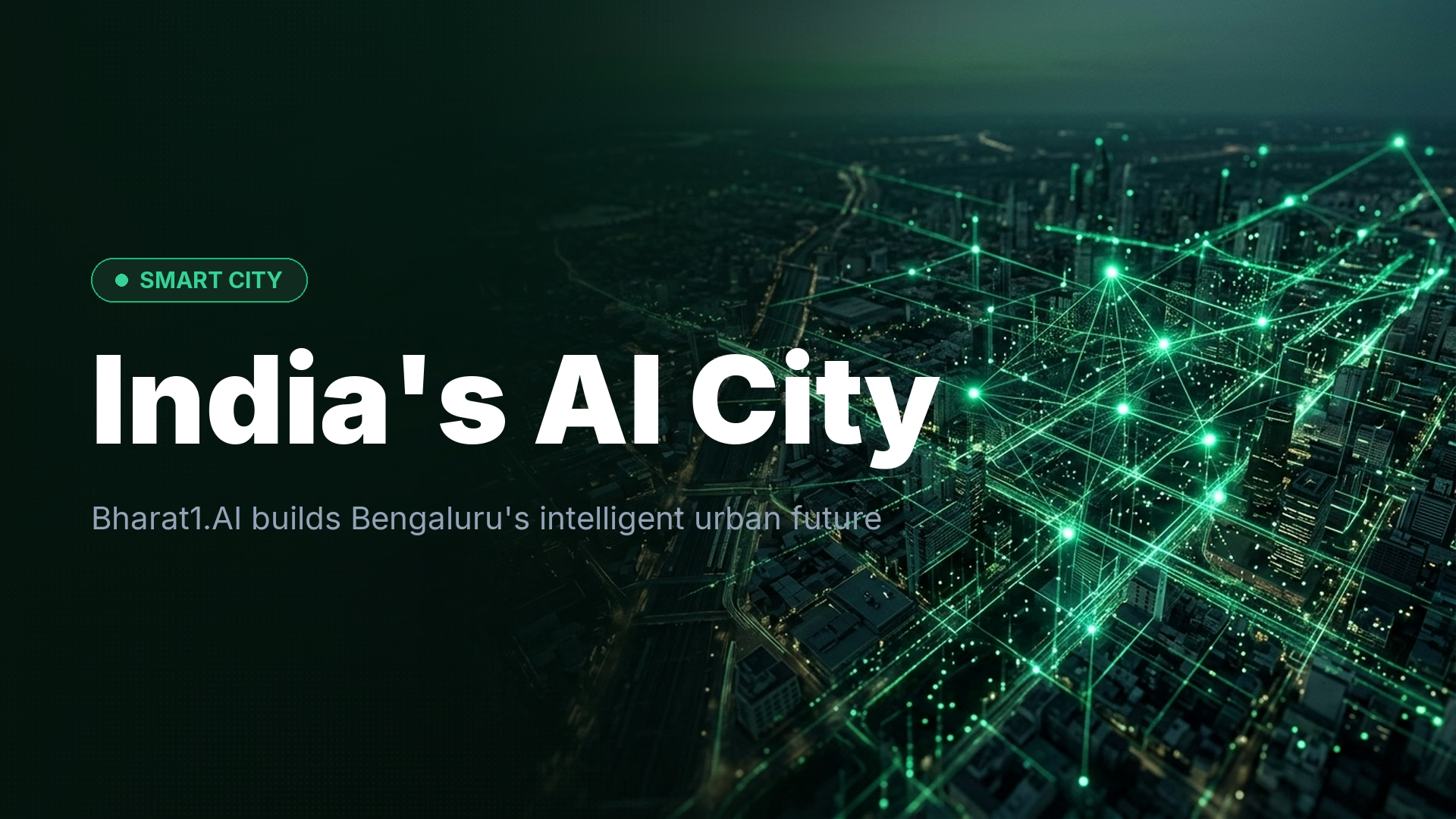
Bharat1.AI has officially launched its comprehensive blueprint for transforming a district of Bengaluru into India's first fully AI-integrated smart city. Officially released on October 6, 2026, the plan outlines a multi-phase deployment of autonomous systems, predictive analytics, and machine learning infrastructure across residential, commercial, and municipal sectors. The initiative represents one of the most ambitious urban AI projects in Asia, aiming to redefine how cities leverage artificial intelligence for daily operations and long-term planning.
Core Infrastructure and Technology Stack
The Bharat1.AI city blueprint centers on three foundational layers: autonomous traffic management using computer vision and real-time routing algorithms, predictive utilities systems that optimize water and energy distribution through demand forecasting, and integrated public service platforms powered by natural language processing for citizen engagement. According to the technical documentation, the city will deploy over 50,000 IoT sensors connected to edge computing nodes, feeding data into centralized AI models that adapt to usage patterns hourly. This architecture mirrors approaches seen in Singapore's smart nation initiatives but scales specifically for India's urban density and infrastructure challenges.
The traffic management component leverages reinforcement learning models trained on Bengaluru's existing traffic data, promising to reduce congestion by up to 40 percent through dynamic signal optimization and autonomous vehicle coordination. Energy grids will integrate solar forecasting models and battery storage algorithms to balance renewable supply with peak demand, a critical feature given India's aggressive renewable energy targets.
Urban Planning and Residential Integration
Residential zones within the AI city will feature smart building systems that adjust lighting, climate control, and security protocols based on occupancy patterns and resident preferences learned over time. Bharat1.AI's white paper emphasizes privacy-first design, with all personal data processed on-device or within local edge nodes rather than centralized cloud servers. The company claims this federated learning approach meets both Indian data sovereignty requirements and international privacy standards.
Public spaces will deploy AI-driven waste management, using image recognition to sort recyclables and optimize collection routes. Parks and recreational areas will include environmental monitoring systems that track air quality, noise levels, and crowd density, feeding data to urban planners for continuous improvement.
Economic and Workforce Development
The blueprint allocates significant resources to workforce training programs, partnering with local universities to create AI operations curricula for city management roles. Bharat1.AI projects the smart city will generate over 15,000 direct jobs in AI system maintenance, data analysis, and urban technology sectors by 2028. The company is also establishing an innovation district within the city boundaries, offering subsidized office space and compute resources to startups focused on urban AI applications.
Funding for the project combines private investment from Bharat1.AI's parent consortium, state government infrastructure bonds, and targeted grants from India's National Mission on Interdisciplinary Cyber-Physical Systems. Total estimated investment through full deployment exceeds $2.3 billion, with phased rollouts beginning in Q1 2027.
Regulatory Framework and Data Governance
Bharat1.AI worked closely with Karnataka state regulators to establish governance protocols for AI decision-making in public services. The framework includes mandatory explainability requirements for any AI system affecting citizen access to utilities or municipal services, regular third-party audits of algorithmic fairness, and citizen oversight committees with authority to request system modifications. This regulatory structure aims to address concerns about algorithmic bias and accountability that have plagued smart city projects in other regions.
The data governance model specifies that aggregated, anonymized city operations data will be made available to researchers and civic organizations through public APIs, while personally identifiable information remains strictly protected under India's Digital Personal Data Protection Act.
What This Means
Bharat1.AI's Bengaluru smart city blueprint represents a concrete, large-scale implementation of urban AI that moves beyond pilot projects to full municipal integration. The emphasis on privacy-preserving architectures and transparent governance could establish new standards for how democracies deploy AI in public infrastructure. If successful, this model will likely influence urban planning across India's rapidly growing metro regions and provide a counterpoint to more centralized smart city approaches. The project's focus on workforce development and local innovation ecosystems also addresses a critical challenge in AI deployment: ensuring communities benefit economically from automation rather than being displaced by it. As the first major urban AI rollout in India, Bengaluru's experience will inform policy debates worldwide about the balance between technological efficiency and democratic accountability in increasingly automated cities.




on Emergent today




