


Biotech Startups Skip AI for Traditional Drug Discovery

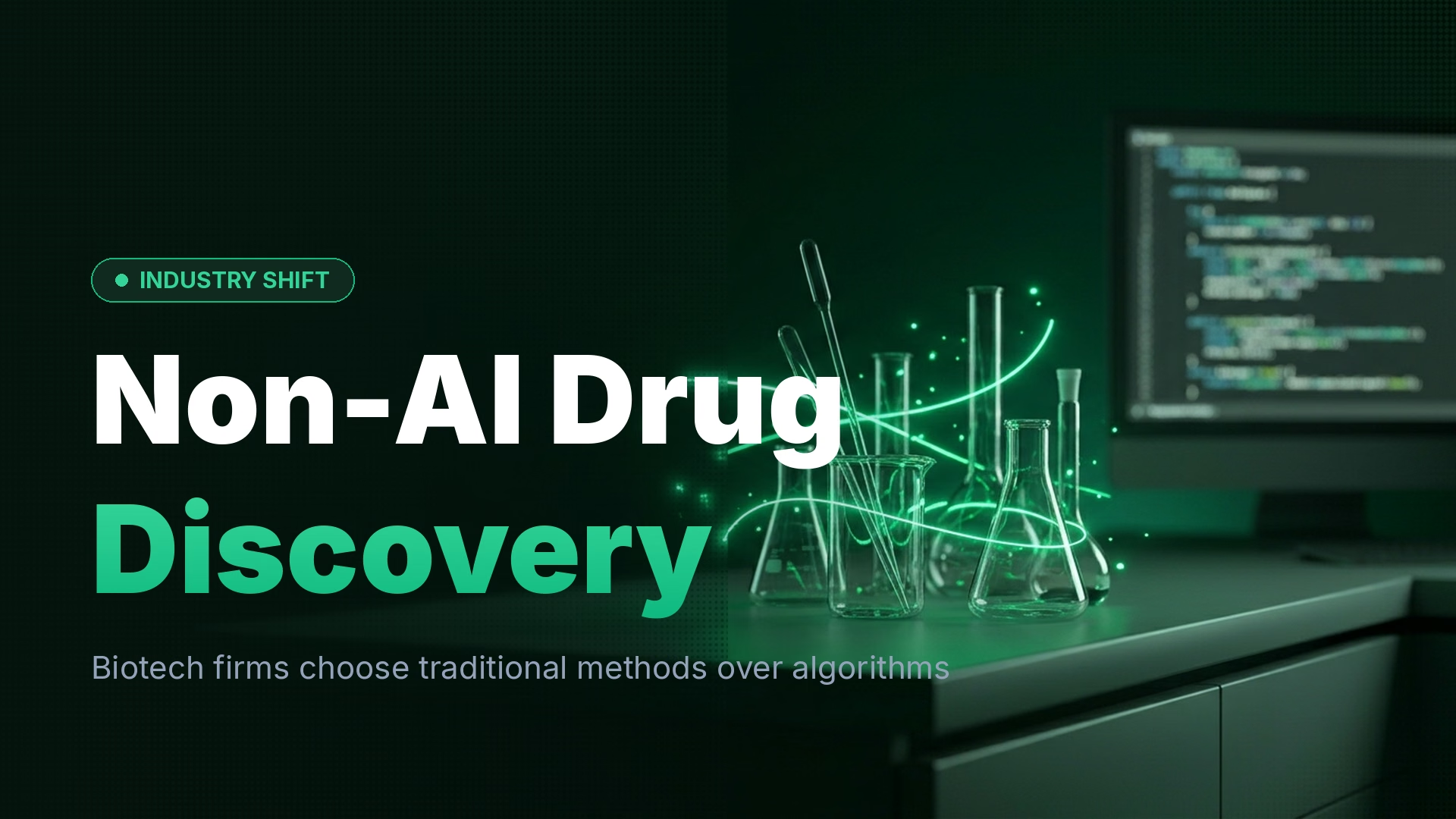
A growing cohort of biotech startups is betting against the industry consensus by deliberately excluding artificial intelligence from their drug discovery pipelines. Officially released on November 4, 2026, reporting from STAT reveals that these companies are choosing traditional wet-lab experimentation and human-led hypothesis generation over the algorithmic approaches that have dominated pharmaceutical headlines for the past three years.
Why Startups Are Rejecting AI Tools
The decision to skip AI stems from three core concerns. First, founders question the quality and representativeness of training datasets used by commercial drug discovery platforms. Many AI models are trained on historical compound libraries that reflect past research biases rather than future therapeutic opportunities. Second, the black-box nature of deep learning systems makes it difficult for regulatory agencies and internal scientific teams to validate predictions. When a model suggests a promising compound structure, researchers often cannot explain why it works, creating friction in FDA approval pathways.
Third, several startup leaders argue that biological systems are too complex and context-dependent for current AI architectures. A compound that shows promise in a computational model may fail spectacularly in living tissue due to factors the algorithm never learned to consider: protein folding dynamics, cellular microenvironments, or patient-specific genetic variations.
The Traditional Approach Still Delivers
Companies embracing non-AI methods are investing heavily in high-throughput screening, medicinal chemistry expertise, and iterative experimental cycles. One unnamed startup profiled by STAT runs 50,000 compound tests per week using robotic automation but relies on PhD chemists to interpret results and design follow-up experiments. Another focuses on rare disease targets where limited patient data makes AI training impractical.
These firms point to recent successes: several blockbuster drugs approved in 2025 and 2026 were discovered through traditional methods, suggesting AI has not yet proven indispensable. The approach also allows smaller teams to move faster without the computational infrastructure costs that AI platforms demand.
Industry Implications and Hybrid Models
The rejection of AI by a subset of startups does not signal a wholesale retreat from computational biology. Instead, it highlights a maturation phase where companies are selectively applying AI to problems where it demonstrably outperforms humans, such as protein structure prediction, while keeping human judgment central to molecule design and target selection.
Some startups are exploring hybrid workflows: using AI for initial screening to narrow a library of 10 million compounds down to 10,000 candidates, then applying traditional methods for final validation. This pragmatic middle ground may become the dominant model as the field learns which discovery stages benefit most from automation.
What This Means
The biotech sector's split approach to AI reflects a broader pattern across scientific fields: early enthusiasm for machine learning is giving way to evidence-based adoption. Startups that skip AI entirely are making a calculated bet that human expertise, domain knowledge, and experimental rigor remain competitive advantages in 2026. Whether this strategy pays off will depend on clinical trial outcomes over the next 3 to 5 years, but the willingness to challenge the AI-first orthodoxy suggests the pharmaceutical industry is maturing beyond hype cycles into a more nuanced understanding of where algorithms add value and where they do not.


on Emergent today


