


Block Dessa AI Model Launches With Conversational Training

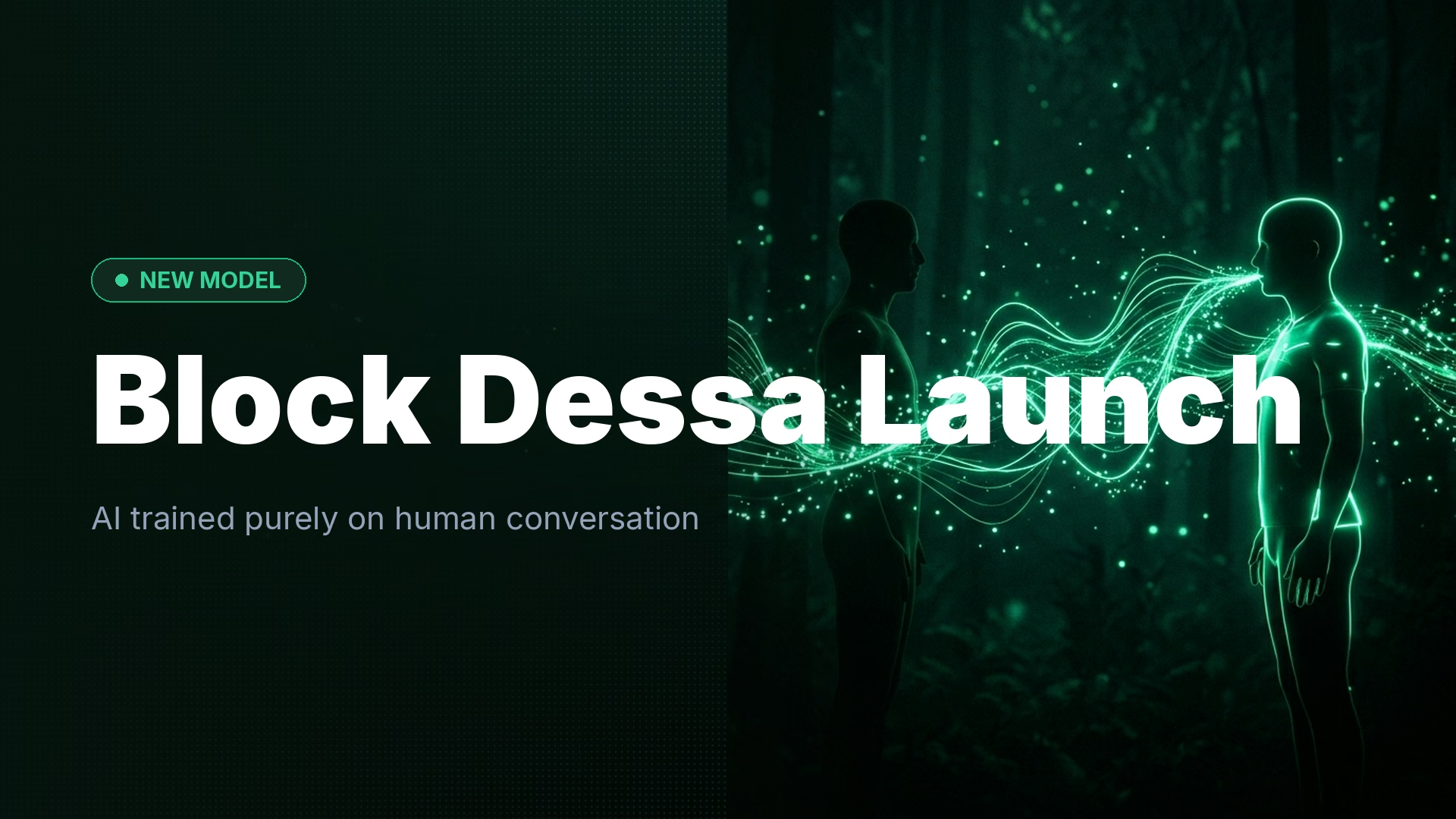
Officially launched on October 23, 2026.
Jack Dorsey's Block has officially launched Dessa, an artificial intelligence model that takes a radically different approach to conversational AI. Unlike traditional language models trained on written text, Dessa was built from the ground up using nothing but recordings of human speech. The result is a voice AI that can sound remarkably natural in some moments and oddly stilted in others, as demonstrated in early conversation samples shared by the development team.
Training Methodology Sets Dessa Apart
The fundamental innovation behind Dessa lies in its training data. While models like GPT-4 and Claude learn from massive text corpora scraped from the internet, Dessa learned exclusively from audio recordings of people talking to each other. This voice-first approach means the model inherently understands conversational patterns, pauses, interjections, and the natural rhythms of human speech that text-based models must artificially recreate.
Ragavan Thurairatnam, who leads the Dessa project at Block, shared several conversation samples that highlight both the model's strengths and its occasional missteps. The exchanges show Dessa handling casual dialogue with reasonable fluency, though moments of awkwardness emerge when the model struggles with context switches or unexpected conversational turns.
Conversational Quirks and Uncanny Moments
The demo conversations reveal an AI that sometimes feels like talking to someone still learning social cues. Dessa can maintain topic coherence and respond appropriately to direct questions, but its responses occasionally miss subtle contextual signals that human speakers navigate instinctively. These awkward moments, rather than representing pure failure, may actually demonstrate the model's authentic grounding in real conversational data, including the hesitations and repair strategies people use in actual dialogue.
Some exchanges show Dessa producing filler words, false starts, and self-corrections that rarely appear in text-trained AI outputs. This creates an uncanny valley effect where the model sounds more human in its imperfections but less polished than competitors optimized for coherent text generation.
Release Date and Availability
Block officially launched Dessa on October 23, 2026, marking Jack Dorsey's latest venture into artificial intelligence development. The company has not yet announced broad commercial availability or specific use cases for the technology, though the voice-first architecture suggests potential applications in customer service, voice assistants, and conversational interfaces where natural speech patterns matter more than written eloquence.
Technical Implications for Voice AI
Dessa's training approach raises important questions about the future of conversational AI development. By learning directly from speech rather than text, the model may capture nuances that written language cannot convey:
- Prosody and intonation patterns that carry meaning beyond words
- Turn-taking conventions and conversational timing
- Emotional coloring and emphasis that text representations flatten
- Disfluencies and repair strategies that make dialogue feel authentic
These characteristics could make Dessa particularly effective for applications where voice interaction is primary, even if the model produces less refined output than text-optimized alternatives when transcribed.
What This Means
Block's Dessa represents a meaningful experiment in rethinking how we train conversational AI systems. While early demonstrations show the model still has rough edges, the voice-first training methodology could unlock capabilities that text-based approaches inherently cannot replicate. As voice interfaces become more prevalent across consumer technology, models trained on actual human conversation rather than written proxies may prove essential for creating truly natural spoken interactions. The awkwardness observers note in Dessa's current outputs may simply reflect the genuine messiness of how humans actually talk to each other, suggesting the model has learned lessons that perfectly fluent text generators miss entirely.

on Emergent today




