


China Bets on Renewable Energy to Power AI Data Centers

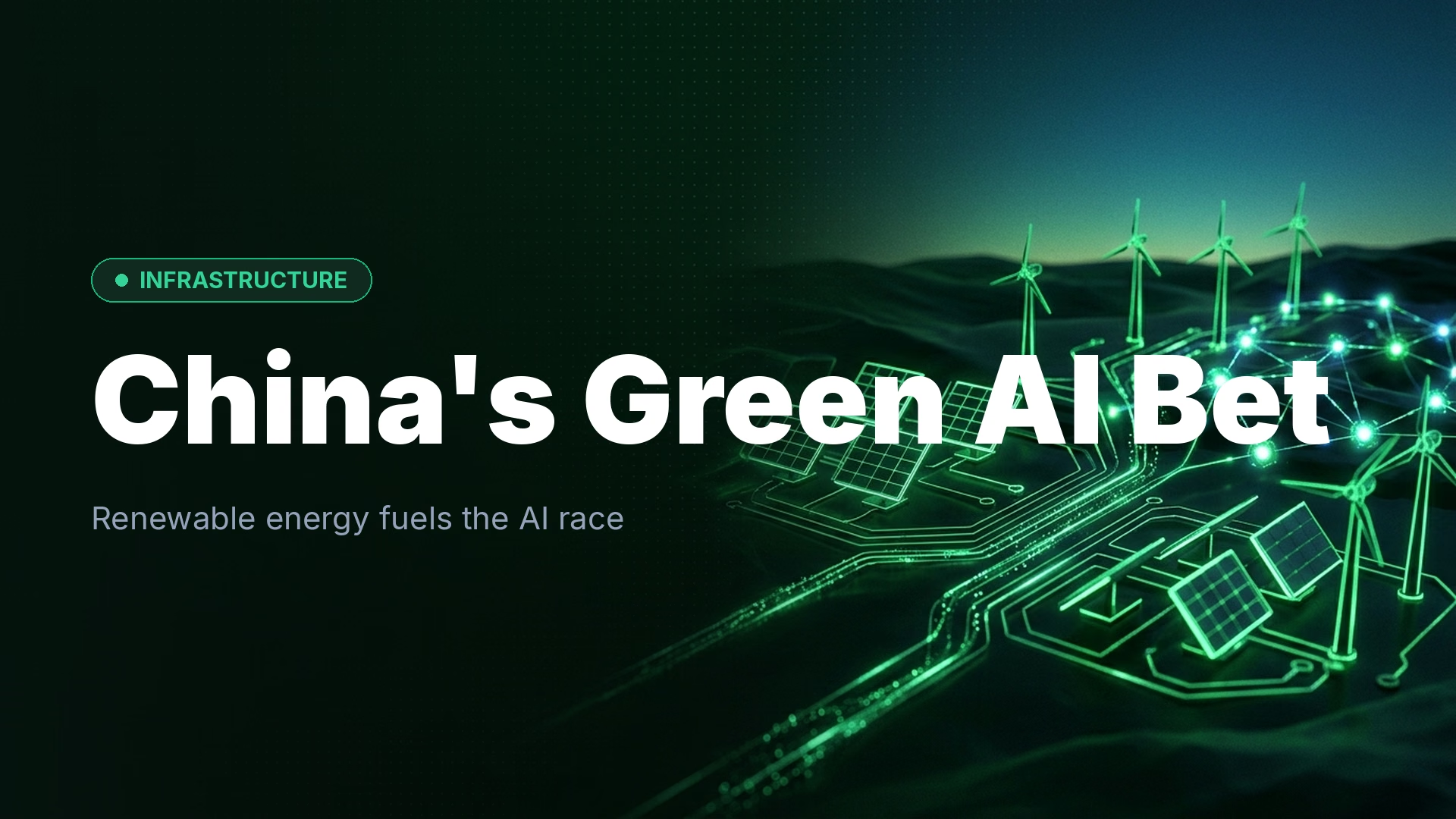
China is making a massive bet on renewable energy infrastructure as the foundation for its AI ambitions, positioning itself to gain a decisive advantage in the global race for artificial intelligence dominance. Officially launched on November 2, 2026, this strategic initiative connects the nation's renewable energy buildout directly to its expanding AI data center network, creating what officials describe as the world's largest sustainable computing infrastructure.
Strategic Infrastructure Investment
The Chinese government has committed to building renewable energy capacity specifically allocated to AI workloads, with solar and wind farms co-located near major data center clusters. This approach addresses two critical challenges simultaneously: the enormous power demands of AI training and inference, and the environmental impact of large-scale computing operations. Early deployments show solar farms generating dedicated power for AI facilities in Inner Mongolia and wind installations supporting data centers in coastal provinces.
Industry analysts estimate China is investing between $50 billion and $80 billion in this renewable-AI infrastructure linkage through 2027. The scale dwarfs similar efforts in other nations and could provide Chinese AI labs with significantly lower operating costs compared to competitors relying on traditional grid power or facing energy constraints.
Competitive Advantage in AI Development
Access to abundant, low-cost clean energy gives Chinese AI companies a distinct edge in training large language models and running inference at scale. While US and European labs face rising electricity costs and capacity limitations, Chinese facilities powered by dedicated renewable sources can train models continuously without power interruptions or budget concerns. This advantage becomes critical as models grow larger and require more compute hours.
Major Chinese AI labs including Baidu, Alibaba, and ByteDance are already relocating training clusters to renewable-powered facilities. The energy cost differential compared to fossil fuel-powered alternatives ranges from 30% to 50% lower according to industry reports, translating directly to faster iteration cycles and more experimental model variants.
Environmental and Economic Calculus
China's approach addresses growing international criticism of AI's carbon footprint while advancing industrial policy goals. By powering AI workloads with renewable energy, Chinese labs can claim environmental leadership even as they scale up computing capacity. The strategy also reduces dependency on fossil fuel imports and creates domestic jobs in renewable energy manufacturing and installation.
- Solar panel production capacity dedicated to AI infrastructure exceeds 40 gigawatts annually
- Wind turbine installations near data centers provide 24-hour baseline power with battery storage backup
- Combined renewable sources target 80% clean energy mix for AI workloads by 2028
Global Implications for AI Competition
This infrastructure bet could reshape the global AI landscape. Countries lacking similar renewable energy resources or political will to prioritize AI-specific power infrastructure may find their labs at a permanent disadvantage. The strategy forces competitors to either match China's renewable investment or accept higher operating costs that slow innovation.
Western nations are watching closely and beginning similar initiatives, but the timeline lag gives China a multi-year head start. The European Union's green energy mandates may eventually provide comparable infrastructure, but US labs face a fragmented energy market and regulatory uncertainty that complicates large-scale renewable deployments.
What This Means
China's renewable energy strategy for AI represents a fundamental shift in how nations compete for technological leadership. By treating energy infrastructure as inseparable from AI development, China has created a sustainable foundation for long-term computing dominance. This approach could become the template for future AI superpowers, where access to clean, abundant energy determines which countries lead in artificial intelligence innovation. The competitive dynamic now extends beyond algorithms and chips to include the basic infrastructure that powers AI at scale.



on Emergent today


