


Claude AI Applied to Military Strategy and Defense Analysis
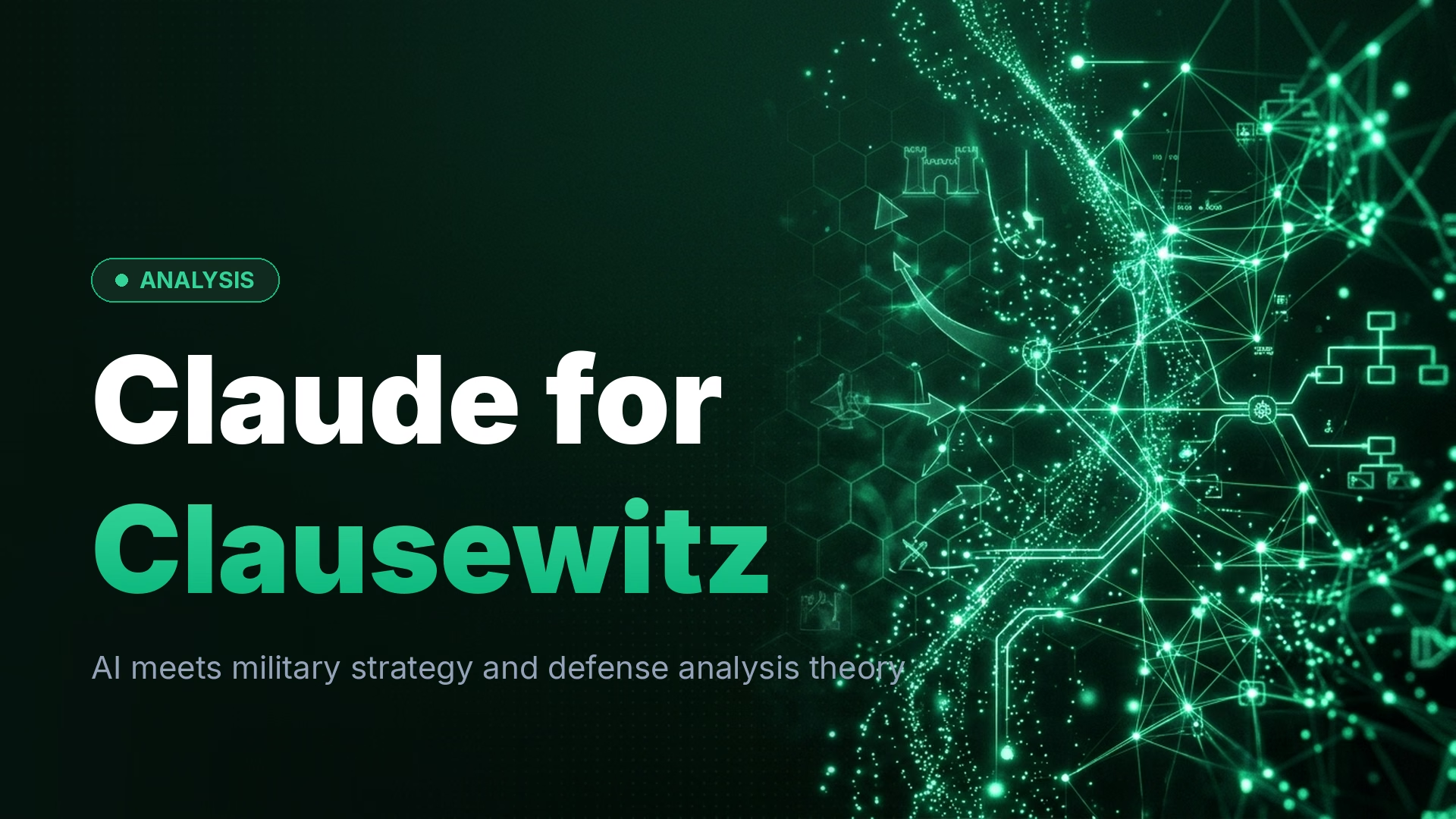
The Lowy Institute has published exploratory analysis examining how Claude AI from Anthropic could support military strategy formulation and defense planning, specifically through the lens of Clausewitzian theory. The piece represents growing institutional interest in applying large language models to complex analytical domains traditionally dominated by human expertise and historical study.
Officially released on October 31, 2026, the Lowy Institute analysis explores potential intersections between advanced AI systems and classical military theory. The work references Carl von Clausewitz's foundational strategic concepts while investigating how modern language models might augment analytical capabilities in defense contexts.
AI Applications in Strategic Analysis
The Lowy Institute's examination focuses on Claude's capacity to process and synthesize complex strategic texts, historical case studies, and theoretical frameworks. Language models like Claude demonstrate proficiency in analyzing multi-layered documents, identifying patterns across historical conflicts, and generating scenario-based assessments that align with established strategic principles.
Defense institutions globally are exploring how AI tools can support intelligence analysis, war gaming, and strategic planning processes. These applications extend beyond simple information retrieval to include hypothesis generation, counter-argument development, and multi-perspective analysis of geopolitical scenarios.
Clausewitzian Theory and Modern AI
Clausewitz's seminal work "On War" emphasizes the fog of war, friction in military operations, and the interplay between political objectives and military means. The Lowy Institute analysis considers whether AI systems can meaningfully engage with these conceptual frameworks or merely surface-level pattern matching in strategic texts.
Key questions include whether language models can capture the nuance of Clausewitzian concepts like the "culminating point of victory" or the "remarkable trinity" of passion, chance, and reason in warfare. These theoretical constructs require contextual understanding that challenges current AI capabilities.
Defense Sector AI Adoption Trends
Military and defense organizations across allied nations have accelerated exploration of large language models for analytical support. Use cases span intelligence synthesis, doctrinal review, historical research, and training scenario development. However, deployment remains cautious due to security classification requirements and accuracy concerns in high-stakes contexts.
Commercial AI providers including Anthropic have established specialized engagement channels for government and defense clients, offering enhanced security controls and deployment options that meet institutional requirements. These adaptations acknowledge the unique constraints of defense sector AI adoption.
Limitations and Considerations
The Lowy Institute analysis acknowledges significant limitations in applying AI to military strategy. Language models lack genuine understanding of warfare's human dimensions, battlefield realities, and moral complexities that define strategic decision-making. AI outputs require rigorous human validation, particularly when informing decisions with life-or-death consequences.
Ethical considerations surrounding autonomous systems and AI-augmented military planning remain active areas of policy debate. The application of commercial language models to defense contexts raises questions about oversight, accountability, and the appropriate boundaries of AI assistance in strategic domains.
What This Means
The Lowy Institute's exploration of Claude for Clausewitzian analysis signals growing mainstream examination of AI's role in traditionally human-dominated analytical fields. While language models offer powerful text processing and synthesis capabilities, their application to military strategy demands careful consideration of both technical limitations and ethical implications. Defense institutions will likely continue experimenting with AI tools for analytical support while maintaining human judgment as the ultimate arbiter of strategic decisions. This measured approach balances innovation potential with the profound responsibilities inherent in defense planning.


on Emergent today


