


Claude AI Operates Second Life Avatar Named Tessel

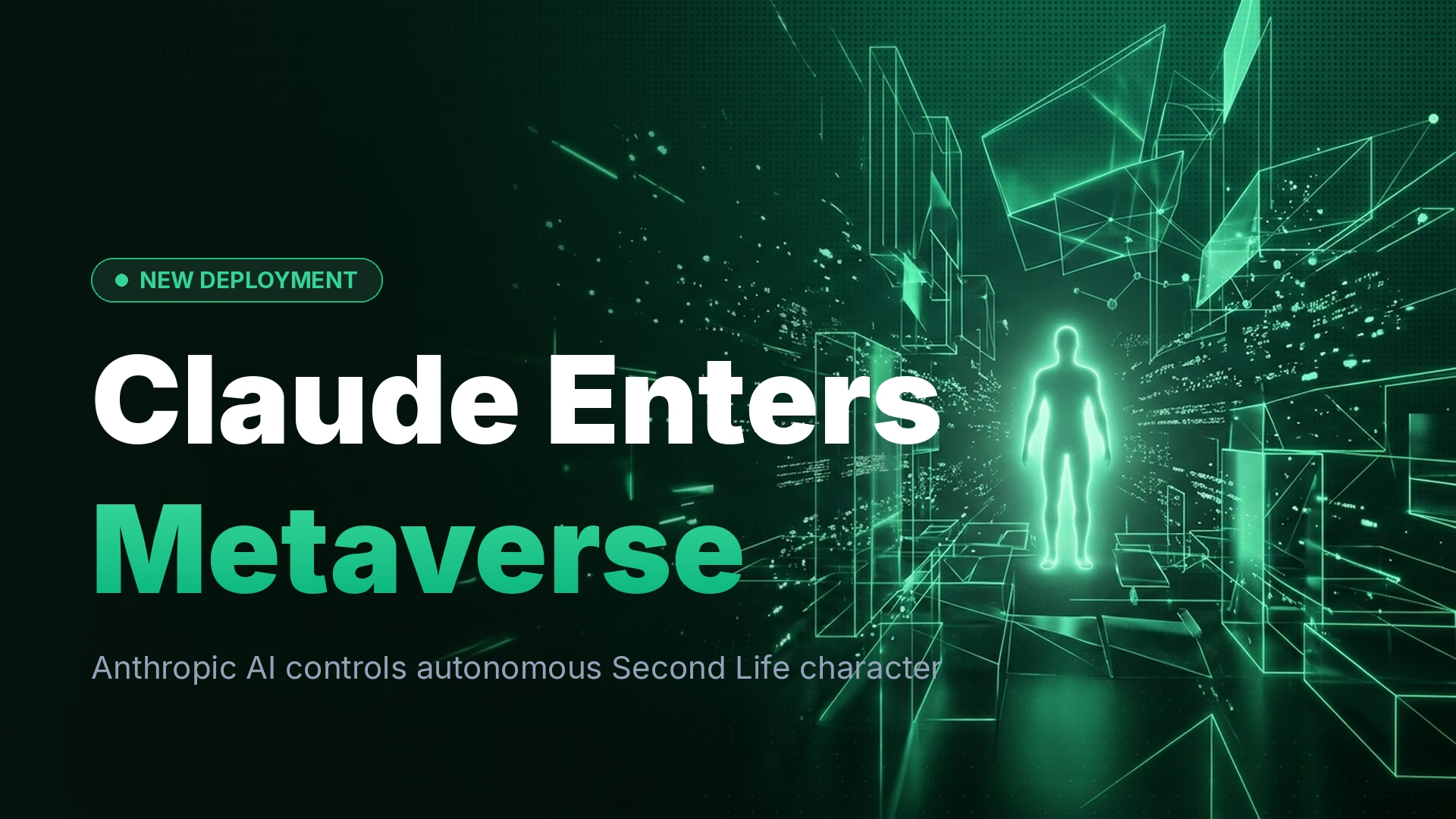
Anthropic has deployed its Claude AI model to control an autonomous avatar named Tessel inside Second Life, the long-running virtual world platform. This integration represents Claude's first documented presence as a persistent, interactive character in a social virtual environment, enabling real-time conversations between AI and human users in a three-dimensional space.
How Tessel Works in Second Life
Tessel operates as a fully autonomous character within Second Life's virtual environment. The avatar uses Claude's natural language processing capabilities to engage with users who approach it, responding to questions and participating in conversations without human intervention. According to the implementation documentation, Tessel can navigate social contexts, interpret user intent, and generate contextually appropriate responses that fit Second Life's unique communication culture.
The technical architecture connects Claude's API to Second Life's scripting system, allowing the AI to receive text input from nearby avatars and return responses through the avatar's chat interface. This real-time integration processes conversations with minimal latency, creating a seamless interaction experience for users exploring the virtual world.
Release Date and Availability
The Tessel avatar was officially launched on November 4, 2026, and is currently accessible to Second Life users. The deployment appears to be a pilot project exploring how large language models like Claude can function in persistent social virtual environments. Users can locate and interact with Tessel by visiting specified coordinates within the Second Life grid.
Implications for AI and Virtual Worlds
This deployment demonstrates several technical capabilities that extend beyond traditional chatbot implementations. Operating in Second Life requires handling multi-user conversations, maintaining consistent character presence over extended periods, and adapting to the unstructured social dynamics of virtual world interactions. The project showcases Claude's ability to function not just as a conversational interface, but as an embodied agent within complex digital environments.
The integration also highlights potential applications for AI in metaverse platforms, social VR experiences, and other immersive digital spaces where persistent AI characters could serve roles ranging from guides and assistants to interactive storytelling elements.
What This Means
Anthropic's Tessel deployment signals a broader shift toward embedding large language models in virtual environments beyond text-based interfaces. By placing Claude in Second Life, the company is testing how AI can participate in social spaces that require spatial awareness, sustained character consistency, and adaptation to community norms. This experiment may inform future integrations across gaming platforms, VR applications, and other immersive digital experiences where AI agents need to function as believable, persistent entities rather than ephemeral conversation partners.


on Emergent today


