


Claudinho: Claude Code Mascot on ESP32 Brings AI to Hardware

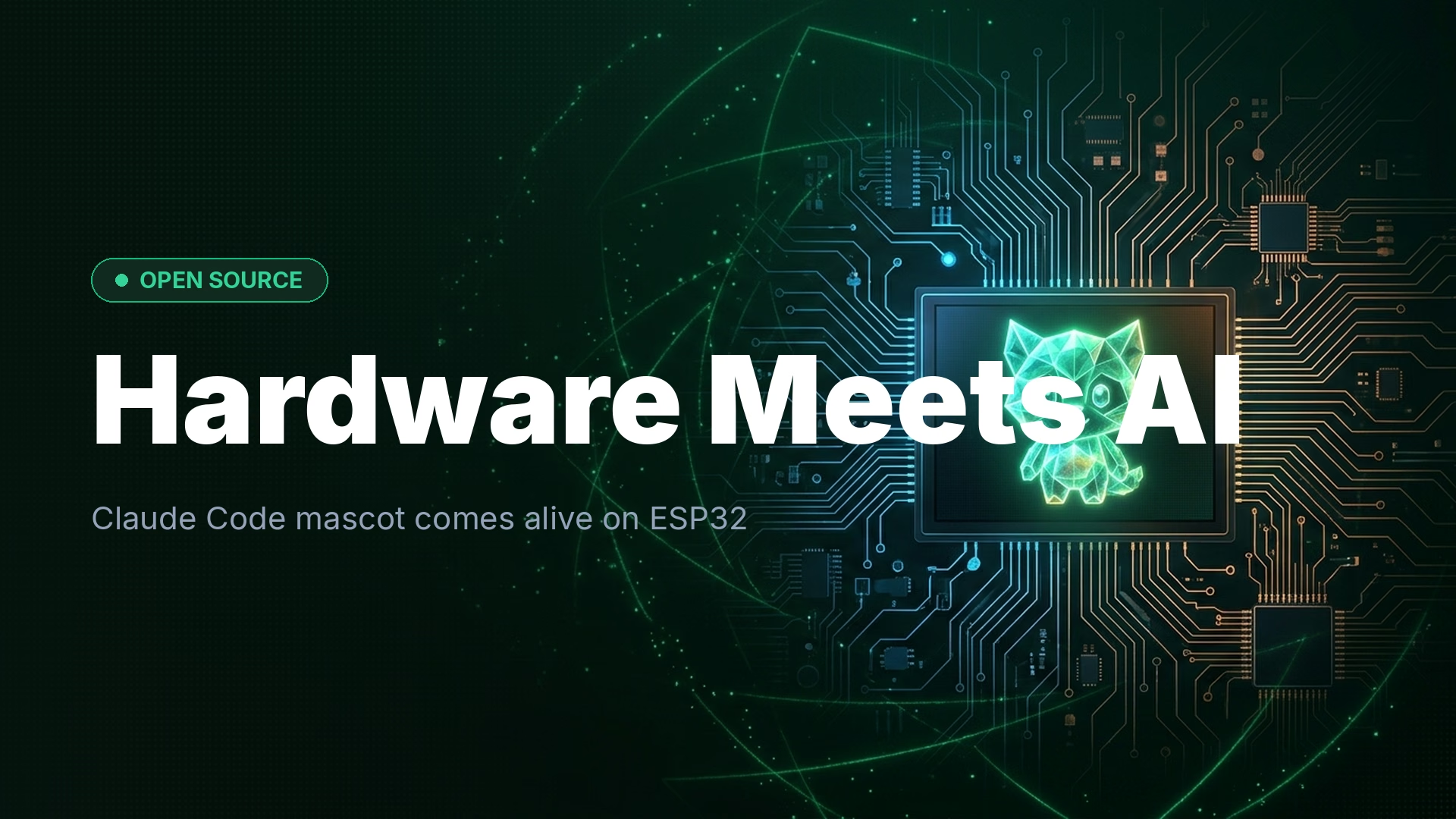
Claudinho, an open-source project that brings Claude Code's mascot to life on ESP32 hardware, officially launched on November 3, 2026. The project uses event-driven hooks to create a physical manifestation of Anthropic's AI coding assistant, bridging the gap between software development tools and embedded systems. Developer argeuthiesen released the project on GitHub, offering makers and developers a novel way to integrate AI assistant feedback into their physical workspace.
What Is Claudinho
Claudinho is a hardware implementation that displays Claude Code's mascot character on an ESP32 microcontroller development board. The project leverages event-driven hooks to respond to activities within Claude Code, Anthropic's AI-powered coding environment. When developers interact with Claude Code, Claudinho can display visual feedback through the ESP32's connected display or LED matrix, creating an ambient awareness system for AI assistant activity.
The ESP32 platform provides WiFi connectivity and sufficient processing power to handle webhook callbacks and render visual updates in real time. This makes Claudinho an accessible IoT project that requires minimal additional components beyond the microcontroller board itself.
Event-Driven Architecture Powers Real-Time Updates
The project's core functionality relies on event-driven hooks that monitor Claude Code sessions. When specific events occur, such as code generation completion, error detection, or task initiation, the hook system triggers updates to the ESP32 display. This architecture ensures low latency between AI assistant actions and physical feedback.
- Webhook integration connects Claude Code events to the ESP32 over WiFi networks
- Configurable event filters allow developers to customize which activities trigger visual responses
- Modular design supports expansion to other AI coding assistants beyond Claude Code
The event-driven approach mirrors patterns used in modern cloud applications, demonstrating how embedded systems can participate in distributed software architectures typically reserved for server-side applications.
Release Date and Availability
Claudinho was officially released on November 3, 2026, through the project's GitHub repository. The open-source release includes complete firmware source code, hardware assembly instructions, and documentation for setting up the webhook integration. Developers can clone the repository and flash the firmware to compatible ESP32 boards immediately, with no proprietary components or paid services required.
The project supports standard ESP32 development boards available from multiple vendors, keeping hardware costs under $15 for most implementations. Optional display modules can add visual fidelity but are not required for basic functionality.
Technical Implementation Details
Claudinho is written in C++ for the ESP32 platform, using the Arduino framework for accessibility. The firmware handles HTTPS webhook endpoints, parses JSON event payloads, and manages display rendering in a single-threaded event loop. Flash memory constraints require efficient data structures, while the dual-core ESP32 architecture allows simultaneous network operations and display updates.
The project demonstrates practical applications of microcontroller programming in the context of modern AI development workflows. By creating a physical presence for AI assistant activity, Claudinho offers developers an alternative to purely software-based notification systems.
What This Means
Claudinho represents a creative intersection of AI tooling and embedded hardware, showing how developers can extend digital AI assistants into physical spaces. The project's open-source nature encourages experimentation and adaptation, potentially inspiring similar integrations across other AI development platforms. As AI coding assistants become standard tools, projects like Claudinho demonstrate how ambient computing can make these tools more tangible and present in developer workflows. The low barrier to entry, thanks to the ESP32's affordability and Arduino framework support, makes this an accessible weekend project for makers interested in IoT and AI integration.



on Emergent today


