


DockTerm Notch Mascot Alerts You When Claude Code Needs

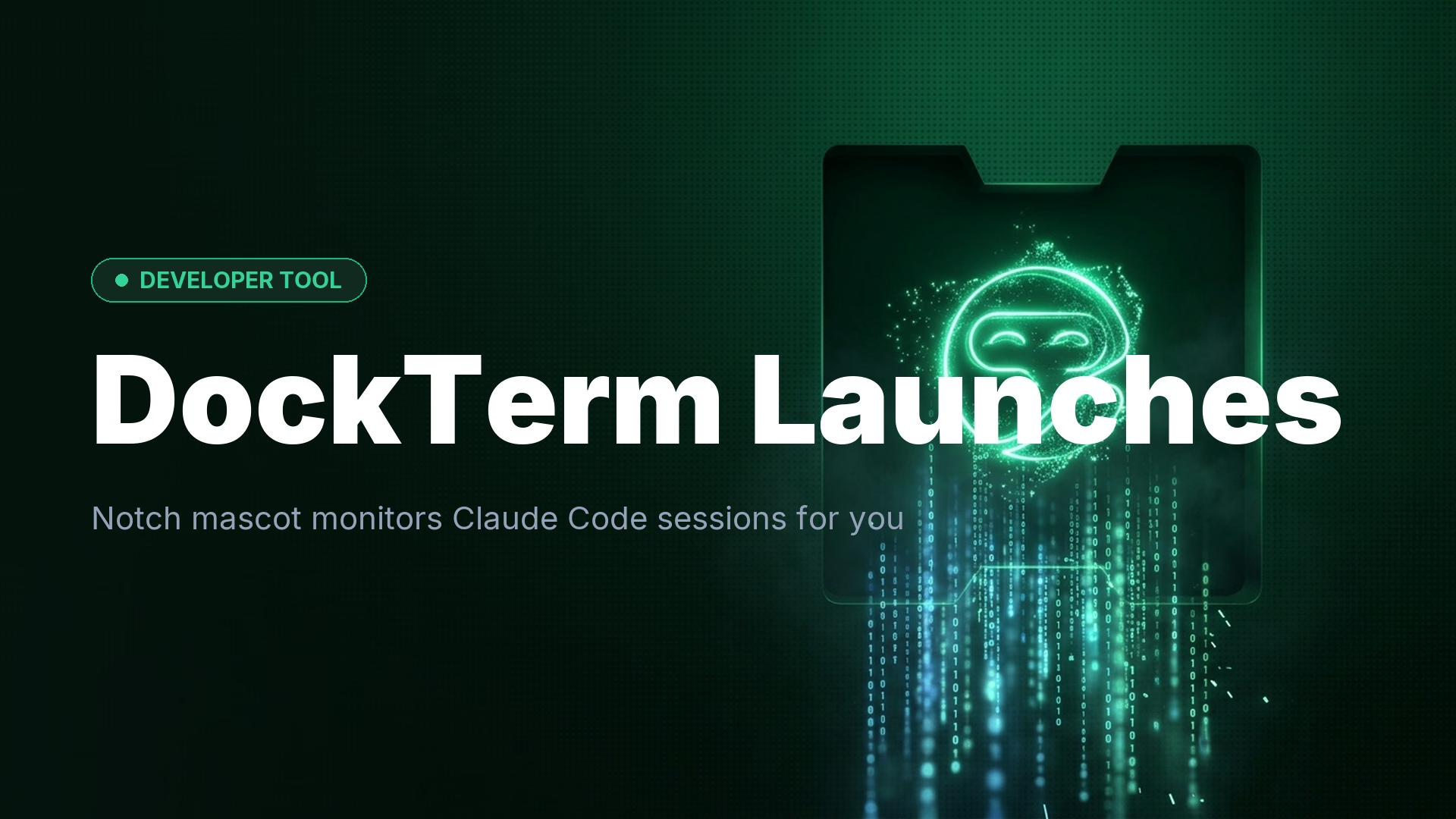
A new open-source utility called DockTerm transforms the MacBook Pro notch into a visual monitoring station for Claude Code sessions. Officially launched on October 1, 2026, the tool provides real-time alerts when Anthropic's AI coding assistant pauses and requires developer input, eliminating the need for constant terminal window surveillance.
The utility addresses a common workflow friction point: developers working with Claude Code often switch between windows while the AI generates code, only to miss the moment when it stops and awaits user confirmation. DockTerm solves this by placing a persistent mascot in the notch area that changes state based on terminal activity.
How DockTerm Monitors Claude Code Sessions
DockTerm operates as a lightweight background process that watches designated terminal windows for activity patterns characteristic of Claude Code pauses. When the AI assistant completes a code generation cycle and displays a prompt requiring user action, the notch mascot shifts from an idle state to an alert state. The visual indicator remains visible regardless of which application window is currently active.
The tool integrates with macOS accessibility APIs to track terminal output without requiring modifications to Claude Code itself. Developers can configure which terminal applications to monitor, set custom alert thresholds, and adjust the mascot's visual appearance through a simple configuration file.
Release Date and Availability
DockTerm was officially released on October 1, 2026, via GitHub as a free, MIT-licensed utility. The initial release targets MacBook Pro models with notch displays running macOS Sonoma or later. The repository includes installation instructions, configuration examples, and troubleshooting documentation for common setup scenarios.
Early community feedback on Hacker News highlights the tool's utility for developers running long Claude Code sessions on multiple projects simultaneously. Users report productivity gains from eliminating manual terminal checking, particularly when working across virtual desktops or external displays.
Technical Implementation Details
The utility is built using Swift and leverages native macOS frameworks for minimal system overhead. Key technical features include:
- Real-time terminal output parsing using macOS accessibility APIs
- Customizable activity detection patterns for different AI coding assistants
- Low memory footprint (typically under 30MB) with negligible CPU usage
- Support for multiple concurrent terminal window monitoring
- Optional notification center integration for additional alerts
The modular architecture allows developers to extend DockTerm's capabilities beyond Claude Code monitoring. The repository documentation outlines hooks for adding support for other AI coding tools and custom terminal-based workflows.
What This Means for AI-Assisted Development
DockTerm represents a growing category of auxiliary tools designed to smooth the developer experience when working with AI coding assistants. As models like Claude Code become central to software development workflows, utilities that reduce context-switching overhead and improve session awareness will become increasingly valuable. The open-source nature of DockTerm invites community contributions that could expand its monitoring capabilities to other AI development tools and workflow patterns. For teams adopting AI-assisted coding at scale, simple utilities like this can compound into meaningful productivity improvements across development cycles.


on Emergent today




