


Dodaios: Open-Source OS for AI Agent Orchestration

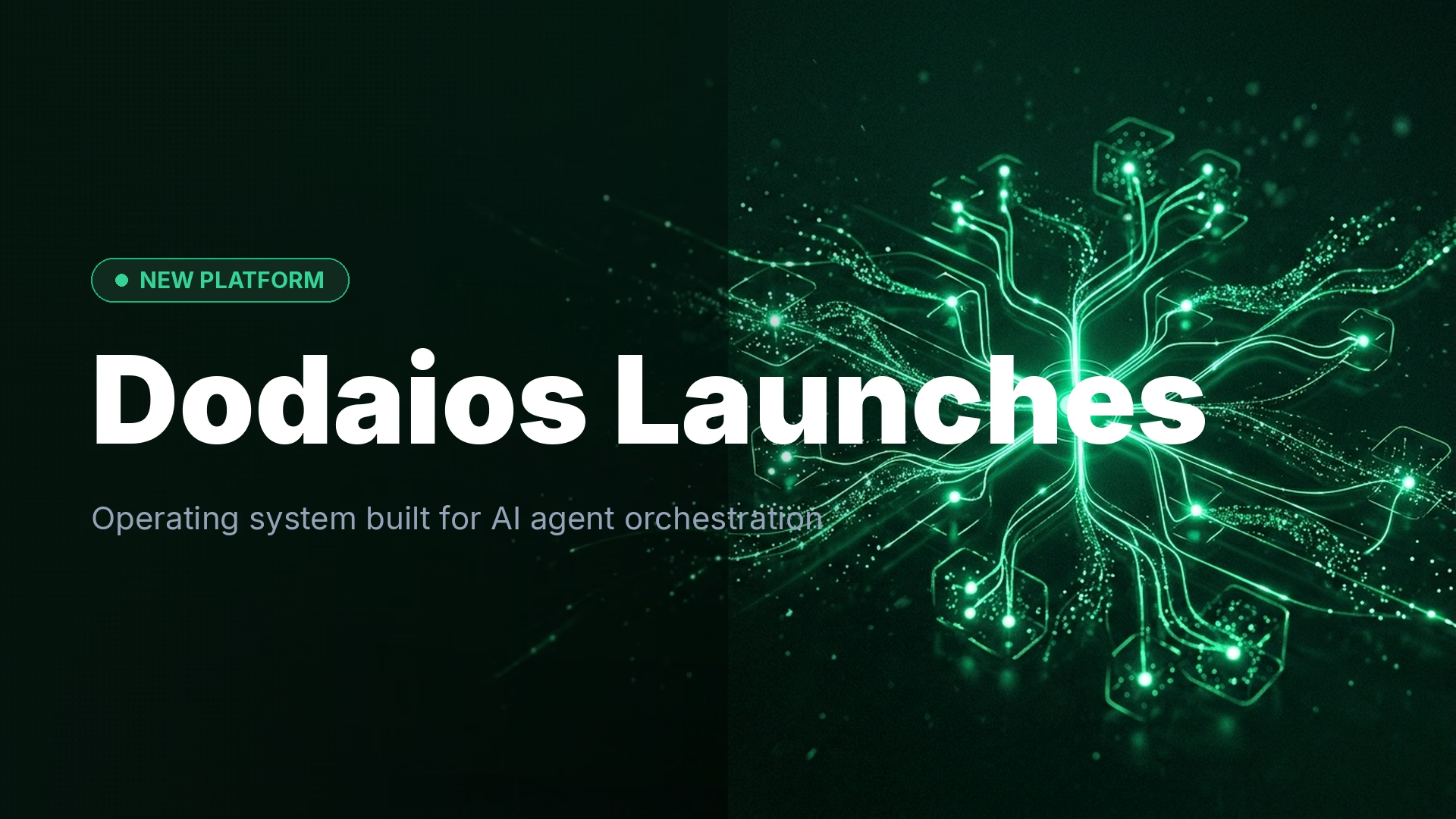
Dodaios has officially launched as an open-source operating system designed to orchestrate AI coding agents including Claude Code, Codex, and other agentic tools. Released on October 30, 2026, the platform introduces OS-level primitives for managing multiple AI agents in parallel workflows, addressing a critical infrastructure gap as developers increasingly deploy multi-agent systems in production environments.
What Dodaios Delivers
The platform provides native process isolation, shared context management, and inter-agent communication protocols at the operating system layer. Unlike existing agent frameworks that operate as application-layer tools, Dodaios functions as a specialized OS kernel optimized for agent workloads. Developers can spawn Claude Code and Codex instances with dedicated resource pools, manage concurrent tasks across agents, and coordinate complex workflows through built-in message passing interfaces.
Key architectural features include memory-safe context sharing between agents, priority-based scheduling for agent tasks, and filesystem abstractions that allow agents to collaborate on shared codebases without conflicts. The system supports both synchronous and asynchronous agent interactions, enabling patterns from simple sequential pipelines to complex multi-agent negotiations.
Availability and Implementation
Officially released on October 30, 2026, Dodaios is available now through its GitHub repository under an open-source license. The project targets developers running multiple AI coding agents in production workflows, particularly those building on Claude Code, Codex, and similar tools.
Installation requires Linux kernel 5.15 or later, with support for containerized deployments via Docker and Kubernetes. The maintainers provide reference implementations for common patterns including parallel code review agents, multi-model testing pipelines, and coordinated refactoring workflows.
Technical Architecture
Dodaios implements an antigenic model where each agent runs in an isolated process space with controlled interfaces for cross-agent communication. The OS manages agent lifecycles, handles resource contention between competing tasks, and provides debugging tools for tracing multi-agent interactions.
- Native support for Claude Code, Codex, and extensible plugin architecture for additional agents
- Built-in monitoring for agent performance, token consumption, and task completion metrics
- Declarative workflow definitions using YAML configuration files
- Hot-reload capabilities for updating agent configurations without system restarts
The platform addresses common pain points in multi-agent deployments including context leakage between tasks, race conditions in shared file access, and unpredictable resource allocation when multiple agents compete for API quotas.
Developer Adoption Path
Early adopters report using Dodaios to orchestrate complex coding workflows that previously required custom scripting and manual coordination. Use cases include running parallel security audits with different AI models, coordinating refactoring tasks across large codebases, and implementing continuous validation pipelines where multiple agents verify each other's work.
The project documentation includes tutorials for migrating from standalone agent deployments to OS-managed workflows, with examples covering common scenarios like coordinating Claude Code with Codex for paired programming tasks.
What This Means
Dodaios represents a shift from treating AI agents as isolated tools to managing them as first-class OS processes. As organizations scale beyond single-agent workflows, the need for robust orchestration infrastructure becomes critical. By providing OS-level primitives for agent management, the platform enables more sophisticated multi-agent architectures while maintaining the isolation and resource guarantees developers expect from operating systems. The open-source release invites community contributions to expand agent support and refine orchestration patterns as agentic coding workflows mature.
on Emergent today


