


DOJ Exposes Ghost Students Using AI to Steal Loan Millions

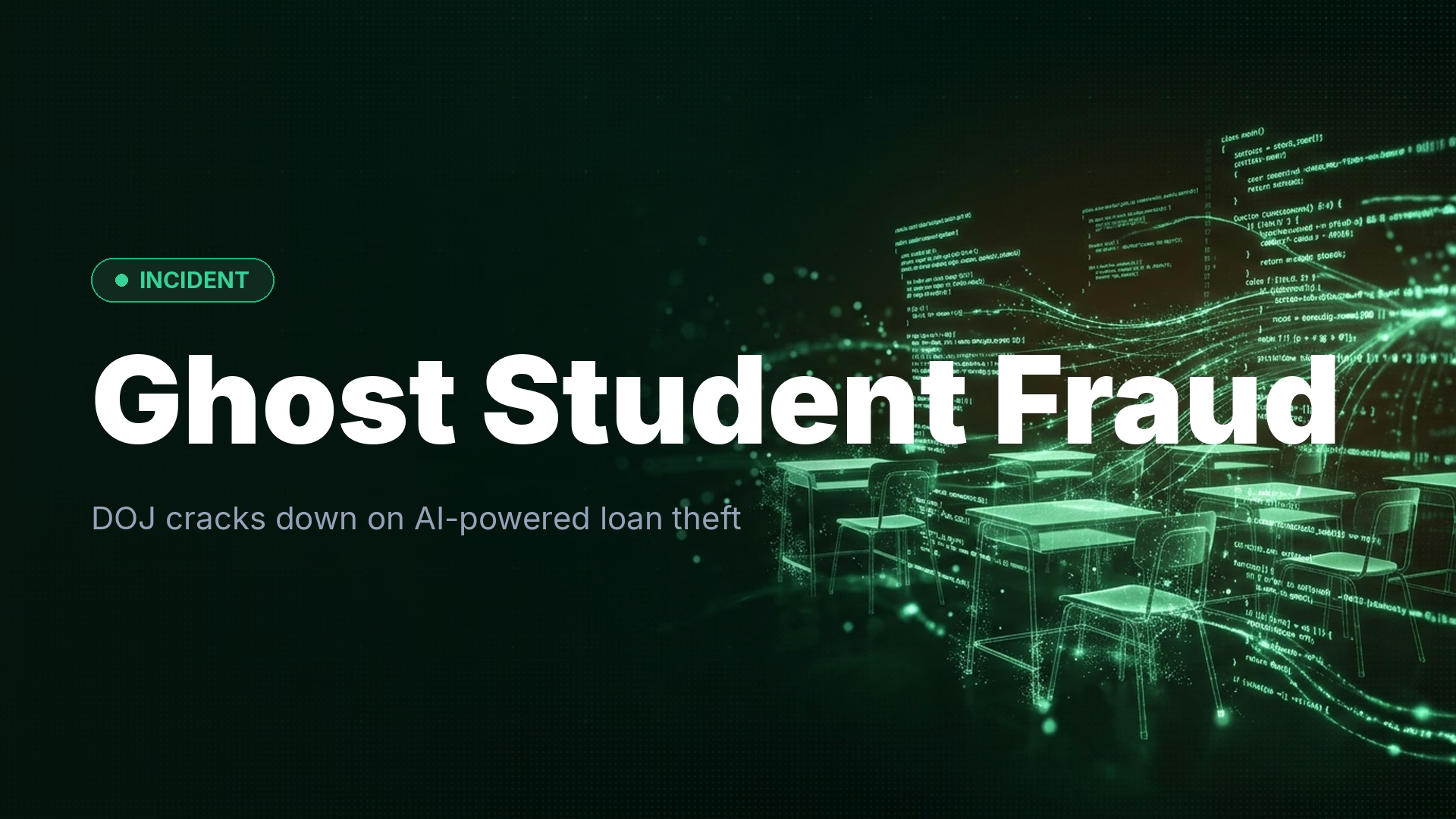
Officially launched on October 30, 2026.
The Department of Justice has unveiled a major crackdown on thousands of fraudulent enrollments in which perpetrators used AI tools to complete coursework and steal millions in federal student loan disbursements. The scheme, which authorities officially disclosed on October 30, 2026, involved fake identities enrolling in online degree programs, deploying AI systems to pass assignments, and collecting financial aid funds without ever attending classes.
How the Ghost Student Scheme Operated
According to DOJ investigators, fraud networks created thousands of fabricated student identities and enrolled them in accredited online institutions. Once enrolled, the perpetrators used AI-powered course completion tools to automatically generate essays, complete quizzes, and submit assignments convincing enough to pass academic standards. The fraudulent students never logged into live sessions or engaged with instructors, yet maintained passing grades sufficient to trigger federal loan disbursements.
Financial aid funds flowed directly to accounts controlled by the fraud operators. Investigators estimate the total theft at several million dollars across multiple institutions, though the full scope remains under review as the probe expands.
AI Tools Enabled Large-Scale Automation
The scheme relied on sophisticated AI systems capable of analyzing course syllabi, reading assignment prompts, and generating academically credible responses at scale. Unlike earlier forms of academic fraud that required manual effort per student, these AI tools allowed operators to manage hundreds of ghost enrollments simultaneously with minimal human oversight.
- AI systems analyzed course materials and generated contextually appropriate essays within minutes
- Automated submission systems mimicked human login patterns to avoid detection algorithms
- Fraud networks coordinated across multiple institutions to maximize loan disbursement amounts
Investigators noted that some AI-generated work was indistinguishable from authentic student submissions, making detection through traditional plagiarism tools ineffective.
Release Date and Enforcement Timeline
The Department of Justice officially launched this enforcement action on October 30, 2026. Authorities indicated the investigation began earlier in 2026 after financial aid offices at several institutions flagged unusual patterns in disbursement requests and reported them to federal investigators.
Prosecutors have filed charges against multiple individuals and are pursuing asset forfeiture to recover stolen funds. The DOJ stated that additional arrests are expected as the investigation continues.
Impact on Legitimate FAFSA Applications
The crackdown is expected to complicate the financial aid application process for legitimate students. According to sources familiar with the enforcement effort, FAFSA may implement stricter verification requirements including enhanced identity checks, manual review of suspicious applications, and increased documentation demands before disbursing funds.
Financial aid administrators are now working with the DOJ to develop AI detection protocols and behavioral analytics that can flag ghost student activity without creating excessive burden for genuine applicants. The balance between fraud prevention and accessibility remains a contentious issue as institutions adjust their verification systems.
What This Means
This case marks one of the first large-scale prosecutions of AI-enabled financial fraud in the education sector. As AI tools become more capable of mimicking authentic human work, institutions face growing pressure to implement detection systems that can differentiate between legitimate and fraudulent activity. The incident highlights the urgent need for regulatory frameworks that address AI misuse in contexts where automated systems can directly facilitate theft of public funds. Students applying for aid in 2027 should expect longer processing times and additional verification steps as institutions implement safeguards.


on Emergent today


