


DSCI LLM Integration Enables Custom Workflow Automation

💡 TL;DR
- DSCI launches LLM integration allowing developers to create custom CI/CD workflows using natural language instructions instead of manual configuration.
- The integration enables automated pipeline creation, testing workflows, and deployment processes through conversational AI interfaces with existing LLM providers.
- Developers can now describe desired automation workflows in plain language, reducing setup time and technical barriers for continuous integration tasks.
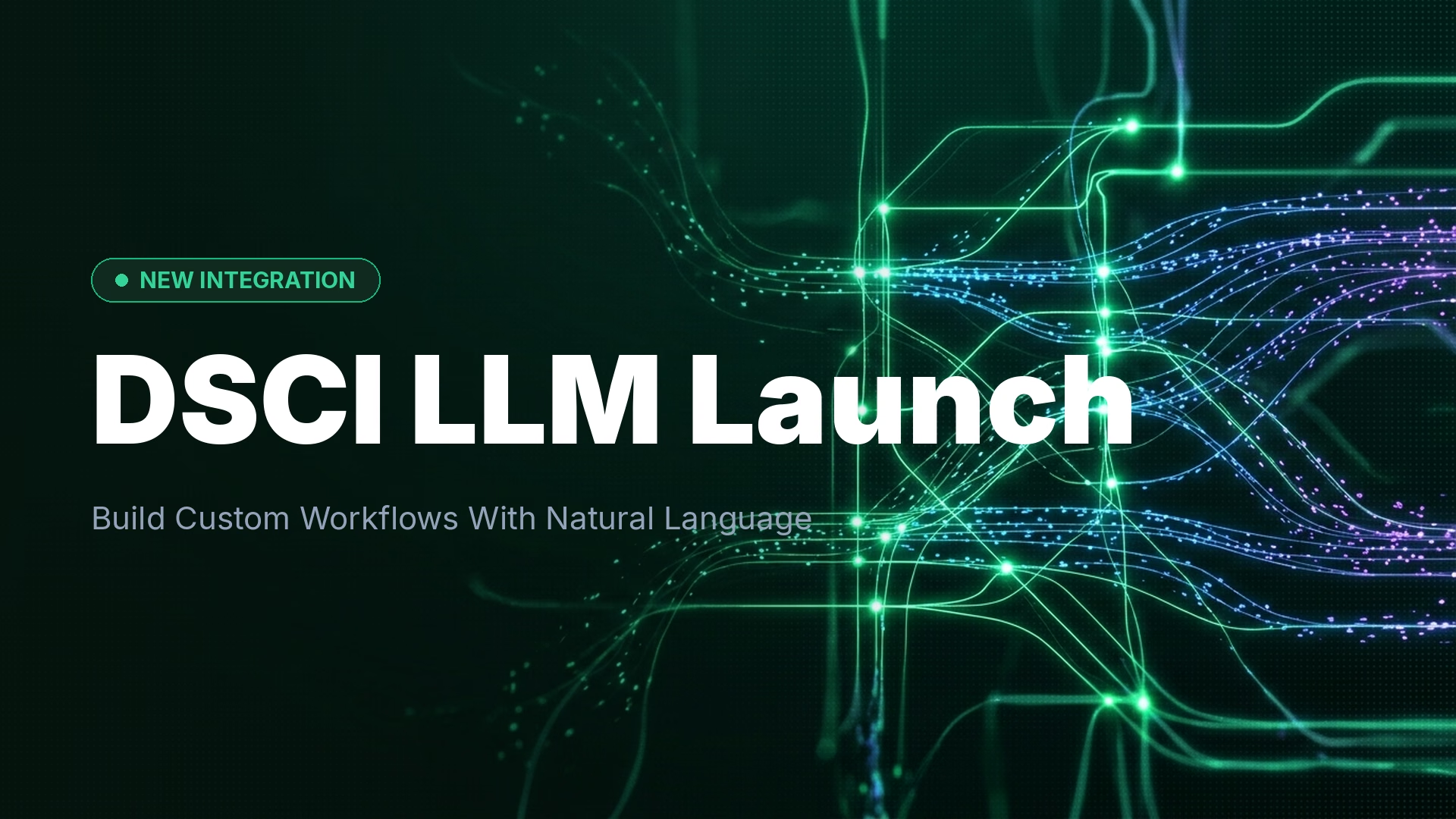
DSCI (Dead Simple CI) has officially launched on September 18, 2026 with integrated LLM capabilities that allow developers to create custom workflows and pipelines using natural language instructions. The Sparrow Hub-hosted platform eliminates traditional configuration complexity by enabling conversational workflow design through large language model interfaces.
Natural Language Workflow Creation
The DSCI LLM integration transforms how developers approach continuous integration and deployment automation. Instead of writing YAML configuration files or navigating complex UI panels, users can describe their desired workflow in plain English. The system interprets these instructions and generates appropriate pipeline configurations automatically.
This approach significantly reduces the technical barrier for teams wanting to implement automated testing, build processes, and deployment workflows. Developers can iterate on pipeline designs through conversational refinement rather than manual editing cycles.
Release Date and Availability
The DSCI LLM workflow feature officially launched on September 18, 2026 through the Sparrow Hub documentation portal. The integration is available immediately to DSCI users, with documentation and implementation examples provided in the announcement post.
Custom Pipeline Capabilities
The LLM-powered system supports a wide range of workflow automation scenarios:
- Automated test suite execution with conditional branching based on results
- Multi-stage build pipelines with environment-specific configurations
- Deployment workflows with rollback capabilities and health checks
- Custom notification and reporting integrations
- Resource provisioning and infrastructure management tasks
Each workflow component can be specified through natural language descriptions, with the LLM handling the translation to executable pipeline definitions. Users maintain full control over the generated configurations and can modify them directly if needed.
Integration Architecture
DSCI connects to existing LLM providers rather than hosting its own model infrastructure. This architecture allows users to leverage their preferred language models while maintaining the simplicity of DSCI's core CI/CD platform. The system supports standard API interfaces, making it compatible with major LLM providers currently available in 2026.
The integration maintains DSCI's focus on simplicity by abstracting the complexity of prompt engineering and API management. Users interact with a streamlined interface that handles the underlying LLM communication automatically.
What This Means
The DSCI LLM integration represents a practical application of conversational AI in DevOps tooling. By reducing configuration overhead, the platform makes sophisticated automation accessible to smaller teams and individual developers who may lack dedicated DevOps expertise. The natural language interface lowers adoption barriers while maintaining the flexibility needed for complex deployment scenarios. As AI workflow builders continue to evolve, tools like DSCI demonstrate how LLM integration can streamline technical processes without sacrificing control or customization capabilities.
on Emergent today




