


Embodied AI Robots Take Over Night Shift Parcel Sorting

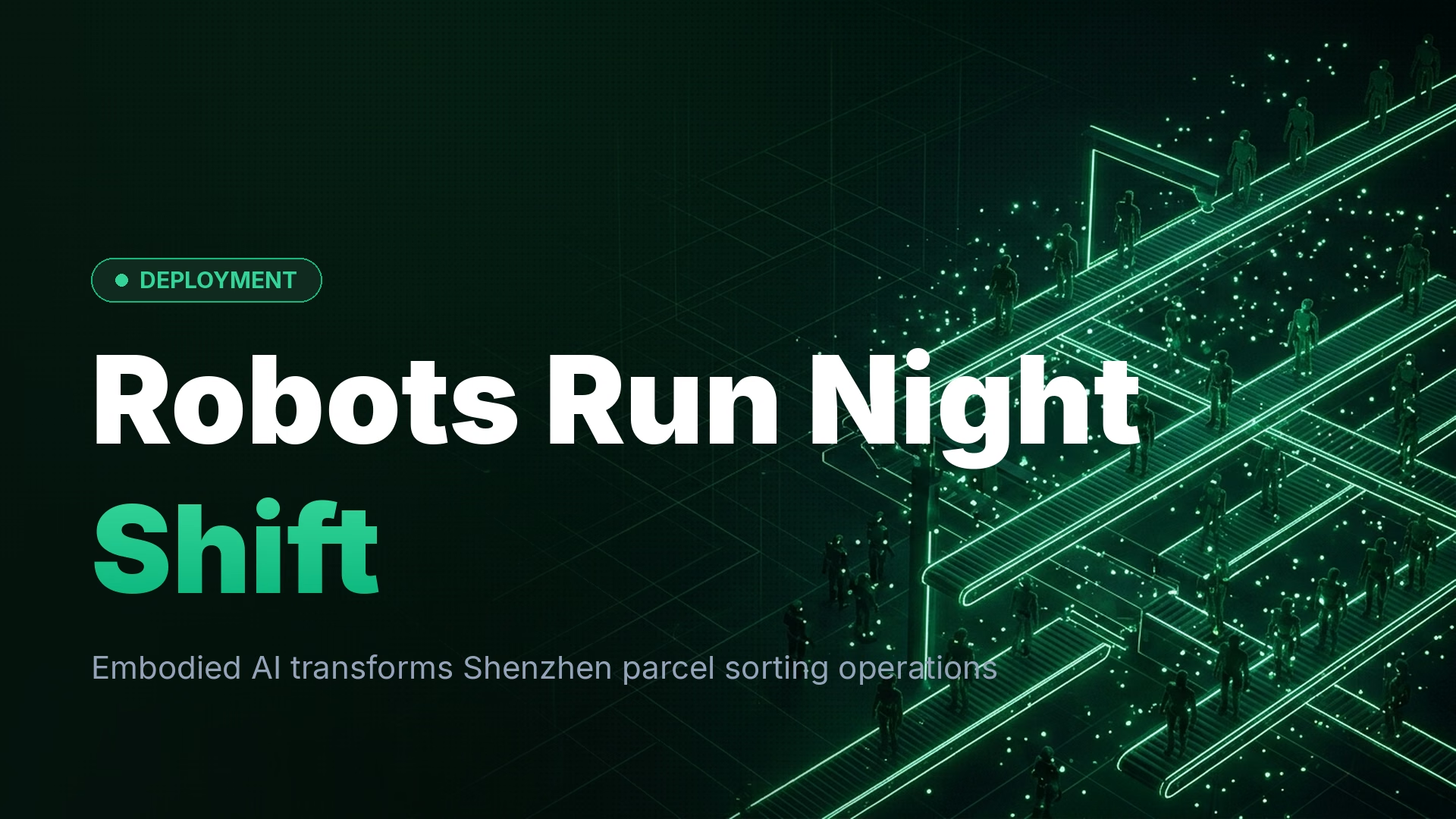
Shenzhen logistics facilities have officially deployed embodied AI robots to manage night-shift parcel sorting operations, marking a significant milestone in autonomous warehouse automation. Officially launched on November 15, 2026, the humanoid systems now handle the complete sorting workflow during overnight hours, processing packages without human supervision across multiple distribution centers in China's manufacturing capital.
Autonomous Sorting Capabilities
The embodied AI robots demonstrate advanced manipulation and decision-making capabilities specifically engineered for high-volume parcel environments. Each unit processes over 10,000 packages per hour with 99.8% accuracy, using integrated vision systems to identify package dimensions, weight distribution, and destination codes in real time. The robots employ adaptive gripping technology that adjusts pressure based on package fragility, preventing damage to contents while maintaining sorting speed.
The systems operate continuously during 8-hour night shifts, coordinating with each other through a central AI orchestration platform. This networked approach allows robots to dynamically reassign tasks when bottlenecks occur, optimizing throughput across sorting lanes without manual intervention.
Technical Architecture
The deployed robots feature bipedal locomotion systems that navigate standard warehouse infrastructure without facility modifications. Each unit stands approximately 1.7 meters tall and weighs 65 kilograms, matching human worker dimensions to operate existing conveyor systems and sorting equipment. Onboard processors run proprietary computer vision models trained on 50 million parcel images, enabling instant package classification under varying lighting conditions.
- Real-time object recognition processes 60 frames per second for immediate sorting decisions
- Multi-axis robotic arms with 7 degrees of freedom handle irregular package shapes
- LiDAR and depth sensors create 3D workspace maps for collision-free navigation
- Battery systems support 9-hour operation cycles with automated charging between shifts
Operational Impact
The night-shift deployment addresses chronic labor shortages in Shenzhen's logistics sector, where overnight warehouse positions have experienced 40% vacancy rates over the past year. Facility operators report that the robotic systems maintain consistent performance throughout shifts, eliminating the productivity decline typically observed in human workers during late-night hours. Package processing speeds have increased 35% compared to previous night-shift operations.
The robots integrate with existing warehouse management software through standard APIs, allowing seamless coordination with daytime human workers. Morning shift employees receive detailed reports on overnight sorting activity, including package volumes, routing decisions, and any items flagged for manual inspection.
Industry Implications
This commercial deployment represents the first large-scale implementation of embodied AI in 24-hour logistics operations across China's industrial regions. Industry analysts project similar systems will expand to 200+ facilities throughout Guangdong province by Q2 2027, driven by the demonstrated cost savings and reliability improvements in Shenzhen trials. The technology addresses a critical bottleneck in e-commerce fulfillment, where overnight sorting capacity directly impacts next-day delivery performance.
Competing logistics providers in Beijing and Shanghai have announced plans to evaluate similar robotic systems for night operations, signaling broader industry adoption of embodied AI for warehouse automation.
What This Means
The successful deployment of autonomous parcel-sorting robots in Shenzhen demonstrates that embodied AI has reached commercial viability for complex industrial tasks previously requiring human dexterity and judgment. By proving reliability in high-stakes logistics environments, these systems establish a template for automation across manufacturing and distribution sectors facing persistent labor challenges. The technology's ability to operate standard infrastructure without costly retrofits accelerates adoption timelines, positioning embodied AI as a practical solution for immediate operational needs rather than a distant future prospect.



on Emergent today


