


Envision Deploys First 800V System for Green AI Power

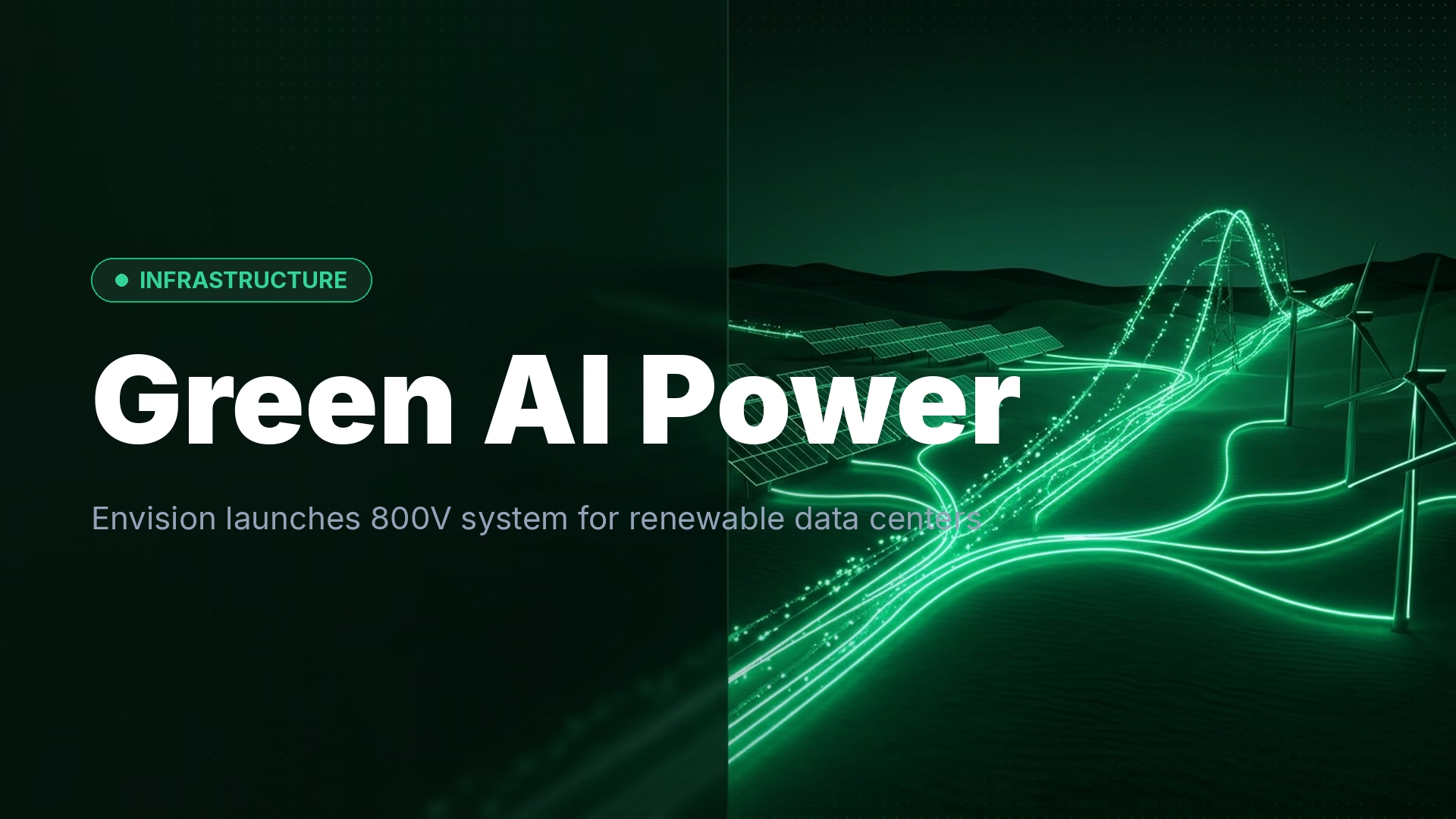
Envision Group has officially launched the world's first commercial 800-volt direct current system designed to power artificial intelligence data centers with renewable energy. Officially launched on November 2, 2026, the integrated platform is now operational at the company's Galaxy Campus in Ulanqab, Inner Mongolia, marking a significant step in China's effort to leverage its renewable energy infrastructure for AI computing demands.
Technical Architecture and Innovation
The 800V DC system integrates three core components: solid-state transformers, battery energy storage, and a split-second controller that coordinates renewable energy sources with grid power. According to Envision senior vice president Kevin Huang, the platform addresses a critical challenge facing AI infrastructure: "AI data centers need power systems that coordinate renewable energy, energy storage, and the grid to meet computing demand."
The architecture delivers measurable efficiency gains over conventional power systems. By operating at higher voltage levels, the platform reduces copper and cable requirements, resulting in a more compact footprint and lower infrastructure costs. The system's direct current design eliminates multiple conversion steps, improving overall power delivery efficiency for AI accelerators.
Galaxy Campus Capacity and Timeline
The Galaxy Campus facility is scheduled for completion by the end of 2028. At full capacity, the 3-gigawatt installation will support up to 1 million AI accelerators operating in parallel. Envision projects that more than 80% of the campus's power will come directly from clean energy sources, a significantly higher proportion than typical data center operations.
The deployment timeline positions Envision ahead of competitors in the race to build renewable-powered AI infrastructure. The company's ability to source and integrate renewable energy at scale reflects China's established manufacturing capacity in wind turbines, solar panels, and battery storage systems.
Mission Gobi Expansion Strategy
The 800V system deployment at Galaxy Campus serves as the technical foundation for Envision's broader Mission Gobi initiative. The program targets 5 GW of AI data center capacity in desert regions worldwide by 2030. Desert locations offer advantages for renewable energy integration: abundant solar resources, available land, and cooler nighttime temperatures that reduce cooling requirements.
The initiative reflects a strategic bet that renewable energy costs in remote locations, combined with improved transmission and storage technology, can compete with conventional grid power for latency-tolerant AI workloads like model training and batch inference.
What This Means
Envision's 800V system represents a practical test of whether renewable energy infrastructure can meet the intensive power demands of AI computing at commercial scale. The Galaxy Campus deployment will provide performance data on system reliability, renewable energy integration rates, and operational costs that will inform future data center designs. If successful, the architecture could establish a template for AI infrastructure in regions with strong renewable resources but limited grid capacity, potentially reshaping the geographic distribution of AI computing capacity over the next decade.



on Emergent today


