


EtherPK Kanban Board Hands Markdown Tasks to Claude Code

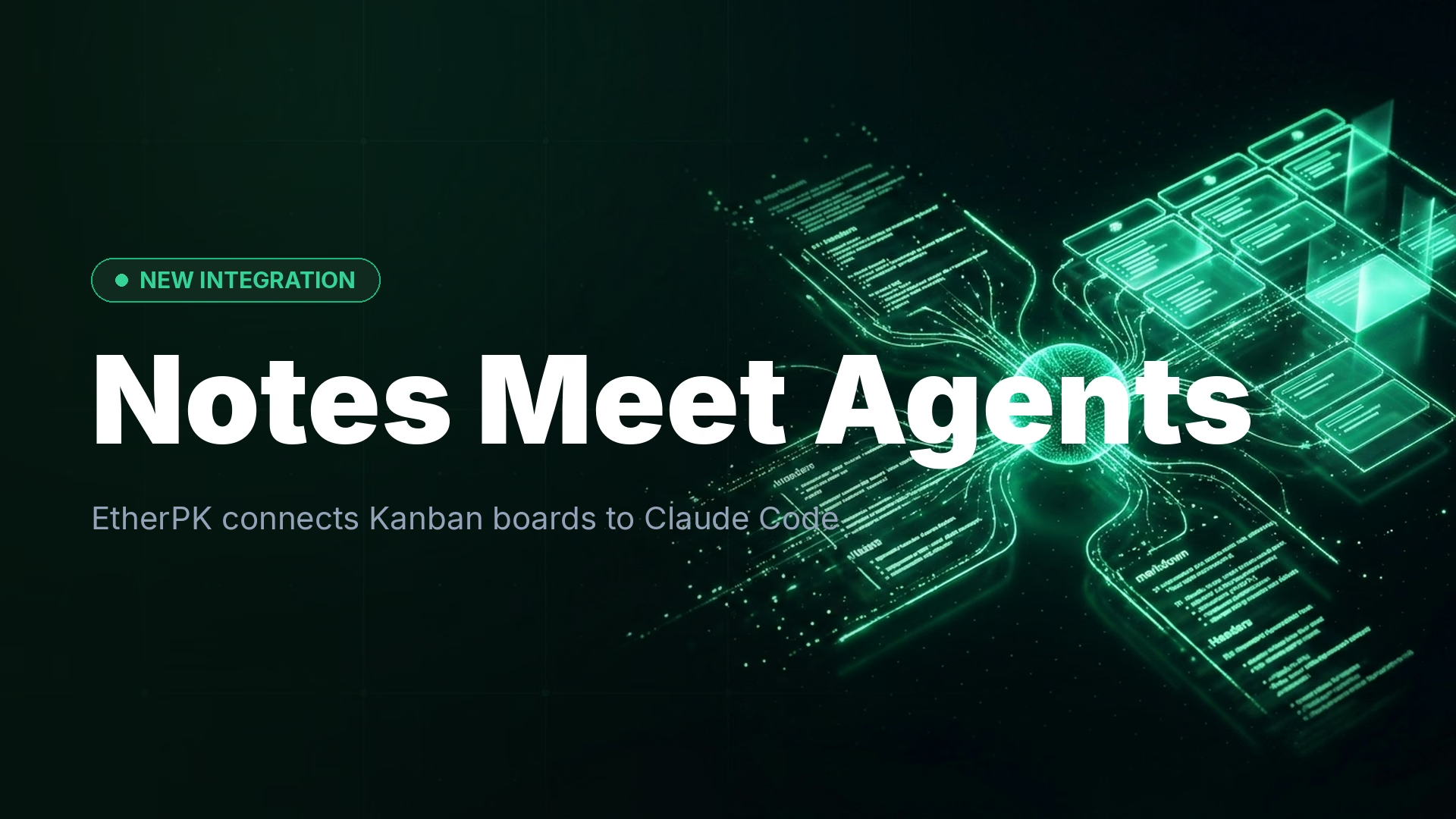
EtherPK, a markdown and wikilink based notes application, has launched a powerful integration connecting its Kanban board functionality directly to Claude Code through an MCP server. The system allows users to manage tasks as plain markdown checkboxes in their notes while seamlessly handing off work with full context to AI agents. Officially launched on November 5, 2026, the integration bridges personal knowledge management with autonomous coding assistance.
How EtherPK Tasks Work
Tasks in EtherPK are markdown checkbox lines written anywhere in your notes, created whenever an idea or action item emerges. The simplicity of plain text checkboxes provides maximum flexibility, as tasks can be documented inline with meeting notes, project documentation, or daily journals without switching contexts or applications.
The system becomes powerful through nesting. When you indent a task under another, EtherPK automatically creates parent-child relationships. Subtasks inherit context from their parents, building a hierarchical structure that captures project scope and dependencies. This nested approach mirrors how developers naturally think about breaking down complex work into manageable pieces.
Kanban Board Integration
EtherPK's client transforms these markdown checkboxes into a visual Kanban board, providing drag-and-drop organization across columns like To Do, In Progress, and Done. The board reads directly from your markdown files, meaning every change syncs bidirectionally: moving a card updates the markdown, and editing the markdown updates the board.
Users can attach metadata to tasks using wikilinks, tags, and inline properties. Due dates, priority levels, and project associations become queryable attributes that drive board filtering and sorting. The visual interface offers project management capabilities while preserving the longevity and portability of plain text storage.
Claude Code Handoff via MCP Server
The breakthrough feature is the MCP (Model Context Protocol) server that connects EtherPK to Claude Code. When a task is ready for AI agent execution, users can hand it off with a single action. The MCP server transmits not just the task description but the full context tree: parent tasks, sibling tasks, linked documents, and relevant notes.
This context preservation solves a critical problem in AI-assisted development. Rather than copying and pasting instructions with incomplete background, the integration ensures Claude Code receives the same knowledge base the human developer would reference. The AI agent can then execute the task with proper understanding of project structure, naming conventions, and architectural decisions documented in the connected notes.
Availability and Technical Details
The integration is available now through the EtherPK client application. The MCP server implementation is open source, allowing developers to inspect the protocol and extend functionality. Tasks remain stored as standard markdown files, ensuring compatibility with version control systems and other text-based tools.
The system supports various task formats including GitHub-style checkboxes, custom metadata fields, and deadline specifications. Users can configure which context elements flow to Claude Code, balancing comprehensive information with token efficiency. The integration works with both local and cloud-synced markdown repositories.
What This Means
EtherPK's integration represents a meaningful step toward making AI agents practical teammates rather than isolated tools. By grounding agent work in the same markdown files developers already use for planning and documentation, the system reduces friction in delegating tasks. The approach acknowledges that effective AI assistance requires rich context, and that context already exists in well-maintained project notes. For teams using markdown-based workflows, this creates a natural bridge between human planning and automated execution without abandoning existing knowledge management practices.


on Emergent today


