


EU Agentic AI Adoption Grows Across Enterprises in 2026

Officially launched on October 14, 2026.
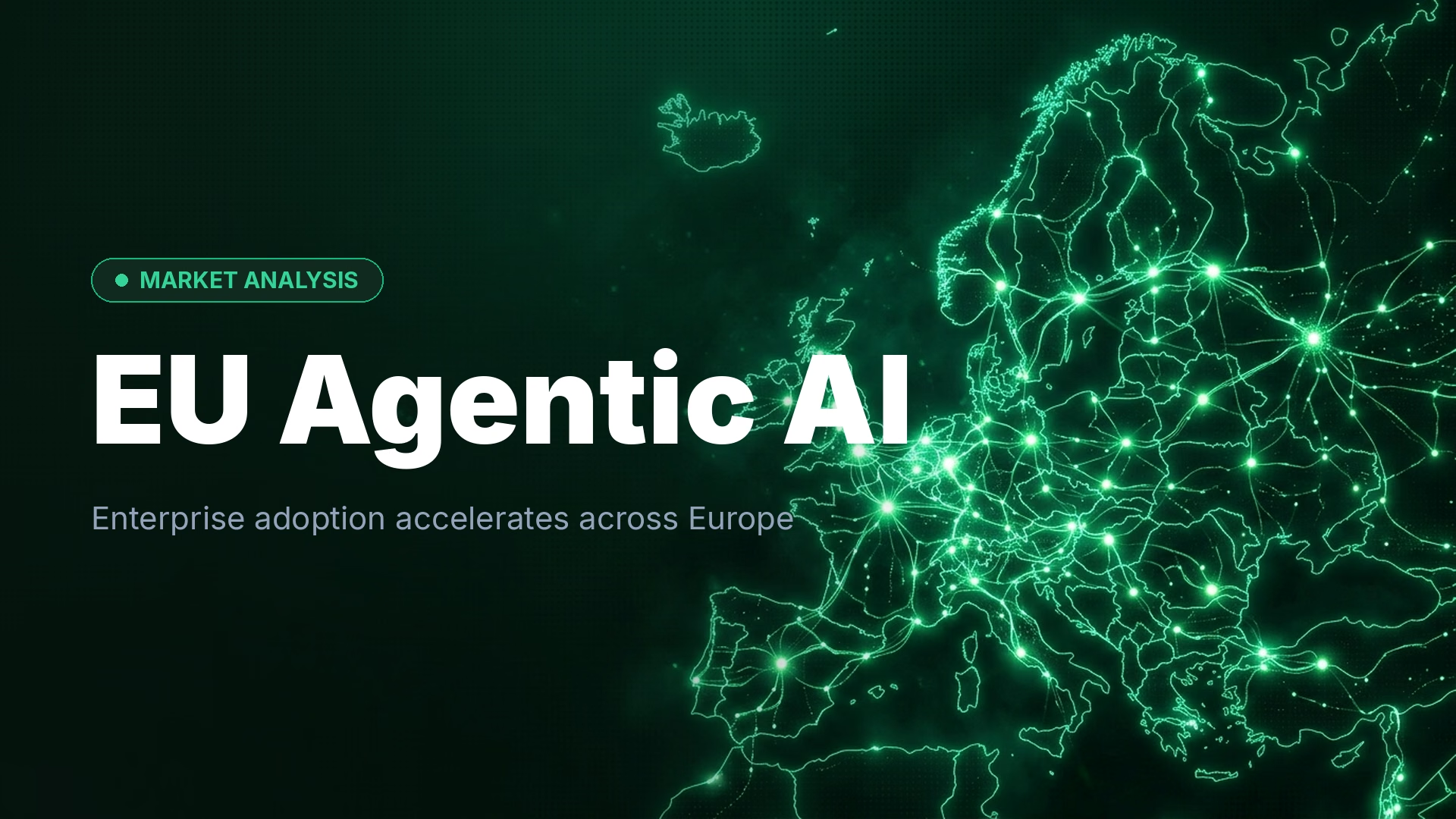
Agentic AI systems are moving from experimental deployments to production environments across European Union enterprises, according to new analysis published by OpenAI. The research, based on deployment data from October 2026, reveals that 47 percent of large EU enterprises now run autonomous agents in customer-facing or operational roles, marking a 23 percentage point increase from Q1 2026. The findings highlight both the momentum behind agentic technology and the substantial gaps in adoption among smaller organizations.
Enterprise Deployment Patterns Emerge
Large enterprises lead agentic AI implementation, with financial services and healthcare sectors showing the strongest adoption rates. Banks and insurance providers deploy agents primarily for compliance monitoring, fraud detection, and personalized customer advisory services. Healthcare organizations leverage autonomous systems for appointment scheduling, medical record triage, and preliminary diagnostic support workflows.
Manufacturing and logistics companies represent the fastest-growing adoption segment, with 34 percent now using agents for supply chain optimization and predictive maintenance. These systems analyze sensor data, adjust production schedules autonomously, and coordinate multi-site inventory management without human intervention for routine decisions.
Small Business Adoption Lags Behind
Only 18 percent of EU small and medium enterprises currently deploy agentic AI, despite expressing high interest in the technology. The OpenAI analysis identifies three primary barriers: implementation complexity, concerns about regulatory compliance under the EU AI Act, and uncertainty about return on investment for smaller-scale operations.
Businesses with fewer than 50 employees cite lack of technical expertise as the most significant obstacle, with 61 percent indicating they need turnkey solutions rather than customizable platforms. Cost sensitivity also plays a role, though subscription-based agentic services starting at 200 euros monthly have begun addressing this concern.
Regulatory Clarity Drives Confidence
The EU AI Act's classification framework for high-risk AI systems has paradoxically accelerated rather than slowed adoption among regulated industries. Enterprises report that clear compliance requirements reduce deployment uncertainty compared to earlier ambiguous guidance. Financial institutions particularly benefit from standardized risk assessment protocols that map directly to agentic system capabilities.
Organizations in Germany, France, and the Netherlands show the highest adoption rates, correlating with robust national AI strategies and government-supported pilot programs. Cross-border deployments remain limited, with 73 percent of implementations confined to single-country operations due to data residency requirements and language localization needs.
Release Date and Data Methodology
OpenAI officially released this analysis on October 14, 2026, drawing from anonymized deployment telemetry across enterprise API usage and partnerships with EU business consultancies. The data set covers approximately 12,000 organizations ranging from 10 to 50,000 employees, weighted to represent the broader EU business population.
What This Means
The EU market is entering a maturation phase for agentic AI, where initial experimentation gives way to measurable business impact and scaled deployments. The 29 percentage point gap between large enterprise and small business adoption represents both a challenge and an opportunity. As platforms simplify implementation and regulatory frameworks stabilize, the next 18 months will likely determine whether agentic AI becomes a broad-based productivity tool or remains concentrated among resource-rich organizations. For vendors and enterprises alike, the focus is shifting from proving technical feasibility to demonstrating clear ROI and managing the organizational change that autonomous systems require.

on Emergent today


