


FDA Clears AI Software for Five-Year Breast Cancer Risk

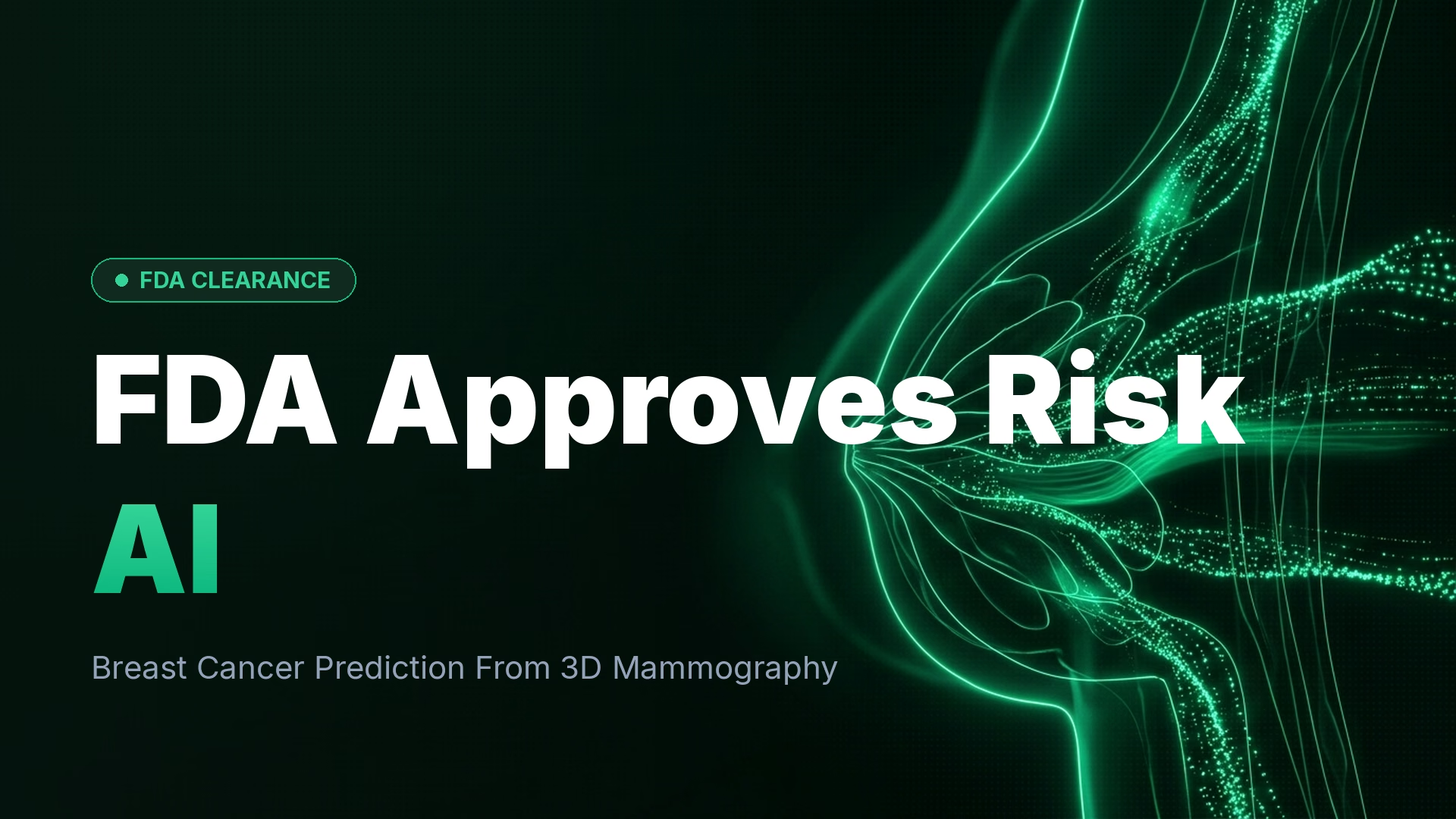
Officially launched on November 25, 2026.
The FDA has cleared artificial intelligence software that predicts five-year breast cancer risk directly from digital breast tomosynthesis (DBT) scans, marking a significant advance in preventive radiology. The clearance enables healthcare providers to move beyond traditional diagnostic imaging toward proactive risk stratification, potentially transforming how millions of women approach breast cancer screening and prevention.
How the AI System Works
The cleared software analyzes 3D mammography images using deep learning algorithms trained on large datasets of DBT scans with known clinical outcomes. Unlike conventional computer-aided detection systems that flag suspicious lesions, this AI generates a personalized risk score indicating the probability a patient will develop breast cancer within five years. The system processes standard screening images without requiring additional scans or radiation exposure.
Radiologists receive the risk assessment alongside their diagnostic workflow, enabling them to recommend tailored screening intervals and preventive strategies. High-risk patients may qualify for supplemental imaging, genetic counseling, or chemoprevention discussions, while lower-risk individuals might safely extend screening intervals.
Release Date and Clinical Impact
Officially cleared on November 25, 2026, the software addresses a critical gap in breast cancer prevention. Current screening protocols rely primarily on family history and genetic markers, missing many at-risk patients who lack these traditional indicators. AI-driven risk prediction from routine imaging could identify previously unrecognized high-risk individuals earlier in the disease trajectory.
Early adopter health systems plan to integrate the software into existing radiology information systems within the next six months. Clinical experts anticipate the technology will support more equitable care by providing sophisticated risk assessment to patients regardless of access to genetic testing or specialized risk clinics.
Digital Breast Tomosynthesis Advantage
The FDA clearance specifically covers DBT scans rather than traditional 2D mammography, leveraging the richer anatomical detail available in three-dimensional imaging. DBT reduces tissue overlap that can obscure small lesions and provides clearer visualization of breast architecture. This enhanced image quality enables AI models to detect subtle tissue patterns associated with future cancer development that may be invisible in 2D views.
As DBT adoption has accelerated across screening facilities over the past several years, the availability of large DBT training datasets has improved AI model performance. The cleared software represents the convergence of advanced imaging hardware and sophisticated machine learning techniques.
Regulatory and Reimbursement Considerations
The FDA clearance validates the software's safety and effectiveness, but widespread adoption depends on reimbursement policies. Healthcare systems and payers are evaluating how to incorporate AI-generated risk scores into clinical decision pathways and payment models. Some insurers have indicated support for coverage, recognizing potential cost savings from optimized screening strategies and earlier intervention.
Professional radiology societies are developing guidance on integrating predictive AI into breast imaging reports and communicating risk information to patients. Standardized reporting frameworks will help ensure consistent clinical interpretation across diverse practice settings.
What This Means
FDA clearance of AI software for predicting five-year breast cancer risk from DBT scans signals a fundamental shift in mammography from purely diagnostic to predictive medicine. By identifying high-risk patients during routine screening, the technology enables personalized prevention strategies that could reduce late-stage diagnoses and improve survival rates. As clinical deployment expands through 2027, the integration of AI risk prediction into standard mammography workflows may become a cornerstone of modern breast cancer prevention, extending the benefits of precision medicine to population-level screening programs.


on Emergent today


