


First AI Supercomputer Heads to Moon in Historic Mission

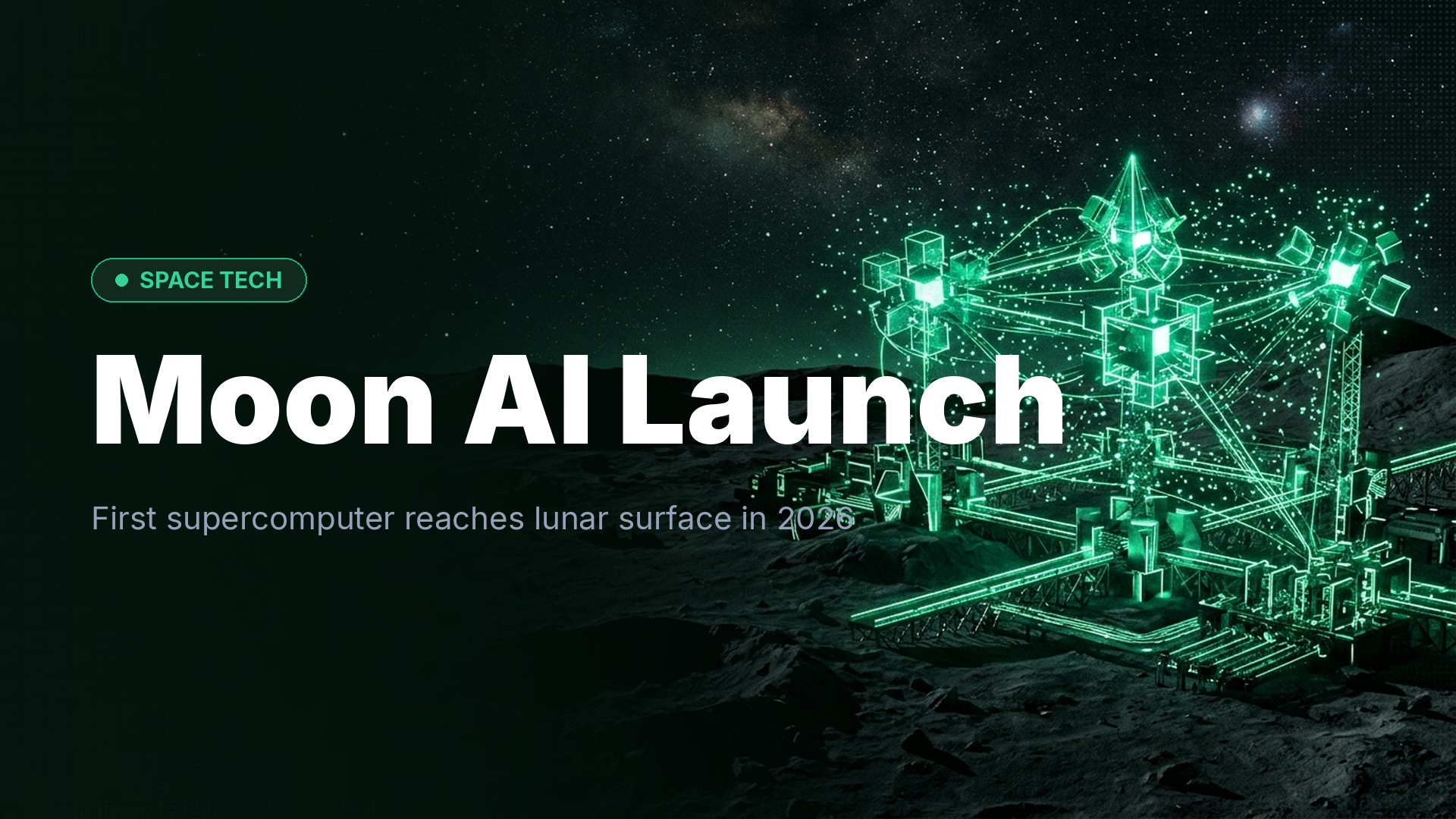
A revolutionary AI supercomputer system is launching to the Moon in a mission that represents humanity's first deployment of advanced computational infrastructure beyond Earth orbit. Officially announced October 29, 2026, this groundbreaking initiative will establish autonomous decision-making capabilities on the lunar surface, eliminating the communication delays that have constrained space exploration for decades.
Officially Launched on October 29, 2026
The lunar AI supercomputer mission was officially released on October 29, 2026, marking a transformative moment in space technology. Unlike Earth-based systems that require constant human oversight, this specialized computing platform is designed to operate independently in the harsh lunar environment, processing vast datasets and making critical decisions in real time without waiting for instructions from mission control.
Technical Capabilities and Design
The AI supercomputer reportedly features radiation-hardened processors capable of withstanding the Moon's extreme temperature fluctuations and cosmic radiation exposure. Engineers have equipped the system with machine learning algorithms optimized for autonomous navigation, resource identification, and equipment diagnostics. The platform can analyze geological samples, coordinate robotic operations, and adjust mission parameters based on environmental conditions without human intervention.
Processing power on the lunar surface eliminates the 2.5-second communication delay between Earth and Moon, enabling instantaneous responses to equipment malfunctions, obstacle detection, and scientific discoveries. This capability is essential for maintaining continuous operations during the lunar night, when direct communication with Earth may be limited.
Infrastructure for Permanent Lunar Presence
Space agencies view this deployment as foundational infrastructure for sustained human activity on the Moon. The AI system will support future missions by:
- Analyzing terrain for optimal habitat placement and resource extraction sites
- Managing power distribution across lunar base modules
- Monitoring life support systems with predictive maintenance algorithms
- Coordinating autonomous rovers during extended exploration campaigns
By establishing computational independence from Earth, mission planners can scale lunar operations beyond the limitations of remote control, paving the way for construction projects, mining operations, and scientific research stations that operate continuously.
Implications for Deep Space Exploration
The lunar deployment serves as a proving ground for AI systems that will be essential for Mars missions and beyond. As humanity ventures farther into the solar system, communication delays grow from seconds to minutes or hours, making autonomous decision-making not just advantageous but mandatory. The Moon's proximity allows engineers to test, refine, and validate AI architectures before committing them to multi-year interplanetary journeys.
According to space technology experts, successful operation of this supercomputer will accelerate development of self-sufficient outposts capable of supporting human crews for extended periods without constant Earth-based supervision.
What This Means
The arrival of AI supercomputing on the Moon represents more than a technological milestone. It signals humanity's transition from visiting space to inhabiting it. By embedding intelligent systems in extraterrestrial environments, we create the computational backbone for a multi-planetary civilization. This mission transforms the Moon from a destination into a platform, one where artificial intelligence handles the complex logistics that make permanent human presence achievable. The decisions made by this system in the coming months will shape space exploration strategy for generations.



on Emergent today


