


Gemini Code vs Claude Code: $800 Cost Comparison Analysis

Officially launched on October 31, 2026.
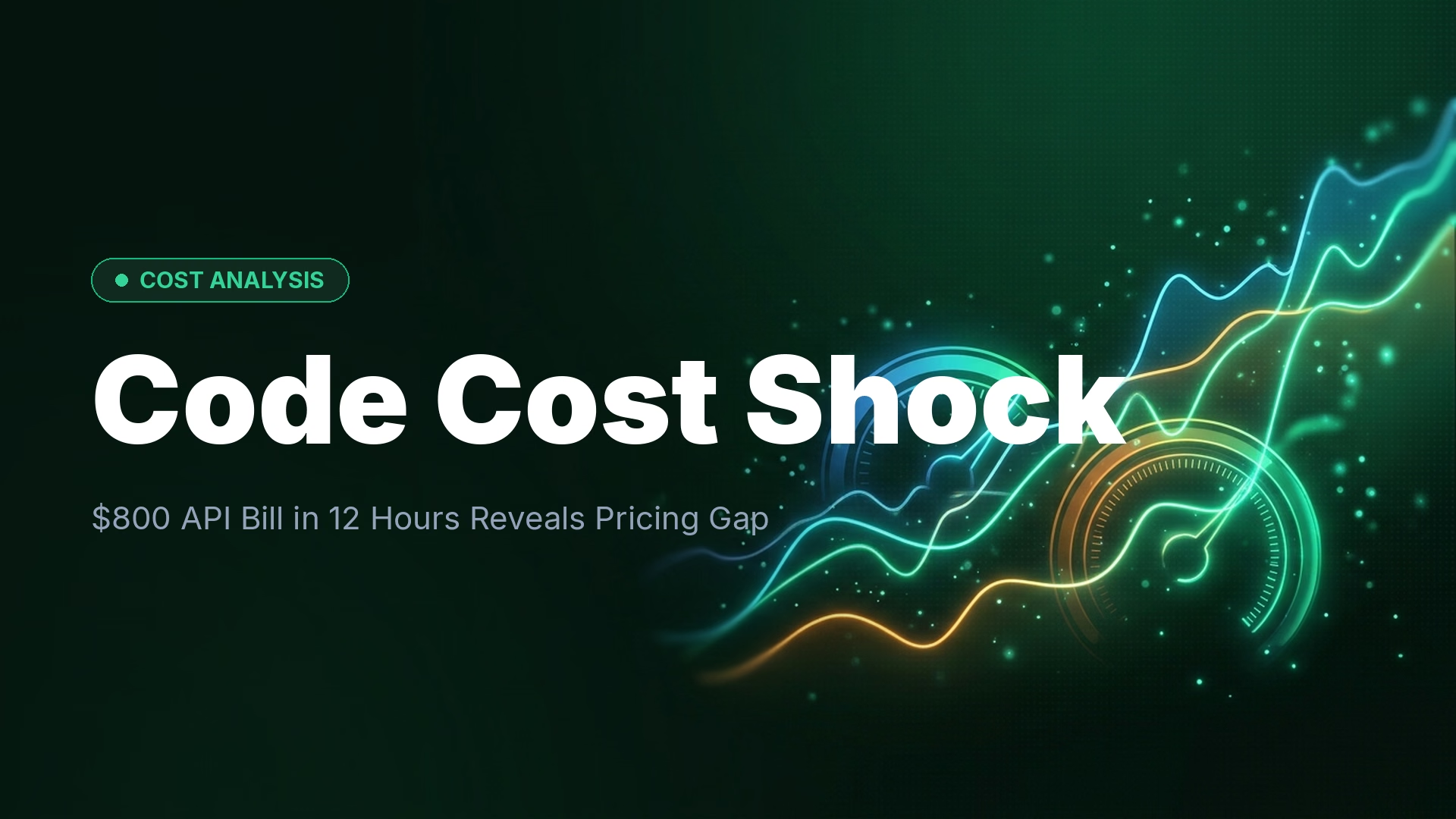
A developer's cautionary tale about AI coding assistant costs has sparked discussion in the developer community after revealing an $800 API bill accumulated in just 12 hours. The post-mortem comparison between Gemini Code and Claude Code highlights critical pricing considerations that teams must evaluate before deploying these tools in production environments.
The $800 Surprise
The incident occurred during what appeared to be a routine coding task, where the developer deployed both Gemini Code and Claude Code to handle automated code generation. According to the Hacker News post published October 31, 2026, the rapid accumulation of API charges caught the team off guard, with costs spiraling far beyond initial estimates. The 12-hour window resulted in unexpected billing that exceeded monthly budgets for similar tools.
What makes this case particularly noteworthy is the comparison between two leading code generation platforms. While both Gemini Code and Claude Code offer powerful capabilities for automated programming tasks, their pricing models and token consumption patterns differ significantly under real-world load conditions.
Release Date and Context
This cost analysis was officially shared on October 31, 2026, following the incident. Both Gemini Code and Claude Code have been available throughout 2026, with developers increasingly relying on these tools for production workflows. The timing of this post-mortem coincides with growing industry awareness about the hidden costs of AI-assisted development at scale.
Pricing Model Differences
The core issue stems from how each platform meters and bills for code generation requests. Gemini Code, Google's offering, and Claude Code, Anthropic's solution, both charge based on input and output tokens. However, the effective cost per completed task can vary dramatically based on several factors:
- Context window utilization and how much prior code each request includes
- Output verbosity and whether the model generates efficient or redundant code
- Retry logic and error handling that may trigger multiple API calls
- Rate limiting strategies that impact total request volume
The developer's experience suggests that one platform consumed significantly more tokens for equivalent tasks, though the post does not specify which service drove the majority of costs. This ambiguity itself is a warning sign, as teams often deploy multiple AI tools without granular cost attribution.
Community Response and Lessons
The Hacker News thread, which garnered 9 comments within hours of posting, reflects broader industry concerns about AI tooling economics. Developers shared similar experiences with unexpected bills from various AI APIs, noting that the advertised per-token pricing often fails to predict real-world expenses accurately.
Several commenters emphasized the importance of implementing cost guardrails before production deployment. Recommended practices include setting strict API budget limits, implementing request throttling, monitoring token consumption in real-time, and testing cost profiles with representative workloads before scaling.
What This Means
This cautionary post-mortem serves as a critical reminder that AI coding assistants, while powerful, require careful cost management. The $800 surprise in 12 hours demonstrates that token-based pricing can scale unpredictably under certain usage patterns. Development teams evaluating Gemini Code, Claude Code, or similar tools must conduct thorough cost modeling, implement robust monitoring, and establish clear budget controls. The gap between advertised pricing and real-world expenses remains a significant challenge as organizations integrate AI coding tools into their workflows. For teams already using these platforms, this incident reinforces the need for continuous cost oversight and the willingness to adjust usage patterns when billing anomalies emerge.
on Emergent today


