


Google Launches AI for Everyone in Every Language

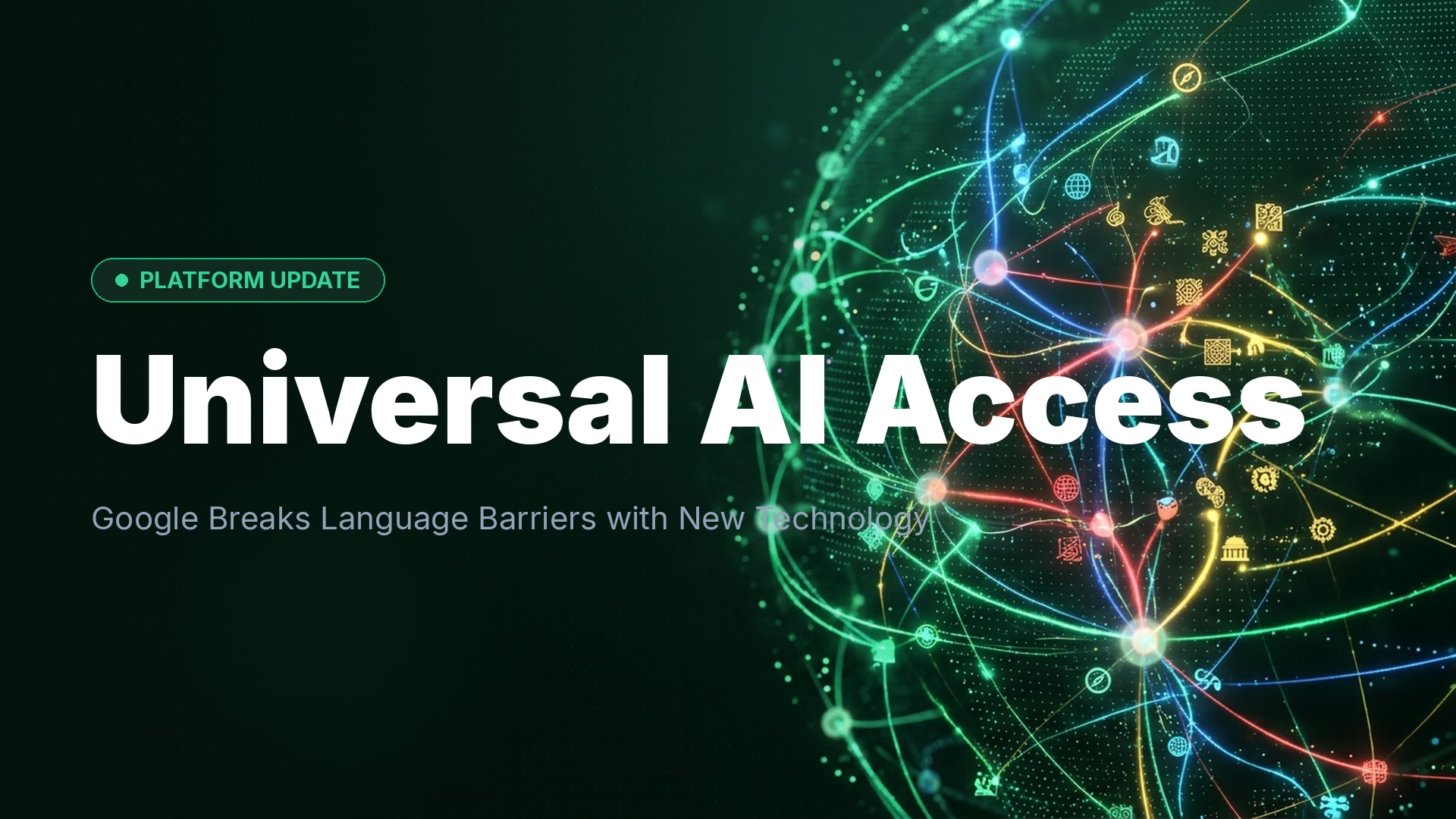
Google has officially launched a comprehensive multilingual AI initiative designed to democratize artificial intelligence access across every language worldwide. Officially released on September 15, 2026, this platform-wide expansion represents one of the tech giant's most ambitious efforts to eliminate language barriers in AI technology, extending advanced capabilities to billions of users in underserved linguistic communities.
Release Date and Availability
The multilingual AI technology officially launched on September 15, 2026, with immediate availability across Google's core product suite. The rollout includes enhanced language support in Google Search, Google Translate, Assistant, and Cloud AI services. Google confirmed that the technology is now accessible to users worldwide, with initial support for over 200 languages and dialects, including many previously underrepresented indigenous and regional languages.
Expanded Language Coverage
The initiative dramatically expands AI capabilities beyond the dominant English, Mandarin, and Spanish languages that have historically received the most development attention. Google's engineering teams have focused on low-resource languages, developing new training methodologies that require less data to achieve high-quality results. The technology includes improved speech recognition, natural language understanding, and generation capabilities tailored to the unique grammatical structures and cultural contexts of each language.
According to Google's announcement, the system leverages transfer learning and cross-lingual models to accelerate development for languages with limited digital resources. This approach allows the AI to apply knowledge gained from high-resource languages to improve performance in low-resource ones, a significant technical breakthrough that addresses long-standing challenges in large language model development.
Technical Architecture and Innovation
Google's multilingual AI platform builds on advances in neural machine translation, multimodal learning, and contextual understanding. The system can process text, speech, and images across multiple languages simultaneously, enabling more natural cross-lingual interactions. Key technical innovations include:
- Universal language encoders that create unified representations across languages
- Context-aware translation that preserves cultural nuances and idiomatic expressions
- Real-time speech-to-speech translation with natural prosody and intonation
- Adaptive learning systems that improve with user feedback and regional usage patterns
The architecture represents a departure from earlier approaches that treated each language as a separate domain, instead embracing a unified framework that recognizes linguistic commonalities and enables more efficient scaling.
Impact on Global AI Accessibility
This launch addresses a critical equity issue in AI development, where most advanced capabilities have been concentrated in a handful of widely-spoken languages. By expanding support to hundreds of languages, Google aims to ensure that AI benefits reach communities regardless of their linguistic background. The technology has immediate applications in education, healthcare, commerce, and government services in regions where digital resources have been scarce.
Industry observers note that this move could accelerate AI adoption in emerging markets and indigenous communities, potentially unlocking new economic opportunities and preserving endangered languages through digital documentation and revitalization efforts.
What This Means
Google's multilingual AI initiative marks a pivotal shift toward truly universal AI accessibility, moving beyond the English-centric development that has dominated the field. For businesses, developers, and users worldwide, this expansion means AI tools can now serve diverse populations in their native languages with comparable quality to major languages. The platform's success could set new industry standards for inclusive AI development, pressuring competitors to prioritize multilingual capabilities and challenging the assumption that cutting-edge AI must be built primarily for English speakers. As language barriers diminish, we can expect accelerated global AI adoption, new market opportunities in underserved regions, and more culturally relevant AI applications that respect linguistic diversity rather than forcing users to adapt to technology's limitations.


on Emergent today


