


Google and Unity Launch AI Gaming Platform for 2026

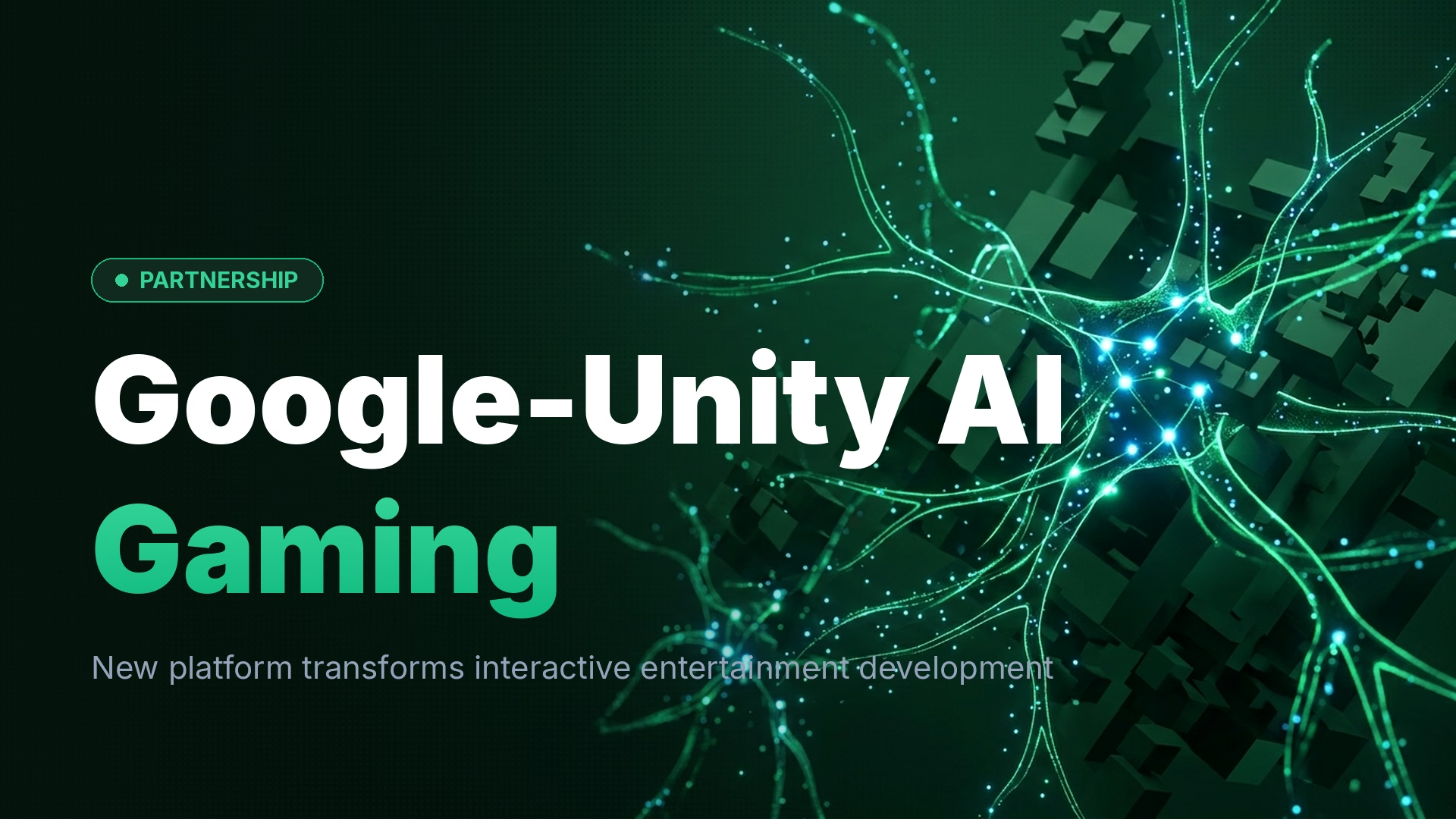
Google and Unity Technologies officially launched their collaborative AI gaming platform on October 7, 2026, marking a significant shift in how developers build interactive entertainment. The partnership combines Google's cloud infrastructure and machine learning capabilities with Unity's widely adopted game development engine, creating an integrated toolset for AI-powered gaming experiences.
Platform Architecture and Core Features
The new platform integrates Google's machine learning models directly into Unity's development environment, enabling real-time AI processing for game mechanics, character behavior, and content generation. Developers can access pre-trained models for natural language processing, computer vision, and decision-making systems without building AI infrastructure from scratch. The platform supports both cloud-based and edge computing deployment, allowing studios to optimize performance based on game requirements and player hardware capabilities.
Release Date and Availability
Officially launched on October 7, 2026, the platform is now available to Unity developers through an early access program. Google confirmed that full general availability will roll out in phases throughout late 2026, with enterprise licensing options for AAA studios and independent developer tiers for smaller teams. The partnership announced tiered pricing based on compute usage and API calls, with a free tier for prototyping and educational projects.
AI-Driven Gaming Capabilities
The platform introduces several breakthrough features for game developers:
- Adaptive NPC behavior systems that learn from player interactions and adjust difficulty dynamically
- Procedural content generation tools that create unique environments, quests, and narrative branches using generative AI
- Real-time voice synthesis and natural language understanding for more immersive character dialogue
- Player behavior analytics that help developers optimize engagement and retention
According to the partnership announcement, these tools are designed to reduce development time while increasing the depth and replayability of gaming experiences. Early beta testers reported 40-60% faster iteration cycles for AI-powered game mechanics compared to traditional scripting approaches.
Industry Implications and Developer Response
The collaboration addresses a growing demand for AI integration in gaming, where major studios have struggled to build proprietary machine learning pipelines. By offering turnkey AI solutions within Unity's familiar ecosystem, Google and Unity lower the technical barrier for implementing advanced features previously limited to well-funded development teams. Several mid-sized studios have already committed to building titles on the platform, with announcements expected in Q4 2026. Industry analysts view the partnership as a competitive response to similar initiatives from Microsoft and Epic Games, both of which have expanded AI tooling in recent months.
What This Means
The Google-Unity AI gaming platform represents a strategic convergence of cloud computing and game development, democratizing access to sophisticated machine learning tools for creators across the industry. As AI becomes central to player expectations for dynamic, personalized experiences, this partnership positions both companies to shape the technical foundation of next-generation interactive entertainment. Developers now have a production-ready path to integrate advanced AI without building infrastructure, potentially accelerating innovation across mobile, console, and PC gaming markets.
on Emergent today




