


GPT-6 Astra Is Now Live on Emergent

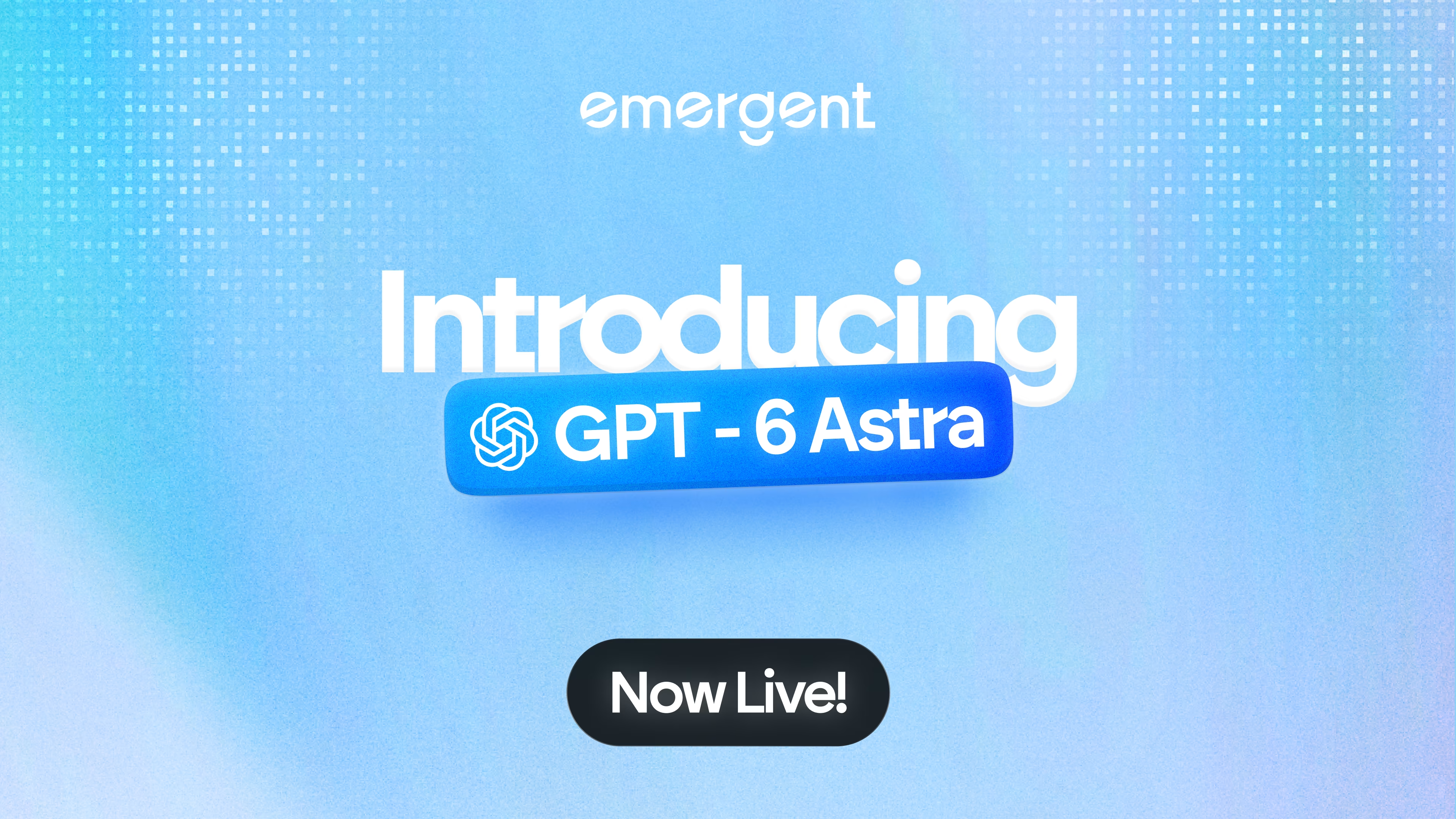
GPT-6 Astra is now live on Emergent, and every builder on the platform can select it at the start of a project, the company announced on X. Astra is OpenAI's most capable model to date, built to hold up across long, autonomous runs on the kind of hard, multi-step work that used to break earlier models partway through.
What GPT-6 Astra brings to your builds
GPT-6 Astra is OpenAI's flagship reasoning model, released on September 3, 2026, and aimed at complex reasoning, coding, computer use, and end-to-end work. It sits above the GPT-5.6 Sol, Terra, and Luna family and carries a 1,050,000-token context window with a knowledge cutoff of April 2026. OpenAI describes it as its most capable model, built for the hardest end-to-end work, and the launch benchmarks back that up in specific areas.
The standout gains for anyone building software are practical rather than abstract. Astra completes real desktop tasks on the OSWorld 2.0 benchmark in roughly 47% less time per task than Sol, and it matches the earlier Fable coding-agent score at less than half the cost per task thanks to large token-efficiency gains. It also cuts its hallucination rate roughly in half versus Sol on independent testing. For long, agentic builds, doing more work in fewer tokens is the difference that shows up in your bill and your results.
Why the "autonomous builds" framing matters
Astra is tuned for jobs that run long and mostly unattended, which is exactly the profile of a full app build. Where earlier models drifted or stalled across many steps, Astra is designed to sustain a coherent chain of work on hard tasks. That maps directly to how Emergent operates, since its agents design, code, and deploy an application across many steps from a single plain-language description.
The efficiency story reinforces this. On the Artificial Analysis Coding Agent Index, Astra lands roughly level with the Fable models on capability while spending far fewer tokens to get there. A model that holds its focus over a long run and uses fewer tokens per task is well suited to the multi-step builds Emergent runs, from backend and database to auth, integrations, and deployment.
How to use GPT-6 Astra on Emergent
Pick GPT-6 Astra at the start of your project and build as you normally would. Model selection happens per project when you begin a build, so you choose Astra for the work that suits it and another model when a different one fits better. The Universal LLM Key handles access and billing, so you reach GPT, Claude, and Gemini models through one credential with usage drawn from your Emergent credits.
There is no separate OpenAI account to create and no keys to manage. Describe the software you want, select GPT-6 Astra as your model, and Emergent builds the full-stack application that runs your business.
What it costs
GPT-6 Astra is priced at the premium end of the frontier market, at $10 per million input tokens and $50 per million output tokens, which is 2.5 times the rate of GPT-5.6 Sol and roughly on par with Claude Fable 5.1. Cached input drops to $1 per million, a 90% discount that rewards reused context. On Emergent, this usage runs through your credits under the Universal Key rather than a separate provider bill.
Cost per finished task is the number that matters more than the sticker rate. Because Astra spends fewer tokens to complete coding work, its cost per completed coding task can land below cheaper-per-token rivals, while general reasoning work runs more expensive. The full breakdown of rates, effort levels, and real-world cost is in the Astra pricing guide.
One note on cyber capabilities
Astra ships with its most advanced cybersecurity capabilities gated, a detail worth knowing if your build touches security work. OpenAI classifies Astra as the first model to cross the Critical threshold under its own Preparedness Framework, and it restricts advanced cyber features behind a vetted-access program while the public model refuses tasks like building working exploits. Our cyber-threshold report covers what that gating means in practice.
What this means for builders
GPT-6 Astra on Emergent gives you a model built for long, autonomous work without the setup that usually comes with a new flagship. You get OpenAI's most capable model for coding and computer-use tasks, its efficiency gains on token cost, and the freedom to switch to Claude or Gemini when the job calls for it, all through one key. For the wider release detail, see our OpenAI launch report.
The practical takeaway is simple. If your next project involves a long build with many moving parts, Astra is now one click away at the start of it. Describe your idea, pick your model, and start building on Emergent.



on Emergent today




