


How AI is Pushing Satellites to Evolve in 2026

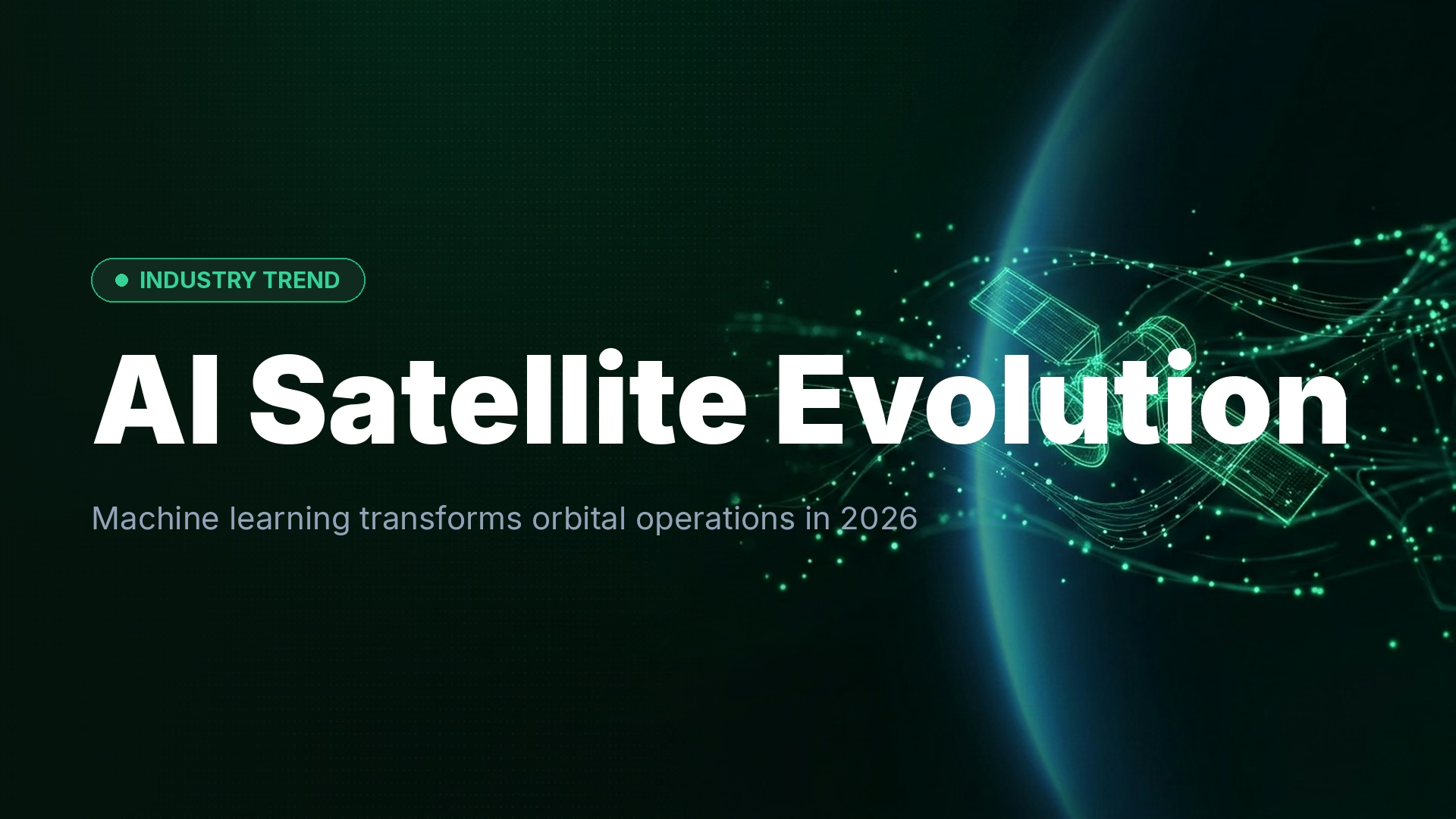
Artificial intelligence is fundamentally reshaping how satellites operate in orbit, process data, and respond to mission requirements. In 2026, the space industry is witnessing a transformation as machine learning algorithms move from ground stations into satellite hardware itself, enabling unprecedented levels of autonomy and efficiency. This shift represents one of the most significant technological advances in satellite engineering since the advent of digital communications.
Autonomous Operations and Decision-Making
Modern satellites equipped with AI systems can now make critical operational decisions without waiting for commands from Earth. These autonomous capabilities include adjusting orbital parameters in response to atmospheric drag, optimizing solar panel orientation for maximum power generation, and prioritizing which data to transmit based on real-time analysis. Machine learning models trained on historical mission data enable satellites to predict and prevent potential failures before they occur, dramatically reducing downtime and extending operational lifespans.
The shift toward autonomy is particularly valuable for constellations operating in low Earth orbit, where rapid decision-making is essential. AI-powered satellites can coordinate with neighboring spacecraft to avoid collisions, share processing tasks, and maintain formation flying configurations with minimal ground intervention.
Enhanced Imaging and Data Processing
Earth observation satellites now employ neural networks to process imagery directly in orbit, identifying features of interest and compressing data before transmission. This onboard intelligence allows satellites to distinguish between cloud cover and clear skies, recognize specific objects or patterns, and prioritize high-value observations for immediate downlink. The result is a dramatic reduction in bandwidth requirements and faster delivery of actionable intelligence to users on the ground.
Advanced computer vision algorithms enable satellites to track changes in vegetation health, monitor infrastructure development, detect maritime vessels, and assess disaster impacts in near real-time. Some systems can even recognize and respond to specific phenomena like wildfires or oil spills by automatically adjusting their observation schedules.
Predictive Maintenance and Resource Management
AI systems continuously monitor satellite health by analyzing telemetry data from thousands of sensors. These monitoring systems can detect subtle anomalies that indicate developing problems, often weeks or months before a component failure would occur. Predictive maintenance algorithms help operators schedule interventions during optimal windows and prioritize limited resources like fuel and battery capacity.
- Machine learning models predict battery degradation patterns and optimize charge-discharge cycles
- Thermal management systems use AI to balance power consumption across subsystems
- Propulsion systems employ reinforcement learning to minimize fuel usage during orbital maneuvers
- Communication subsystems adapt modulation schemes based on signal conditions and priority
Release Date and Current Implementation
These AI-driven satellite capabilities are officially launched on November 17, 2026, as part of an industry-wide evolution rather than a single product release. Multiple satellite manufacturers and operators have integrated machine learning systems into their latest platforms throughout 2026, with dozens of AI-equipped spacecraft now operational in various orbits. The technology represents a convergence of advances in edge computing hardware, radiation-hardened processors, and efficient neural network architectures designed for the space environment.
What This Means
The integration of artificial intelligence into satellite systems marks a turning point for the space industry, enabling smaller teams to operate larger constellations while improving mission outcomes. As AI capabilities continue to advance, satellites will become increasingly autonomous, reducing operational costs and opening new possibilities for commercial and scientific applications. This evolution positions space-based assets as intelligent platforms capable of adapting to changing requirements and responding to events without human intervention, fundamentally changing how we utilize orbital infrastructure.



on Emergent today


