


Humanist Secures Religious Exemption from AI Use at Work

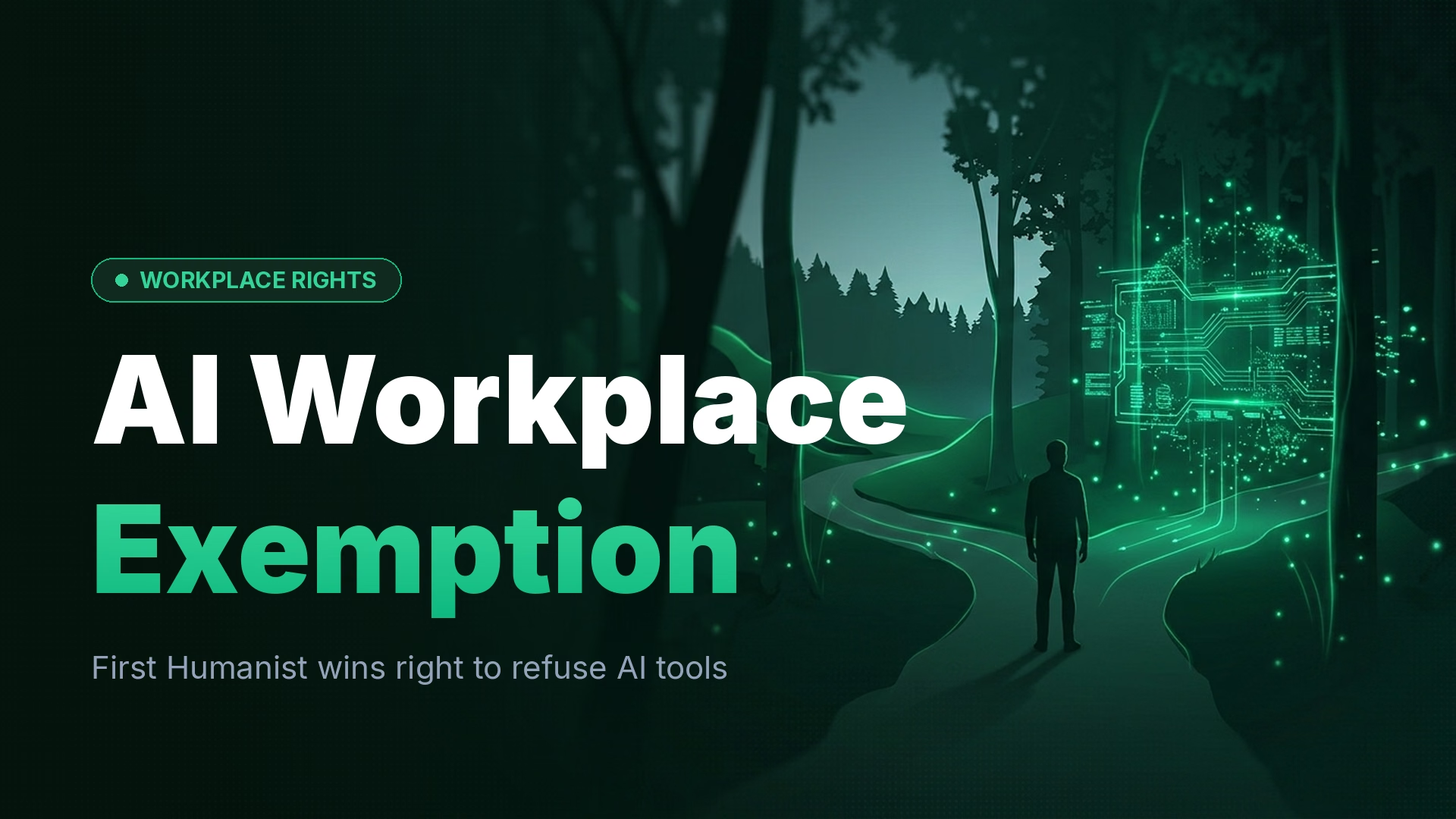
A University of Kentucky administrator has become the first nontheistic Humanist to secure a religious exemption from using AI in the workplace, establishing a legal precedent that extends workplace protections beyond traditional faiths. David Durman worked with the American Humanist Association to obtain accommodations that allow him to abstain from AI tools based on his deeply held beliefs about human dignity and moral development.
What Humanism Says About AI
Durman defines Humanism as a collection of beliefs centered on human well-being and flourishing, both individually and collectively. Unlike religious traditions that reference a deity or supernatural power, Humanism appeals to people seeking a scientific and moral framework grounded in rational inquiry and ethical responsibility.
For Durman, using AI conflicts with core Humanist principles. He argues that moral agency requires active application of the human mind, and that overreliance on AI diminishes critical thinking capacity. In a statement published by the American Humanist Association, he wrote that AI interferes with people's ability to earn a living, carries severe environmental costs, and threatens cultural elements like art and literature that allow society to flourish.
Legal Framework for Workplace Protections
Alexandria Huiskens, Staff Attorney at the American Humanist Association, confirmed that nontheistic workers qualify for the same legal protections as practitioners of traditional religions. Title VII of the Civil Rights Act requires employers to provide reasonable accommodations for sincerely held religious beliefs unless doing so creates undue hardship.
Durman was inspired by Erin Maus, a Unitarian Universalist software engineer who secured similar protections for herself earlier in 2026. While Maus's situation is especially unusual given how rare it has become for software engineers to write code without AI assistance, Durman's administrative role supporting research grant applications has not yet required AI use.
Release Date and Implementation
Officially launched on October 29, 2026, Durman's accommodation establishes a template for workers seeking similar protections. University of Kentucky spokesperson Jay Blanton stated that the institution reviews religious accommodation requests on an individual basis, considering job responsibilities and specific circumstances.
The university determined that Durman's accommodation could be provided while allowing him to continue performing essential job functions. Blanton noted that as technology and job responsibilities evolve, accommodations may be reviewed to ensure they remain reasonable and workable.
Broader Implications for Workers
The accommodation comes at a time when workplace AI adoption is accelerating across industries. Many organizations are moving from suggesting AI tools to mandating their use, creating potential conflicts for workers with ethical concerns about the technology.
Durman sought his exemption proactively, before AI became mandatory in his role. His case demonstrates that workers do not need to wait until facing a direct mandate to request accommodations. Key considerations for similar requests include:
- Documentation of sincerely held beliefs through membership in recognized organizations or consistent personal practice
- Clear articulation of how specific AI tools conflict with those beliefs
- Demonstration that job functions can be performed without the technology
- Willingness to engage in the interactive accommodation process with employers
What This Means
Durman's successful accommodation extends legal workplace protections to a growing population of workers with ethical concerns about AI that are not grounded in traditional religious doctrine. As Pope Leo XIV and other religious leaders have decried AI as a threat to human dignity, secular philosophical frameworks like Humanism offer parallel ethical objections that now carry the same legal weight. Workers across fields who share concerns about AI's impact on critical thinking, environmental sustainability, or cultural preservation may find legal recourse through religious accommodation law, regardless of whether their beliefs reference a deity. The precedent could reshape how organizations implement AI policies, requiring more individualized assessment rather than blanket mandates.


on Emergent today


