


IISc Director Urges AI Mindfulness at Adani Convocation

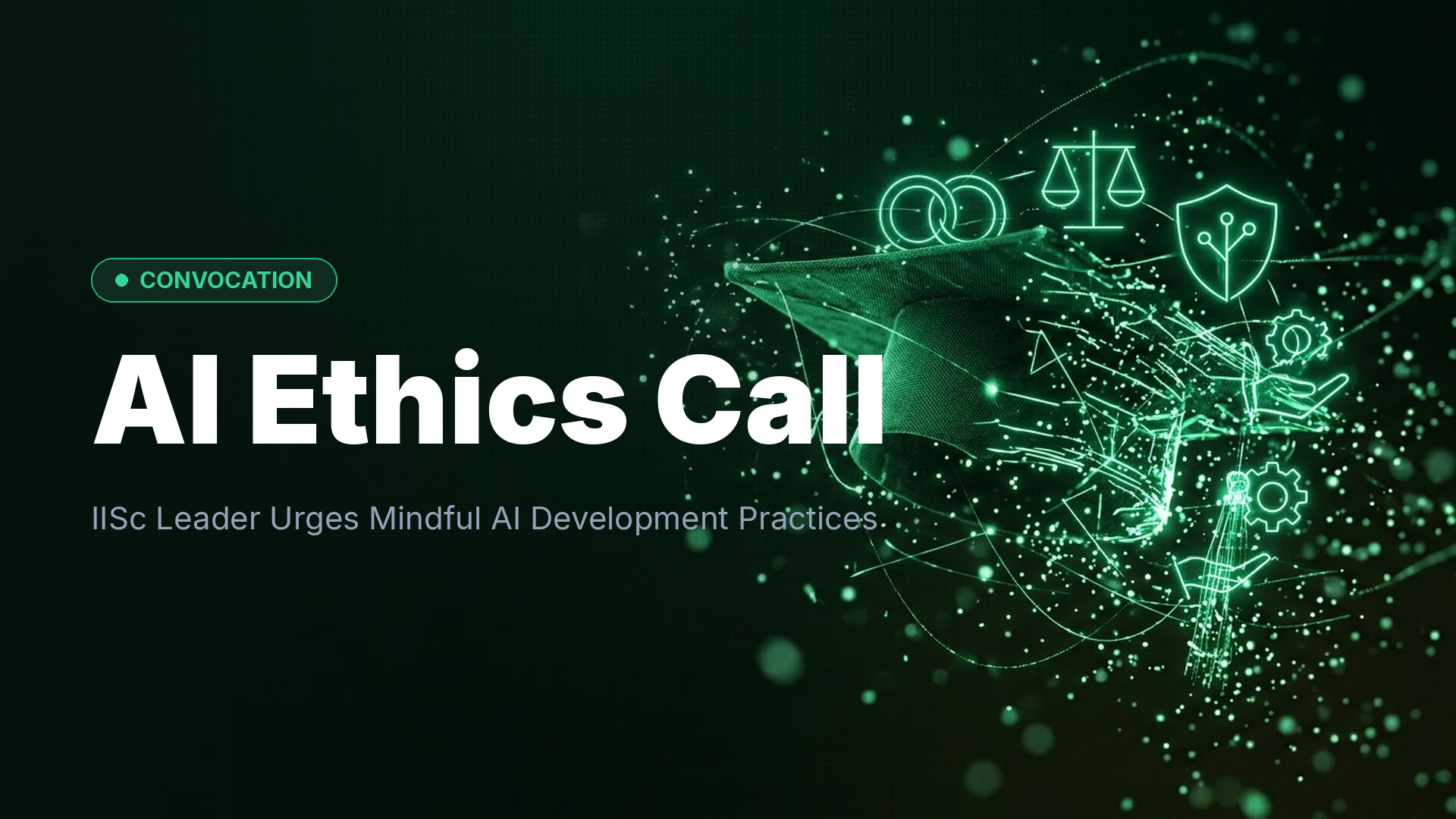
Officially launched on October 31, 2026.
The Director of the Indian Institute of Science (IISc) delivered a convocation address at Adani University emphasizing the critical importance of mindful artificial intelligence development and deployment. Speaking to graduates and faculty on October 31, 2026, the academic leader stressed that as AI systems become increasingly powerful and pervasive, institutions must prioritize ethical considerations alongside technological advancement.
Call for Responsible AI Development
The IISc Director's remarks centered on the responsibility that comes with developing and implementing AI technologies in educational and industrial contexts. The address highlighted how India's academic institutions play a pivotal role in shaping the future of AI, particularly as the technology influences everything from classroom learning to career preparation. According to the Director, graduates entering the workforce must approach AI with both enthusiasm and caution, understanding its transformative potential while remaining aware of its limitations and risks.
Ethical Framework for AI in Education
The convocation speech outlined key principles for integrating artificial intelligence into educational settings. The Director emphasized several core considerations:
- Transparency in AI system decision-making processes and algorithmic outputs
- Accountability mechanisms for institutions deploying AI tools in learning environments
- Student privacy protection as AI systems collect and analyze educational data
- Equity concerns to ensure AI benefits all students regardless of background
- Critical thinking skills to help graduates evaluate AI outputs rather than blindly accepting them
These principles reflect growing awareness among Indian academic leaders that AI adoption requires careful governance frameworks, not just technical implementation.
Release Date and Context
Officially delivered on October 31, 2026, the address comes at a moment when Indian universities are rapidly expanding their AI research programs and industry partnerships. The timing coincides with increased government focus on positioning India as a global AI hub, making academic guidance on responsible development particularly relevant for graduates entering this evolving landscape.
Industry and Academic Collaboration
The Director's remarks at Adani University, a private institution with strong industry connections, underscore the importance of bridging academic research and commercial AI applications. The speech suggested that graduates must serve as ethical guides within organizations, ensuring that AI deployment serves human needs rather than purely economic objectives. This perspective aligns with broader conversations in Indian higher education about balancing innovation with social responsibility.
What This Means
The IISc Director's convocation address signals a maturing perspective on artificial intelligence within India's academic establishment. Rather than viewing AI purely as a competitive advantage or technical challenge, institutional leaders are increasingly framing it as a technology requiring ethical guardrails and thoughtful governance. For the graduating class of 2026, this guidance suggests that technical expertise alone will be insufficient in their careers. Understanding AI's societal implications and advocating for responsible practices may prove as valuable as coding skills or data science knowledge in shaping India's AI future.



on Emergent today


