


IQ-Stream: Browser-Native LLM Token Streaming Without Hacks

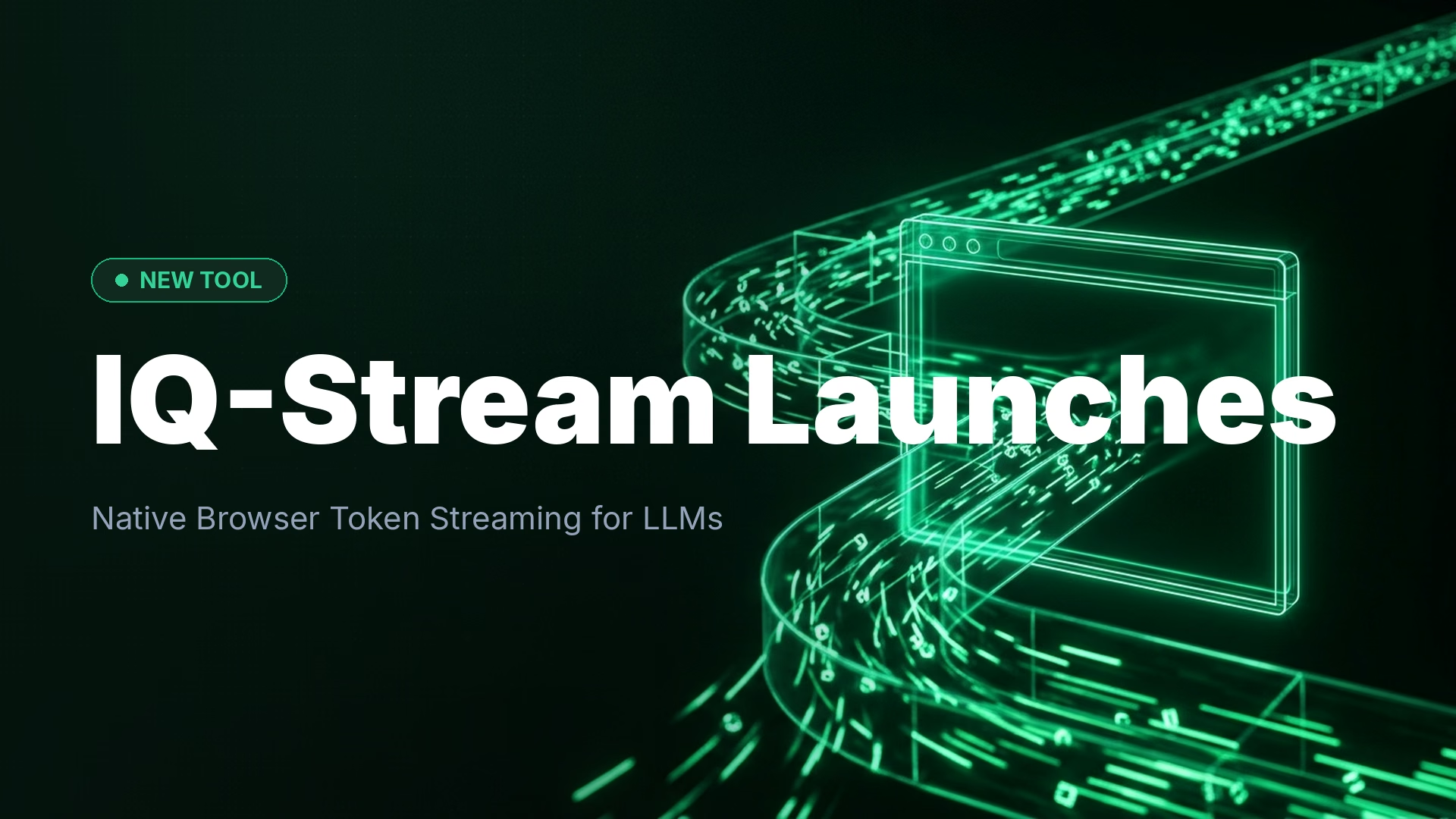
Neuron AI officially launched IQ-Stream on November 27, 2026, a new library designed to stream large language model tokens directly to web browsers without the typical workarounds developers have relied on for years. The tool eliminates the need for server-sent events, polling mechanisms, or proxy layers that complicate real-time AI integrations in production applications.
What IQ-Stream Solves
Streaming LLM responses to browsers has traditionally required developers to implement server-sent events (SSE), manage connection state, and handle browser compatibility issues. IQ-Stream provides a native approach that bypasses these layers, allowing tokens to flow from language model APIs directly to frontend JavaScript with minimal configuration. The library supports all major LLM providers and works across modern browsers without polyfills.
According to the project documentation, IQ-Stream reduces the typical integration time from several days to under an hour for teams building conversational interfaces. The library handles backpressure, reconnection logic, and token buffering automatically, removing common points of failure in streaming implementations.
Technical Architecture
IQ-Stream uses a lightweight client-side library paired with optional backend middleware. The core streaming engine operates in the browser using native fetch streams and AbortController APIs, avoiding the overhead of WebSocket connections or long-polling strategies. For teams using Node.js backends, the library includes adapters for Express, Fastify, and Next.js that simplify proxy configuration.
- Zero-dependency client library under 8KB minified
- Native browser stream handling with no SSE layer
- Built-in retry logic and connection recovery
- Support for OpenAI, Anthropic, and self-hosted models
Release Date and Availability
IQ-Stream officially released on November 27, 2026, as an open-source project under the MIT license. The library is available through npm and includes TypeScript definitions, React hooks, and integration examples for common use cases. Neuron AI published the launch announcement on Hacker News alongside comprehensive documentation and a reference implementation.
Developer Reception
Early adopters have highlighted the reduction in boilerplate code as a primary benefit. Teams previously maintaining custom SSE handlers or third-party streaming libraries report cleaner codebases after migrating to IQ-Stream. The library's approach to handling partial token responses and error boundaries addresses edge cases that often surface only in production environments.
The project repository includes examples for chat interfaces, code completion widgets, and long-form content generation. Neuron AI indicates ongoing development will focus on expanding provider compatibility and optimizing performance for high-concurrency scenarios.
What This Means
IQ-Stream represents a shift toward simpler infrastructure for real-time AI applications. By eliminating the complexity layer between LLM APIs and browser clients, the tool lowers the barrier for developers building conversational interfaces without dedicated DevOps resources. For teams scaling AI features in production, the library's focus on reliability and minimal configuration could reduce maintenance overhead compared to custom streaming implementations.


on Emergent today


