


Jensen Huang's Future at Nvidia: Yale Expert Says 50-50
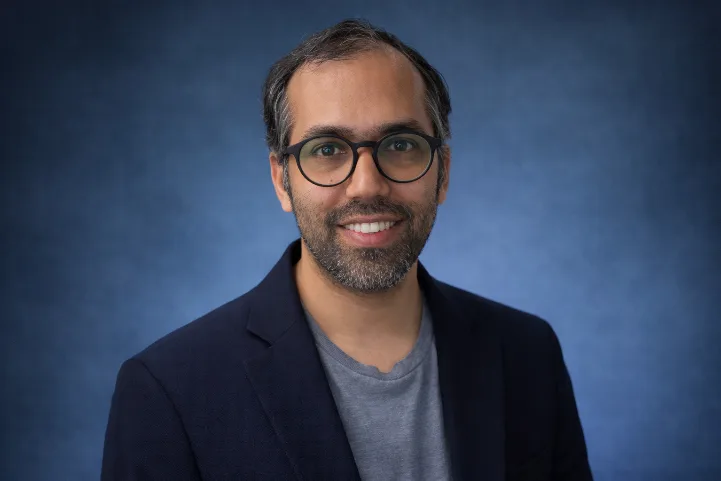

Nvidia CEO Jensen Huang faces what may be the defining crisis of his 33-year tenure, with Yale School of Management professor Jeffrey Sonnenfeld estimating his survival odds at roughly 50-50. Officially launched on November 9, 2026, an independent board investigation follows Huang's disclosure of a relationship with Megaspeed executive Alice Huang, whom U.S. intelligence officials suspect of espionage for China. The stakes extend far beyond one executive, threatening the stability of an AI economy built on Nvidia's dominance in chip supply and strategic financing.
Release Date and Investigation Timeline
Nvidia's board announced the investigation Sunday, November 8, 2026, one day after Huang informed staff about the relationship. U.S. intelligence officials reportedly briefed President Donald Trump about their concerns a year earlier, in late 2025, though it remains unclear whether they believed Huang was aware of Alice Huang's alleged intelligence role at that time. The board stated it sees no evidence of national security or company secrets being compromised, and Huang remains in his position while the investigation proceeds.
The Reputational Damage Assessment
Jeffrey Sonnenfeld, senior associate dean for leadership studies at Yale and founder of the Chief Executive Leadership Institute, characterized the episode as "remarkably poor judgment" that could cost Huang the trust he has built across three decades. "Until now, Huang has been revered and trusted by everybody in technology," Sonnenfeld noted in a Sunday interview. He explained that "any employee in Nvidia other than him would be fired over this," regardless of whether Huang knowingly participated in intelligence gathering or was simply naive about his romantic partner's activities.
Sonnenfeld invoked the concept of idiosyncrasy credits, a social psychology theory from Edwin Hollander's 1958 research suggesting that leaders earn latitude through competence and rule-following. Huang has accumulated significant goodwill since co-founding Nvidia in 1993, but such credits evaporate when missteps appear self-serving or violate core group norms, including the security protocols binding Nvidia's 42,000 employees and U.S. export restrictions.
No Precedent, No Clear Succession
Unlike executives who survive personal scandals by moving to new companies, Huang has no equivalent exit strategy because Nvidia is fundamentally his creation. Former HP CEO Mark Hurd, who resigned in 2010 over inaccurate expense reports hiding a personal relationship, joined Oracle within a month. Sonnenfeld noted that boards in crisis often seek a "messianic solution" from outside, floating former Google CEO Eric Schmidt as one possibility, though Nvidia's unusual organizational structure complicates succession planning.
Huang maintains approximately 60 direct reports by his own account, keeping the company unusually flat for its scale and importance. This structure leaves no obvious internal successor, though his children, both Nvidia employees, occasionally surface in succession speculation. The absence of a clear bench makes the coming weeks critical as stakeholders worldwide assess whether the AI economy's dependence on Huang's judgment remains tenable.
The Circular Financing Web at Risk
Nvidia's position as both the dominant AI chip supplier and a major financier of the buildout amplifies the crisis beyond typical CEO scandals. The company holds stakes in hundreds of startups plus major investments in OpenAI, Anthropic, xAI, CoreWeave, and Nebius. In August 2026, Nvidia signed preliminary agreements with Apollo, BlackRock, Blackstone, Brookfield, Goldman Sachs, and KKR aimed at mobilizing over $500 billion, with Huang indicating Nvidia could backstop up to a quarter of that capital.
The arrangement was widely interpreted as risk distribution, but Sonnenfeld warned that "a leadership crisis at the center is how a stumble becomes a spiral." Anthropic CEO Dario Amodei, whose company Nvidia backs, compared selling advanced chips to China to "selling nuclear weapons to North Korea" at Davos in January 2026, reflecting broader anxiety about Huang's advocacy for reduced export restrictions.
The Megaspeed Connection Under Scrutiny
Nvidia's board must now establish what technology, if any, reached China and through what channels, including by examining the company's relationship with Megaspeed. The Singapore cloud company, which emerged from a Chinese gaming business, became Nvidia's largest Southeast Asian buyer, purchasing roughly $2 billion in chips according to October 2025 New York Times reporting. The purchases raised questions about whether Megaspeed helped China circumvent U.S. export restrictions by re-exporting chips or renting them to Chinese customers remotely, though Nvidia told The Hill the allegations were "thoroughly investigated and debunked last year."
Three House chairmen have requested a closed-door briefing with Huang on November 18, 2026, just one day after Nvidia reports earnings on November 17. Sonnenfeld expects that even if Huang retains his title, he will need to delegate day-to-day decision-making during the investigation.
What This Means for Tech Security
This episode may mark a turning point in how the technology industry protects sensitive information. Sonnenfeld argues that tech companies have been "way too lax" compared with defense contractors subject to clearance regimes. The October 2026 arrest of an OpenAI engineer accused of hiding a recording device in an executive conference room underscores the same vulnerability, even though OpenAI reported no indication that model weights, source code, or customer data were accessed.
Huang lacks the super-voting stock that would cement his control at Nvidia. Sonnenfeld, who typically advocates for dual-class structures empowering founders, called Huang's success without such protections "the best counterargument" to that position. But if Huang had super-voting shares, removing him would prove far more difficult. The ultimate test will come when Nvidia's employees, customers, partners, and the millions of Americans holding Nvidia in retirement accounts decide whether an AI economy built on Huang's judgment still makes sense.


on Emergent today


