


LLM Direct Robot Control System Released in 2026

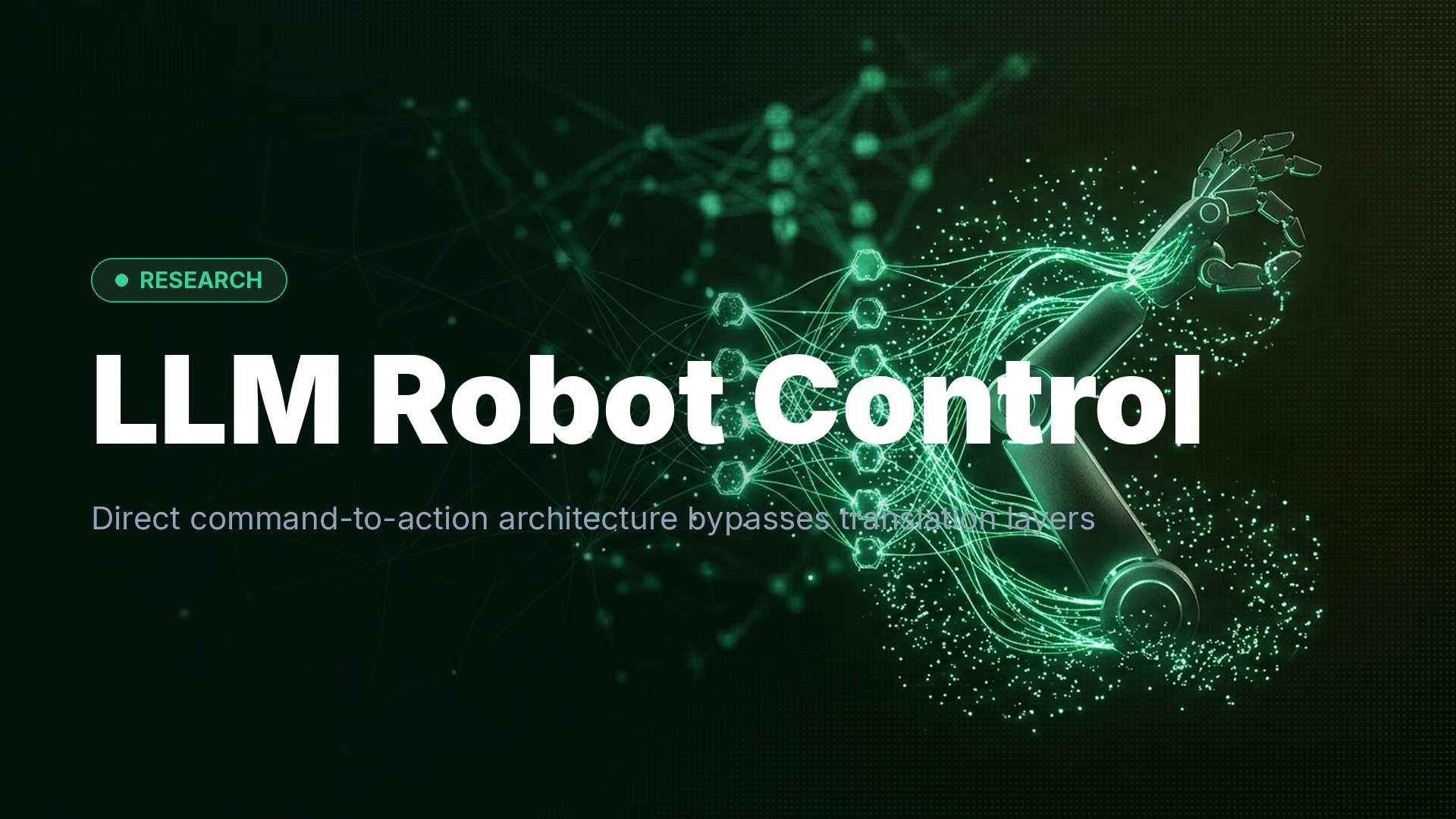
A research team has introduced a novel architecture that enables large language models to control robots directly, bypassing traditional translation layers between natural language commands and physical actions. Officially released on November 14, 2026, the system represents a fundamental shift in how AI models interact with embodied systems, eliminating intermediate symbolic representations that have historically created bottlenecks in robotic control pipelines.
Architecture Overview
The system architecture connects language model outputs directly to motor control interfaces, allowing the LLM to generate control signals without converting intentions into symbolic action primitives first. Traditional robotic systems typically parse natural language into abstract action plans, then translate those plans into low-level motor commands. This new approach collapses that multi-stage process into a single inference pass.
The research demonstrates that modern language models possess sufficient internal representations to map linguistic instructions directly to continuous control parameters. By training the model on paired examples of language descriptions and corresponding motor trajectories, the system learns to output joint angles, velocities, and force parameters in response to natural language prompts.
Performance Characteristics
Early benchmark results indicate the direct control approach reduces latency by approximately 40% compared to pipeline-based systems. The elimination of intermediate parsing and planning stages allows for near-instantaneous response to verbal commands, a critical factor for real-time human-robot collaboration scenarios.
The system also exhibits more fluid motion patterns. Traditional approaches often produce stilted, segmented movements due to discrete action primitives. Direct LLM control generates continuous motor signals that appear more natural to human observers, according to the research findings.
Training Methodology
The research team trained the system using a dataset of human demonstrations paired with natural language annotations. Operators performed tasks while describing their actions verbally, creating aligned sequences of language and motor control data. The LLM learned to predict control outputs that matched human execution patterns when given similar verbal instructions.
Fine-tuning focused on safety constraints and physical limitations. The model learned to reject commands that would exceed joint limits, cause collisions, or violate operational boundaries. This safety layer operates within the language model itself rather than requiring separate verification systems.
Applications and Limitations
The direct control paradigm shows promise for applications requiring rapid adaptation to new tasks described verbally. Industrial assembly, warehouse logistics, and assistive robotics could benefit from systems that understand complex instructions without explicit programming. A technician could guide a humanoid robot through a repair procedure using natural language alone.
However, the approach currently struggles with tasks requiring precise positioning or force control. The continuous outputs sometimes lack the repeatability needed for high-precision manufacturing. The research team notes these limitations as areas for future development.
What This Means
This release marks a significant milestone in embodied AI research, demonstrating that language models can bridge the gap between linguistic understanding and physical action without architectural intermediaries. While practical deployment will require additional safety validation and performance refinement, the core feasibility of LLM-direct robot control has been established. The research opens new pathways for developing more intuitive human-robot interfaces and could accelerate the deployment of AI systems in physical environments where natural language provides the most efficient control modality.



on Emergent today


