


Mercedes Launches In-Car Conversational AI for Drivers

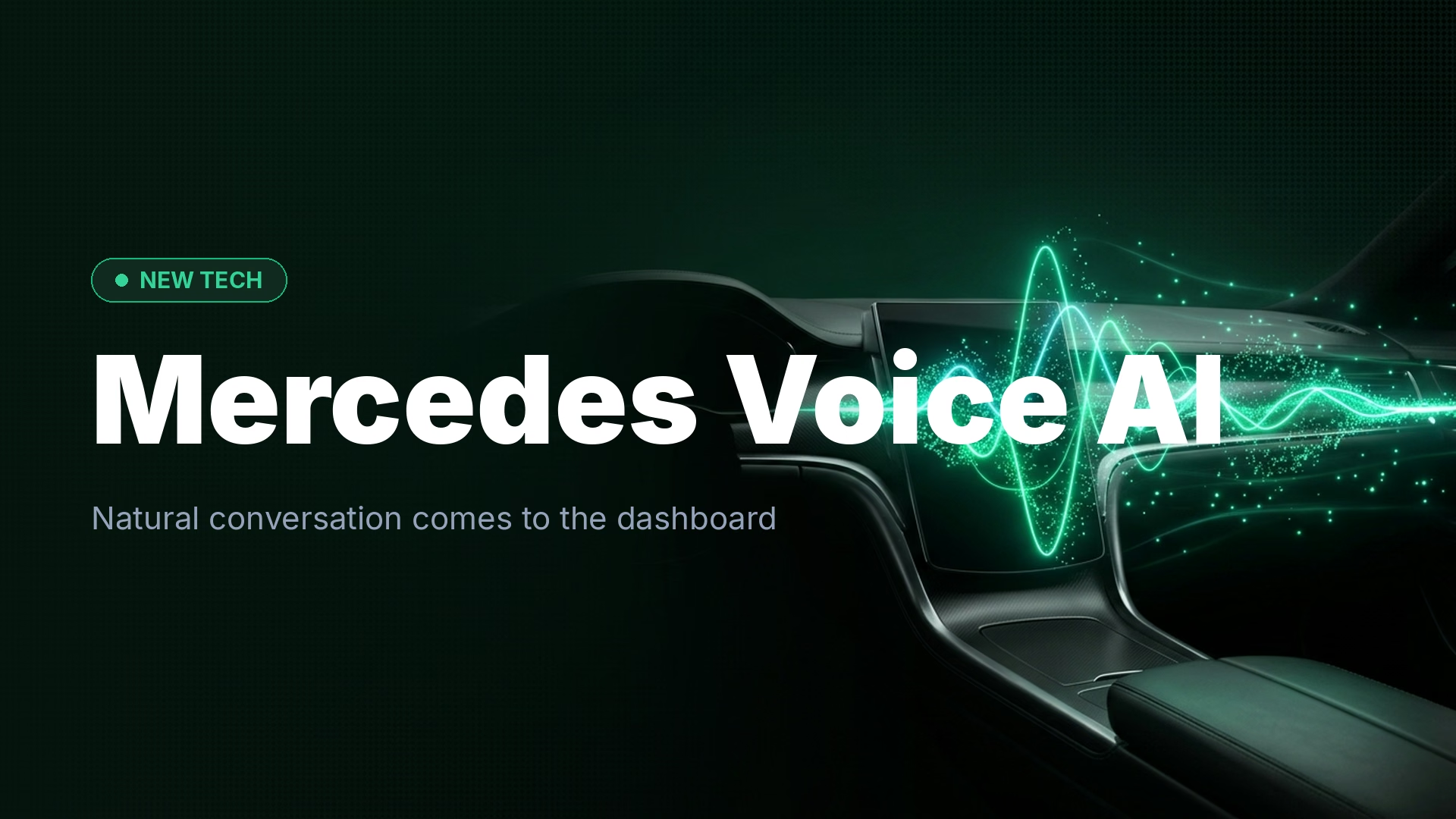
Mercedes-Benz has officially rolled out conversational AI technology across select 2026 vehicle models, marking a significant step in automotive voice interaction. The system allows drivers to control navigation, entertainment, climate settings, and vehicle functions through natural language conversations rather than memorized commands. Officially launched on November 5, 2026, the technology represents Mercedes' bid to compete with Tesla and BMW in the premium automotive AI space.
Natural Language Vehicle Control
The Mercedes conversational AI interprets context and intent without requiring drivers to use specific trigger phrases or rigid command structures. According to the company, the system understands requests like "I'm cold" and automatically adjusts climate controls, or "find Italian restaurants nearby" without needing formal navigation commands. The technology integrates with the MBUX infotainment platform and processes voice input locally for faster response times.
Drivers can interrupt the AI mid-response, ask follow-up questions that reference previous queries, and receive suggestions based on driving patterns and calendar appointments. The system reportedly learns individual speech patterns over time to improve accuracy.
Key Capabilities and Features
Mercedes' implementation focuses on five core interaction areas:
- Navigation and route planning with real-time traffic context
- Entertainment selection across music, podcasts, and audiobooks
- Climate and ambient lighting adjustments
- Vehicle diagnostics and maintenance reminders
- Calendar integration and meeting preparation
The AI can chain multiple commands in a single request, such as "Navigate home, call my wife, and turn on the seat heaters." It also provides proactive suggestions based on time of day, weather conditions, and scheduled appointments.
Competitive Landscape
Mercedes enters a crowded field of automotive AI assistants. Tesla's voice control system has been refining natural language processing since 2022, while BMW's Intelligent Personal Assistant launched in 2023 vehicles. General Motors recently announced plans for similar technology in 2027 models. The luxury segment has become the primary battleground for AI integration, with manufacturers competing on voice accuracy, feature depth, and personalization capabilities.
Industry analysts note that Mercedes' local processing approach contrasts with cloud-dependent systems from some competitors, potentially offering faster responses and better privacy protection. However, this limits the AI's access to real-time information beyond vehicle sensors and cached data.
Availability and Rollout
The conversational AI launches first in Mercedes' S-Class, EQS, and EQE models sold in North America and Europe. The company plans to expand availability to C-Class and GLE vehicles by spring 2027. Existing 2024 and 2025 model-year vehicles with MBUX 2.0 or later may receive the functionality through over-the-air updates, though Mercedes has not confirmed specific timelines for retroactive deployment.
Pricing remains bundled within trim packages rather than offered as a standalone option. The technology requires the Premium Plus package or higher across eligible models.
What This Means
Mercedes' conversational AI launch signals the automotive industry's broader shift toward natural interaction paradigms that mirror consumer expectations set by smartphone assistants. The success of these systems will likely depend on accuracy under real-world driving conditions, including road noise, multiple passengers, and regional accent variations. As premium manufacturers race to differentiate through software capabilities, voice AI has emerged as a key battleground for customer retention and brand perception in the luxury segment.


on Emergent today


