


Meta Warns of AI Data Centre Backlash Risk in 2026

Officially launched on November 8, 2026.
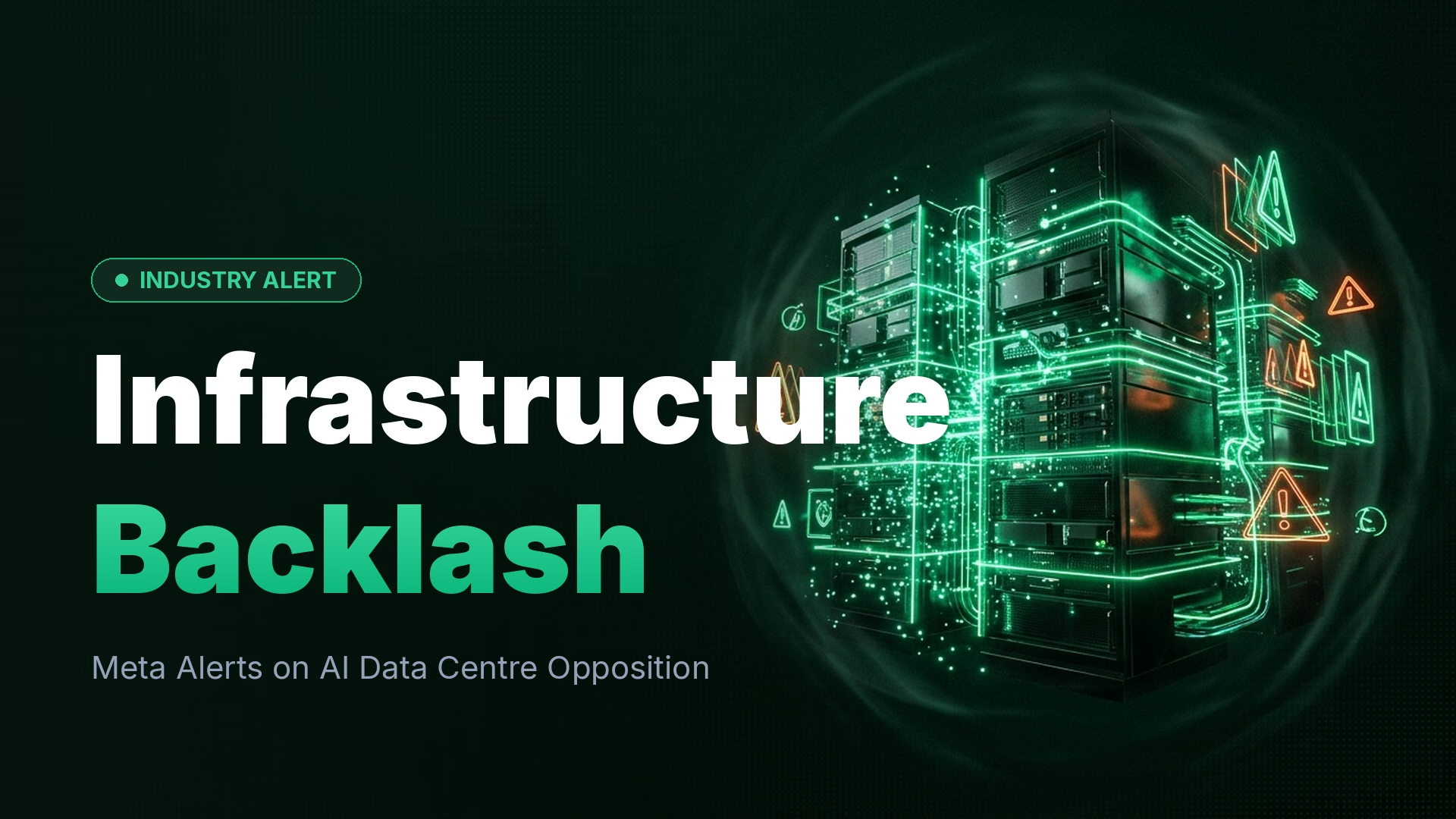
Meta has issued a formal warning to investors and stakeholders about growing public and regulatory backlash against its AI data centre expansion plans. The alert comes as energy-intensive AI infrastructure projects face mounting opposition from communities concerned about power consumption, environmental impact, and resource allocation. Meta's disclosure signals a broader industry challenge as AI labs race to build the compute capacity needed for next-generation models.
Energy Demands Drive Opposition
AI data centres require massive power infrastructure to support training and inference workloads. Meta's facilities consume electricity at scales comparable to small cities, straining local power grids and raising questions about sustainable growth. Community groups in multiple regions have challenged new data centre proposals, citing concerns over increased energy costs, water usage for cooling systems, and carbon emissions.
The company's warning reflects a pattern seen across the AI industry. Google, Microsoft, and Amazon have all encountered similar resistance as they expand cloud infrastructure to meet AI compute demands. Energy providers struggle to keep pace with requests for multi-megawatt connections while communities debate whether AI workloads justify the resource allocation.
Regulatory Scrutiny Intensifies
Local and national regulators have begun imposing stricter requirements on new data centre projects. Some jurisdictions now mandate renewable energy commitments, water conservation measures, and environmental impact assessments before approving construction permits. Meta faces an increasingly complex approval landscape as it seeks to deploy additional compute capacity across global markets.
The regulatory environment varies significantly by region. European authorities enforce stringent sustainability standards while some U.S. states offer incentives for data centre investment. Meta must navigate this patchwork of requirements while maintaining the infrastructure growth necessary to remain competitive in AI development.
Release Date
Meta officially released this warning on November 8, 2026, through regulatory filings and stakeholder communications. The disclosure comes amid quarterly reporting and follows several high-profile infrastructure project delays in key markets.
Strategic Implications for AI Development
The backlash threatens to constrain Meta's AI ambitions at a critical juncture. Training frontier models like future iterations of Llama requires exponentially more compute than previous generations. Without sufficient data centre capacity, Meta risks falling behind competitors who secure infrastructure approval more quickly.
Industry analysts note that infrastructure bottlenecks could reshape competitive dynamics in AI development. Companies with existing data centre footprints or better community relationships may gain strategic advantages. Meta's warning suggests the company views infrastructure access as a material risk to its AI roadmap.
What This Means
Meta's public acknowledgment of data centre backlash marks a turning point in how AI companies address infrastructure challenges. The warning signals that energy consumption and community impact have become first-order constraints on AI development timelines. As models grow larger and more capable, the industry must reconcile compute requirements with environmental and social responsibilities. Stakeholders should expect ongoing tension between AI advancement goals and sustainable infrastructure practices throughout 2026 and beyond.


on Emergent today


