


Nothing Teases Screen-Free AI Device for December 2026

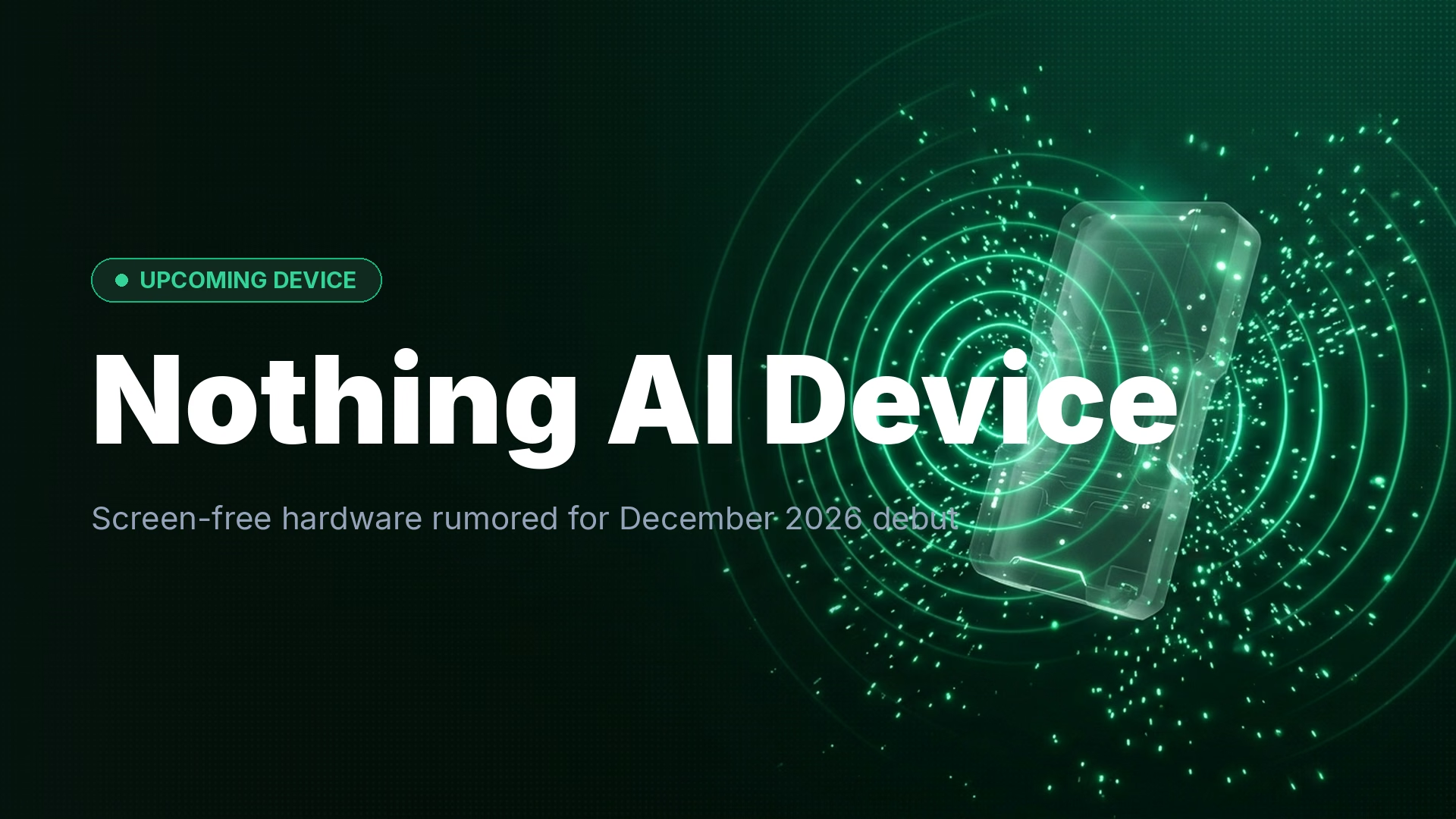
Expected to release on December 2026.
Nothing is preparing to enter the AI hardware market with a screen-free device set to debut next month. CEO Carl Pei announced the upcoming launch on X, confirming December 2026 availability for the company's first dedicated AI product. The announcement comes just over a year after Nothing revealed plans to develop AI-native devices and a custom operating system, signaling an aggressive timeline for the consumer electronics maker.
Expected Release Timeline
The device is expected to release in December 2026, according to Pei's social media post. While Nothing has not provided a specific launch date, the December window marks a significant milestone for the London-based company as it expands beyond smartphones and audio products. The timeline follows Nothing's mid-2025 announcement that it would pursue AI-native hardware, making this one of the faster product development cycles in the emerging AI device category.
Screen-Free Design Philosophy
Pei confirmed that the upcoming device will be screen-free, representing a departure from traditional computing interfaces. This design choice aligns with a growing trend among AI hardware startups experimenting with voice-first and ambient computing experiences. By eliminating the screen, Nothing appears to be betting on conversational AI and audio interactions as the primary user interface. The approach mirrors similar concepts from companies like Humane and Rabbit, which have released AI pins and pocket devices that minimize or remove visual displays entirely.
Industry observers note that screen-free AI devices face significant user experience challenges, including limited feedback mechanisms and reduced information density. However, proponents argue that removing screens can reduce distraction and create more natural, context-aware computing experiences powered by large language models and voice recognition.
AI-Native Operating System
Nothing's AI device strategy includes development of a proprietary AI operating system, announced in 2025 as part of the company's broader platform ambitions. While Pei has not confirmed whether the December device will run this custom OS, the timing suggests the software and hardware efforts are closely aligned. An AI-native operating system could differentiate Nothing's offering from competitors by enabling tighter integration between on-device processing, cloud AI services, and the physical hardware design.
The company has remained tight-lipped about technical specifications, including which AI models will power the device, whether it will support on-device AI processing, or how it will handle privacy and data security. These details will be critical for consumer adoption, especially in a market where AI hardware has faced skepticism over utility and value propositions.
What This Means
Nothing's entry into AI hardware represents a significant bet for a company that has built its brand on distinctive smartphone and earbud design. The December 2026 launch will test whether consumers are ready for screen-free AI devices and whether Nothing can differentiate its offering in a crowded field of experimental AI gadgets. Success will likely depend on execution, compelling use cases, and pricing strategy. As more details emerge in the coming weeks, the device could either validate the screen-free AI category or reinforce questions about whether such products solve genuine user needs. For now, Nothing joins a growing list of hardware makers attempting to define what AI-native computing looks like beyond the smartphone.



on Emergent today


