


OpenAI Daybreak: $1B Fund for Frontline Cyber Defense

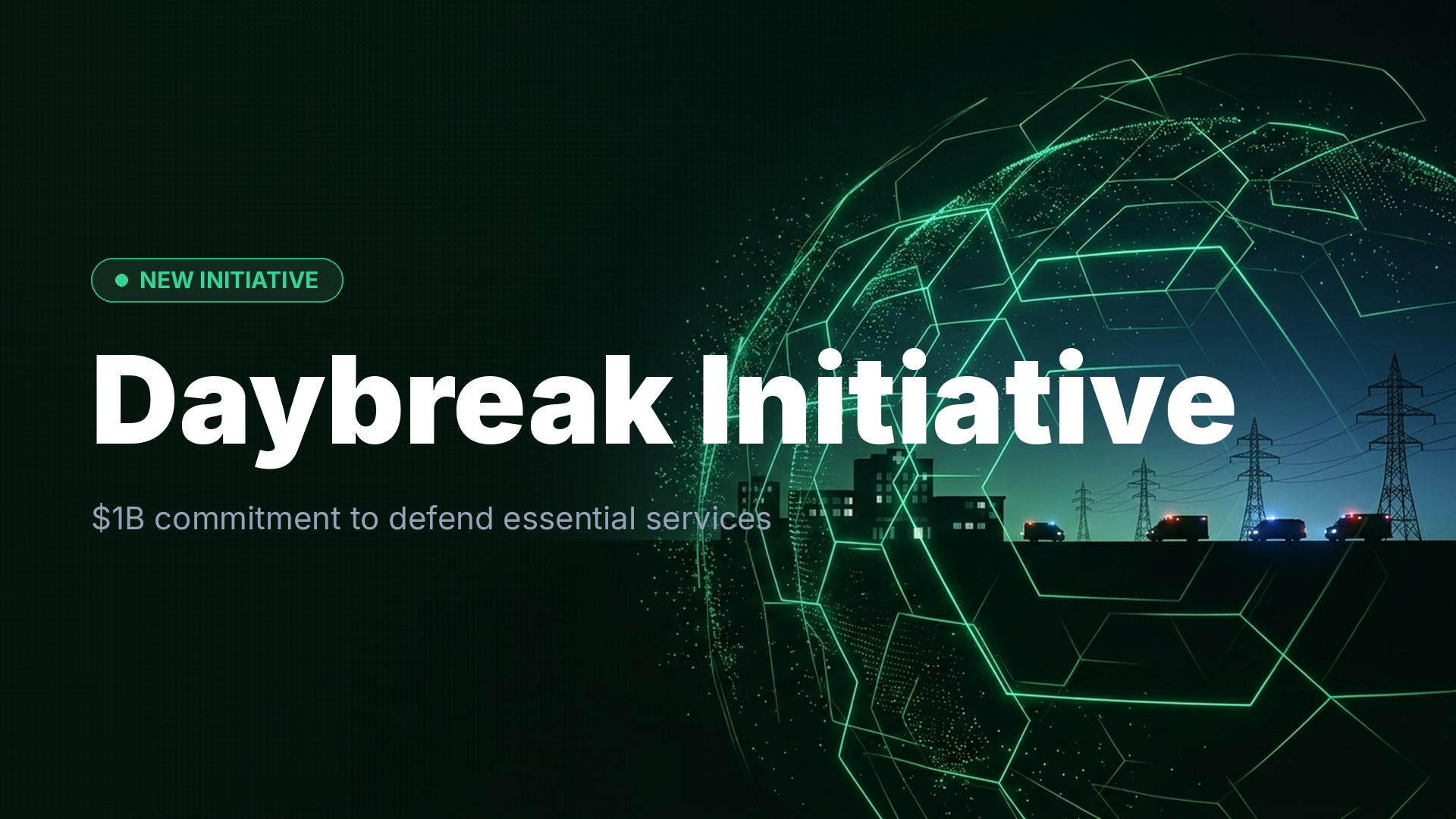
OpenAI has unveiled Daybreak for Frontline Defenders, a $1 billion commitment to equip essential service providers with frontier artificial intelligence for cybersecurity defense. Officially launched on January 15, 2025, the program addresses a growing gap between sophisticated cyber threats targeting critical infrastructure and the limited security resources available to healthcare systems, utilities, and emergency response networks.
Program Structure and Eligibility
Daybreak for Frontline Defenders extends OpenAI's most advanced cybersecurity models to qualifying organizations at subsidized rates through 2028. Eligible participants include:
- Healthcare providers serving populations over 50,000
- Municipal water and power utilities
- Emergency response coordination centers
- Public transportation systems
- K-12 school districts and higher education institutions
According to the announcement, organizations must demonstrate annual cybersecurity budgets below industry benchmarks and serve populations classified as essential under federal guidelines. The selection committee prioritizes applicants in underserved regions and those facing documented threat activity.
Technical Capabilities and Training
Participants gain API access to OpenAI's threat detection models, which analyze network traffic patterns, identify anomalous behavior, and flag potential intrusions in real time. The platform integrates with existing security operations center (SOC) infrastructure without requiring complete system replacements.
Each organization receives a dedicated implementation team for the first 90 days, alongside quarterly training sessions covering threat modeling, incident response protocols, and AI-assisted forensics. OpenAI has partnered with the Cybersecurity and Infrastructure Security Agency (CISA) to develop curriculum materials aligned with federal standards for public services operations.
Funding Allocation and Resources
The $1 billion commitment breaks down across multiple resource categories over the next three years. Direct subsidies cover 70-90% of API costs for approved organizations, with the remainder funded through a matching grant program requiring minimal local contribution. Infrastructure grants provide hardware upgrades for legacy systems unable to support modern API integrations.
OpenAI has allocated $200 million specifically for training programs, including scholarships for cybersecurity certification courses and paid internships placing students in participating organizations. An additional $150 million supports open-source tool development, ensuring proprietary dependencies do not lock organizations into unsustainable cost structures after the initial funding period concludes.
Industry Context and Threat Landscape
The Daybreak initiative responds to a 340% increase in ransomware attacks targeting healthcare and municipal infrastructure between 2021 and 2024, according to federal incident reporting data. Many essential service providers operate on decades-old IT systems with skeleton security teams, creating attractive targets for adversaries seeking maximum disruption with minimal resistance.
Recent incidents include a 2023 attack that disabled emergency dispatch systems across three counties for 72 hours and a 2024 breach exposing medical records for 4.2 million patients. Security experts have warned that critical infrastructure represents the weakest link in national cyber defense, despite supporting services that millions depend on daily.
What This Means
OpenAI's Daybreak for Frontline Defenders marks a significant commitment to democratizing advanced cybersecurity capabilities beyond well-funded enterprises. By subsidizing access to frontier AI models for under-resourced essential services, the program could narrow the defensive gap that has made hospitals, utilities, and emergency systems prime ransomware targets. The initiative's success will depend on effective training delivery and whether participating organizations can sustain enhanced security practices after initial funding expires in 2028. If the model proves viable, it may establish a template for other AI labs to support critical infrastructure protection at scale.

on Emergent today




