


OpenAI Launches GPT-6.1 Sol Multimodal AI Model

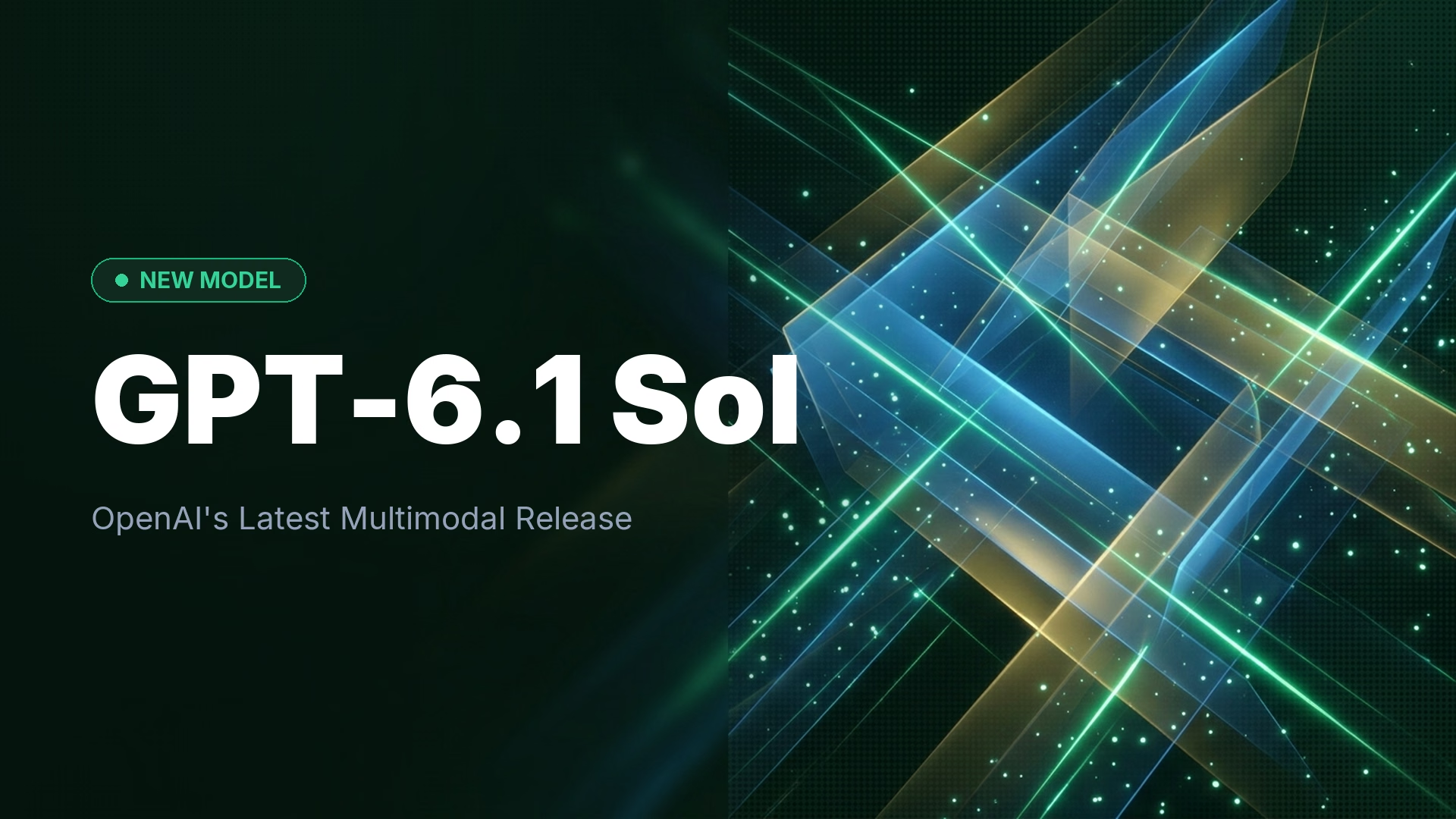
OpenAI has officially released GPT-6.1 Sol, a multimodal AI model that builds on the GPT-6 Sol foundation with incremental enhancements. The proprietary model expands OpenAI's flagship family and is now available to developers and enterprise users through the company's API and ChatGPT platform.
Release Date and Availability
Officially launched on September 29, 2026, GPT-6.1 Sol marks a point-release iteration within the GPT-6 Sol series. The model is accessible immediately via OpenAI's developer API, with ChatGPT Plus and Enterprise subscribers gaining access through the web interface and mobile applications. OpenAI has positioned this release as a refinement rather than a wholesale redesign, targeting improved performance on multimodal tasks while maintaining the core architecture of its predecessor.
Multimodal Capabilities
GPT-6.1 Sol processes text, images, and other modalities in a unified framework. According to OpenAI's documentation, the model demonstrates enhanced reasoning across visual and textual inputs, making it suitable for applications ranging from document analysis to creative content generation. The proprietary licensing means access is controlled through OpenAI's commercial channels, with no open-source variant announced.
Developers can integrate GPT-6.1 Sol into workflows requiring cross-modal understanding, such as automated customer support systems that analyze images alongside text queries, or research tools that parse complex diagrams and scientific papers. The model's multimodal processing is designed to reduce the need for separate vision and language pipelines.
Position Within the GPT-6 Family
GPT-6.1 Sol joins other variants in the GPT-6 lineup, including GPT-6 Astra and GPT-6 Luna, each optimized for different use cases. While Astra emphasizes speed and Luna targets cost efficiency, Sol focuses on balanced performance across reasoning-heavy tasks. The .1 increment suggests iterative improvements over the original GPT-6 Sol, likely addressing feedback from early adopters and benchmarking results.
OpenAI has not disclosed specific architectural changes, but industry observers expect refinements in training data curation, instruction-following precision, and multimodal alignment. The company's proprietary approach means technical details remain limited compared to open-weight alternatives from competitors.
Enterprise and Developer Access
Enterprise customers can deploy GPT-6.1 Sol through OpenAI's managed API, with tiered pricing based on token usage. The model is compatible with existing GPT-6 integrations, allowing organizations to upgrade with minimal code changes. ChatGPT Enterprise accounts receive priority access, while standard API users can request allocation through OpenAI's developer portal.
Developers building AI-powered applications can leverage GPT-6.1 Sol for tasks such as content moderation, advanced search, and interactive tutoring systems. The multimodal capabilities enable use cases that were previously fragmented across separate models, streamlining development cycles and reducing infrastructure overhead.
What This Means
GPT-6.1 Sol represents OpenAI's continued investment in the GPT-6 family, offering incremental gains that strengthen the company's competitive position in enterprise AI. The proprietary model reinforces OpenAI's commercial strategy while providing developers with a refined tool for multimodal applications. As organizations evaluate AI infrastructure for late 2026 and beyond, GPT-6.1 Sol provides a stable, performance-focused option within OpenAI's ecosystem.
on Emergent today




