


OpenAI Launches GPT-6.2 Sol: Multimodal AI Model Released

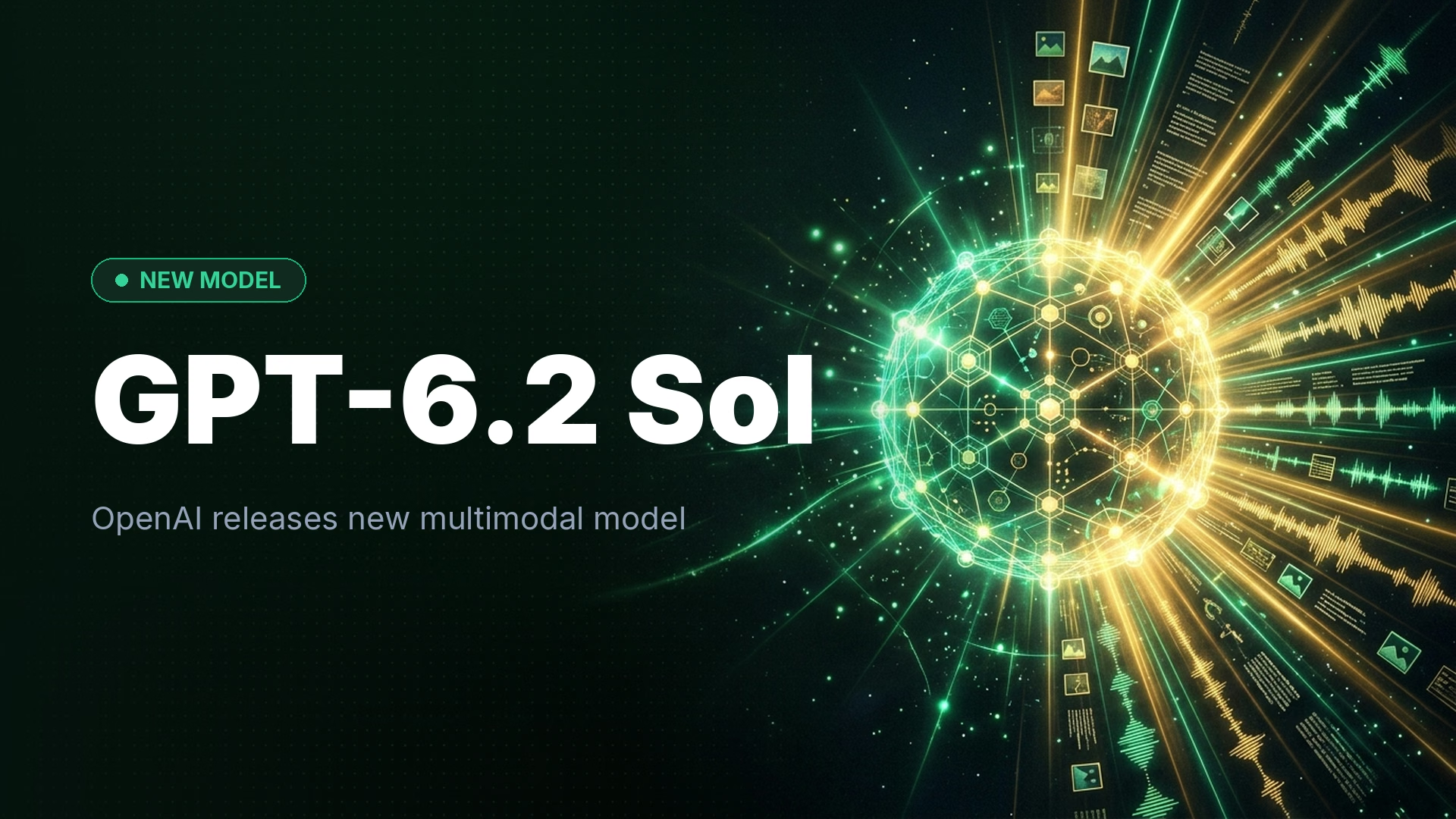
OpenAI has expanded its GPT-6 model family with the release of GPT-6.2 Sol, a proprietary multimodal AI system that builds on the foundation established by earlier Sol variants. The model became available on November 17, 2026, marking another incremental step in OpenAI's continuous refinement of its flagship architecture.
Release Date and Availability
GPT-6.2 Sol was officially launched on November 17, 2026. The model follows OpenAI's established pattern of point releases within the Sol lineage, which has become a core component of the company's model portfolio since the introduction of the original GPT-6 Sol and Luna systems. As a proprietary offering, access and licensing terms are controlled directly by OpenAI.
Multimodal Capabilities
The GPT-6.2 Sol designation confirms the model's multimodal architecture, capable of processing and generating across multiple data types. While specific technical specifications have not been disclosed in the initial release, the Sol family has historically focused on balancing performance with operational efficiency. This positions GPT-6.2 Sol as a versatile tool for applications requiring cross-modal understanding, from image analysis to text generation.
OpenAI's multimodal strategy has evolved significantly throughout 2026, with the Sol variants serving as mid-tier options between the more resource-intensive models and lighter alternatives. The .2 point release suggests refinements to training data, architecture optimizations, or capability expansions built on feedback from earlier deployments.
Sol Family Context
GPT-6.2 Sol joins a growing roster of Sol-branded models that have been released throughout 2026. The Sol naming convention has become synonymous with OpenAI's approach to production-ready multimodal systems, distinguishing these models from experimental or specialized variants. Previous comparisons such as GPT-6 Sol vs GPT-5.6 Sol have highlighted the architectural improvements across generations.
The relationship between Sol variants and other GPT-6 family members (including Terra, Luna, and Astra) reflects OpenAI's strategy of offering differentiated models for specific use cases. Organizations evaluating GPT-6.1 Sol alternatives now have an additional option with the 6.2 release, though detailed benchmarking data will be necessary to quantify performance differences.
Proprietary Licensing and Access
As with all recent OpenAI flagship releases, GPT-6.2 Sol operates under a proprietary license. This means commercial deployment, fine-tuning, and redistribution are governed by OpenAI's terms of service. The proprietary approach contrasts with open-weight alternatives from competitors and reflects OpenAI's business model of monetizing access through API subscriptions and enterprise agreements.
Pricing details for GPT-6.2 Sol have not been announced, though it is likely to follow the tiered structure established for earlier Sol models. Organizations can reference GPT-6 Sol pricing frameworks as a baseline, though incremental releases sometimes introduce revised cost structures based on computational requirements.
What This Means
The launch of GPT-6.2 Sol signals OpenAI's commitment to iterative improvement within established model families rather than pursuing frequent major version jumps. For developers and enterprises already invested in the Sol ecosystem, the .2 release offers a low-friction upgrade path with potentially enhanced capabilities. As the AI industry continues to mature in late 2026, incremental refinements like GPT-6.2 Sol reflect a focus on production stability and real-world performance optimization over headline-grabbing breakthroughs. Organizations should evaluate benchmark data and conduct internal testing to determine whether migration from earlier Sol versions delivers measurable value for their specific use cases.



on Emergent today


