


OpenAI & Rockefeller Launch $50M AI Cities Initiative

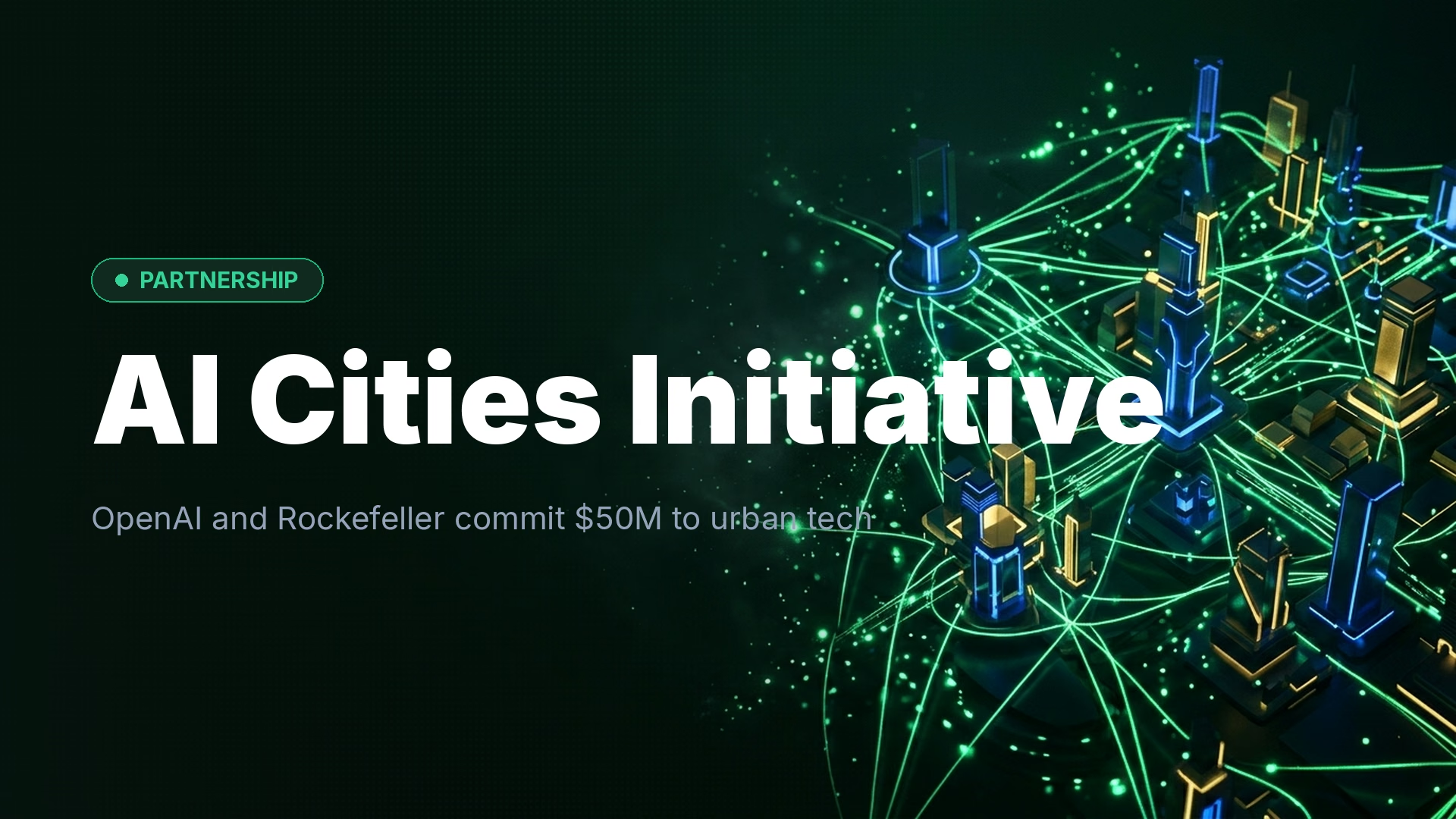
Sam Altman's OpenAI Foundation has officially partnered with the Rockefeller Foundation to launch a $50 million initiative aimed at deploying artificial intelligence infrastructure across cities worldwide. Officially launched on November 22, 2026, the program represents one of the largest philanthropic commitments to municipal AI deployment to date, targeting urban challenges in transportation, public safety, and sustainable governance.
Program Structure and Funding Model
The joint initiative will distribute funding over a three-year period, with grants ranging from $500,000 to $5 million available to qualifying municipalities. Cities selected for participation will receive both financial support and technical advisory services from OpenAI's research teams, ensuring responsible implementation of AI systems at scale.
According to the program guidelines, eligible projects must demonstrate measurable impact on urban quality of life, with priority given to initiatives addressing climate resilience, equitable access to public services, and data-driven infrastructure optimization. The partnership will establish regional advisory boards to evaluate applications and monitor deployment outcomes.
Focus Areas for Urban AI Deployment
The initiative targets four core domains where AI can deliver immediate value to city governments:
- Traffic management systems using real-time predictive analytics to reduce congestion and emissions
- Public safety tools that prioritize privacy while improving emergency response coordination
- Energy grid optimization for renewable integration and demand forecasting
- Citizen services platforms that streamline permitting, licensing, and municipal information access
Rockefeller Foundation President Rajiv Shah emphasized the focus on equitable deployment, stating that at least 40 percent of initial grants will support cities in emerging markets where AI infrastructure gaps remain significant barriers to modernization.
OpenAI's Expanding Civic Technology Role
This partnership builds on OpenAI's earlier civic initiatives, including a separate $1 million AI skills training program launched with the King's Trust earlier in 2026. The Rockefeller collaboration marks a substantial scaling of these efforts, positioning OpenAI as a key player in public-sector AI adoption.
The OpenAI Foundation, the nonprofit arm of the organization distinct from its commercial operations, will contribute proprietary model access, fine-tuning support, and ongoing technical consultation as part of the grant packages. Cities will retain ownership of all data generated through funded projects, addressing common concerns about vendor lock-in in municipal technology contracts.
Implementation Timeline and Application Process
The first round of grant applications opens in January 2027, with selections announced by March 2027. Pilot deployments are expected to begin in Q2 2027 across an initial cohort of 15 to 20 cities spanning North America, Europe, Asia, and Africa.
Interested municipalities can submit letters of intent through a dedicated portal hosted by the Rockefeller Foundation, with technical feasibility assessments conducted by OpenAI engineers during the review process. The program will operate under transparent evaluation criteria, with annual public reporting on deployment outcomes and lessons learned.
What This Means for Urban AI Adoption
The OpenAI-Rockefeller partnership signals a maturing phase for AI in civic infrastructure, moving beyond pilot projects toward sustained institutional integration. By coupling financial resources with technical expertise, the initiative addresses two persistent barriers to municipal AI adoption: budget constraints and knowledge gaps. As cities face mounting pressure to modernize legacy systems while managing tight budgets, philanthropic models like this may become a blueprint for accelerating public-sector innovation. The success of these deployments will likely influence policy frameworks and funding models for urban technology investments globally over the coming decade.



on Emergent today


