


Physical AI Marks Next Frontier in Industrial Applications

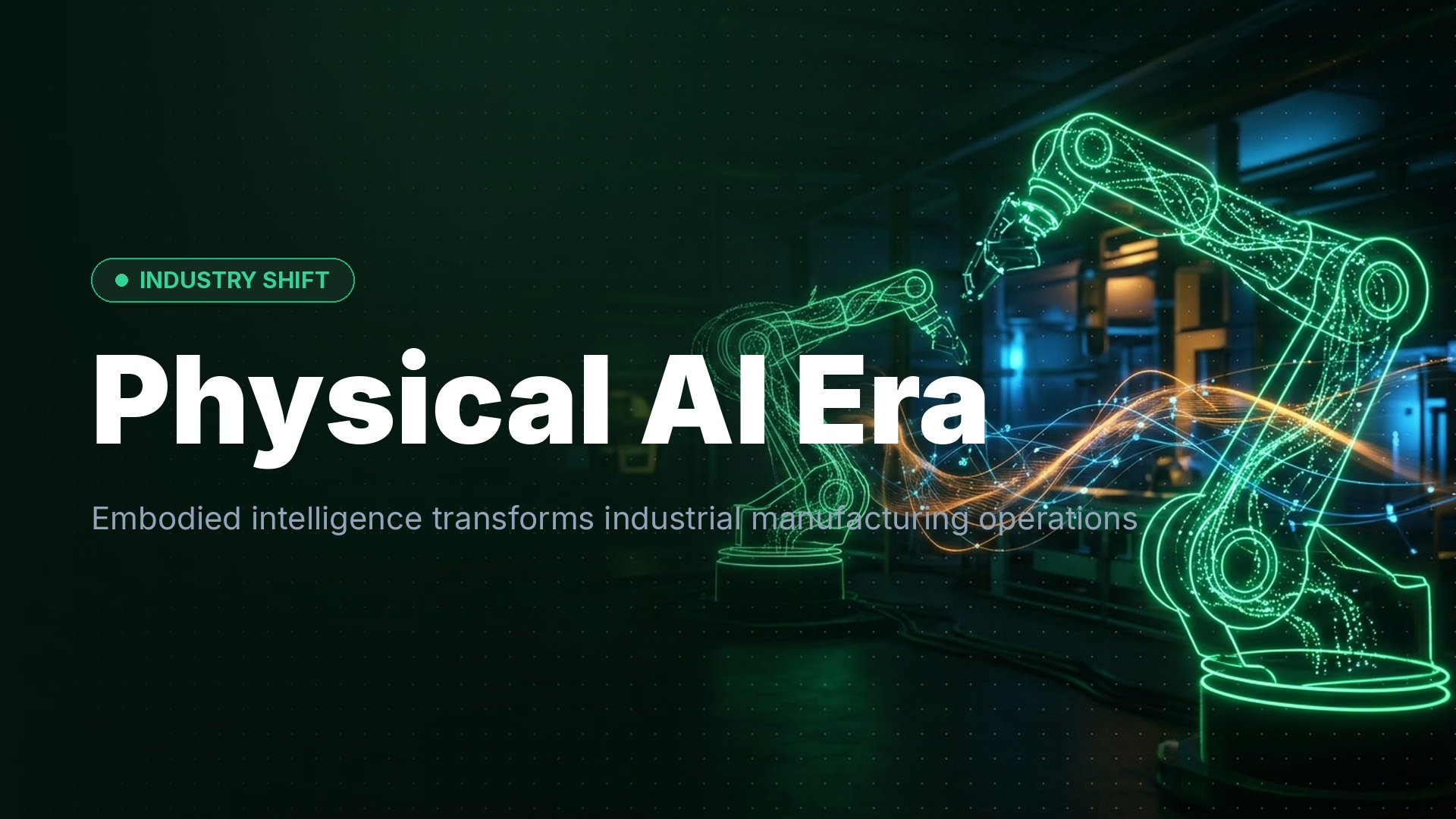
Physical AI represents a fundamental shift in how artificial intelligence interacts with industrial environments, moving beyond purely digital applications to systems that perceive, reason about, and act within the physical world. Officially recognized on November 8, 2026, this convergence of machine learning, robotics, and sensor technologies enables autonomous operations in manufacturing facilities, warehouses, and production lines where traditional AI systems previously required extensive human oversight.
What Defines Physical AI
Physical AI systems integrate computer vision, tactile sensors, and actuators with advanced machine learning models to create embodied intelligence. Unlike conventional industrial automation that follows rigid programming, these systems adapt to changing conditions in real time. A robotic arm equipped with physical AI capabilities can adjust its grip pressure based on material properties it detects, reroute around unexpected obstacles, and learn from each interaction to improve future performance.
The technology combines three core components: perception systems that gather data from cameras and sensors, reasoning engines that process this information using neural networks, and action mechanisms that execute physical tasks. This closed-loop system allows machines to operate with minimal human intervention while maintaining safety protocols and quality standards.
Industrial Applications Driving Adoption
Manufacturing facilities deploy physical AI for quality inspection tasks that previously required human experts. Computer vision systems now detect microscopic defects in automotive parts, semiconductor wafers, and pharmaceutical products with accuracy rates exceeding 99.5%. These systems operate continuously without fatigue, processing thousands of units per hour while maintaining consistent standards.
Predictive maintenance represents another critical application. Physical AI monitors vibration patterns, temperature fluctuations, and acoustic signatures from industrial equipment to forecast failures before they occur. According to industry reports, manufacturers implementing these systems reduce unplanned downtime by 35-40% while extending equipment lifespan through optimized maintenance schedules.
- Autonomous mobile robots navigate factory floors, transporting materials between workstations without fixed tracks or guide wires
- Collaborative robot systems work alongside human operators, adjusting their speed and force based on proximity detection
- Adaptive assembly lines reconfigure production parameters in real time based on incoming order specifications
Release Date and Market Readiness
Officially launched on November 8, 2026, the physical AI framework builds on years of development in robotics and machine learning. Major industrial automation vendors now offer physical AI platforms that integrate with existing manufacturing execution systems, enabling phased adoption without requiring complete facility overhauls.
Early adopters in automotive, electronics, and heavy machinery sectors report 20-30% improvements in operational efficiency within the first six months of deployment. The technology proves particularly valuable in high-mix, low-volume production environments where traditional fixed automation lacks the flexibility to handle frequent product changes.
Technical Challenges and Implementation Considerations
Physical AI deployment requires robust edge computing infrastructure to process sensor data with latency under 50 milliseconds for safety-critical applications. Manufacturers must balance the computational demands of real-time inference with power constraints and heat dissipation in industrial environments where temperatures often exceed standard operating ranges for commercial hardware.
Data quality remains paramount. Physical AI systems trained on synthetic data or limited real-world examples may fail when encountering edge cases in production. Leading implementations combine simulation-based pre-training with continuous learning from actual factory conditions, creating models that improve accuracy over time while maintaining safety boundaries.
What This Means for Industrial Operations
Physical AI fundamentally changes the economics of industrial automation by making advanced capabilities accessible to mid-sized manufacturers previously unable to justify the capital investment in traditional fixed automation. Cloud-connected physical AI systems receive software updates that add new capabilities without hardware modifications, extending the useful life of robotic investments. As the technology matures through 2026 and beyond, the distinction between digital AI services and physical manufacturing operations continues to blur, creating integrated systems that optimize both information flow and material handling in unified frameworks.


on Emergent today


